Mussel Power: The Importance of Freshwater Mussels
Journal

Credit: Roger Thomas
Written on: June 9, 2026
Freshwater mussels are bivalve (two valve) mollusks that live in lakes, rivers, and streams; like saltwater mussels that live in the ocean. North America represents one of the world's greatest centers of freshwater mussel diversity, with approximately three hundred recognized species distributed across its rivers, lakes and streams. Mussels have an outer shell that protects their soft bodies inside. You can find them on the bottom buried in the mud, sand or cobble.
Mussels can move! They have a large muscular foot that can slowly move them across the stream bottom; this foot also helps them anchor down when they find a good spot. Mussels are filter feeders; they draw water in through a siphon (tube) and filter out microscopic plants and animals for food.
Why are Freshwater Mussels Important?
Because mussels are filter feeders, they act as natural purification systems for lakes, rivers and streams. They filter out harmful algae, excess nutrients and suspended dirt which leads to cleaner water. One adult mussel can filter up to ten gallons of water a day during their growing season. They also improve and diversify benthic (stream bottom) habitats available for other animals and help to stabilize the sediments when water levels get high.
What is Happening to Freshwater Mussels?
Unfortunately, 70% of North American mussel species are considered threatened, endangered, or of special concern (Patterson et. al. 2018). They are one of the most endangerd groups of organisms in our country. Historically, extensive river damming, habitat alteration, and pollution have been primary drivers of freshwater mussel decline across North America. Many freshwater mussel species grow and reproduce slowly, meaning they cannot quickly rebound after significant disturbances or population decreases. The reduction or disappearance of these mussel populations can lead to poorer water quality and degraded habitats in our regional freshwater ecosystems.
Reproduction
Fertilization in freshwater mussels is quite different from traditional broadcast spawning (like marine oysters and blue mussels) in which both eggs and sperm are released into the water and fertilization occurs externally. During most freshwater mussel mating periods, only male sex cells are released into the water column and float until they are taken in by female mussels during filter feeding. The fertilized eggs develop in their mother's gills and grow into glochidia, which look like tiny adult mussels. The female will release her glochidia into the water, and to survive and grow, they need to attach to a fish! Glochidia from many mussels can utilize a variety of fish species. However, some mussels have evolved to rely solely on one fish species, making it more difficult to reproduce if those fish cannot reach them. Once the glochidia attach to a fish's gills or fins they will continue to grow for several weeks and then drop off when they are ready to start life on their own.
Freshwater Mussel Recovery Program
The Freshwater Mussel Recovery Program is a Partnership for the Delaware Estuary (PDE) initiative to conserve and restore regional freshwater mussel populations. The Academy of Natural Sciences of Drexel University and PDE have collaborated on projects to support this work since 2007. Aqua, an Essential Utilities Company, and the Upper Montgomery Joint Authority have also been key to the development of Aqua’s Green Lane Reservoir as one of our primary grow out sites for the regional mussel restoration program.
The Bottom Line!
Restoring mussel populations to water bodies where they once were present is not easy. There are not enough freshwater mussels out there to relocate to other areas. One way to get around this problem is to raise juvenile mussels in a hatchery, such as the Philadelphia Water Department's mussel hatchery at the Fairmount Water Works. In a mussel hatchery, adult mussels, glochidia, and their fish hosts are given the ideal environment for reproduction, where we can raise many juvenile mussels to repopulate our streams and rivers! Once the juveniles are ready to leave the hatchery, it's important they have a safe place to grow and get bigger before they are relocated into a stream or river.
We have been testing different techniques for raising juvenile mussels once they are ready to leave the hatchery. Since 2017, we have been deploying our juvenile mussels in large baskets or aquaculture platforms at Aqua’s Green Lane Reservoir. Sometimes these units are floating on the surface and sometimes they are sunk to the bottom to avoid ice during the winter. If you boat on the reservoir, watch for submerged ropes around the floating installations!! Every so often, we measure the mussels to see how well they are growing, and record water temperature, dissolved oxygen, pH and other water quality metrics. The results to date have been very promising! This project will provide valuable information that will be used to raise many more juvenile mussels to repopulate our local streams and rivers for future generations!
Many thanks to The Academy of Natural Sciences of Drexel University’s Patrick Center for Environmental Research, the Partnership for the Delaware Estuary, Aqua, an Essential Utilities Company, the Upper Montgomery Joint Authority, Montgomery County Parks, Trails and Historic Sites Division, and the Perkiomen Watershed Conservancy for supporting our freshwater mussel research and grow out efforts at Green Lane Reservoir. For more information check out the Mighty Mussel website.
Article originally appeared in the January 6th MONTCO MONTHLY County News and Updates electronic newsletter.
For more information check out the Mighty Mussel website or email Roger Thomas at rlt47@drexel.edu.
References
Graf, D. L., & Cummings, K. S. (2021). A ‘big data’ approach to global freshwater mussel diversity (Bivalvia: Unionoida), with an updated checklist of genera and species. Journal of Molluscan Studies, 87(1), eyaa034.
Patterson, M. A., Mair, R. A., Eckert, N. L., Gatenby, C. M., Brady, T., Jones, J. W., & Devers, J. L. (2018). Freshwater mussel propagation for restoration. Cambridge University
Image Gallery
-
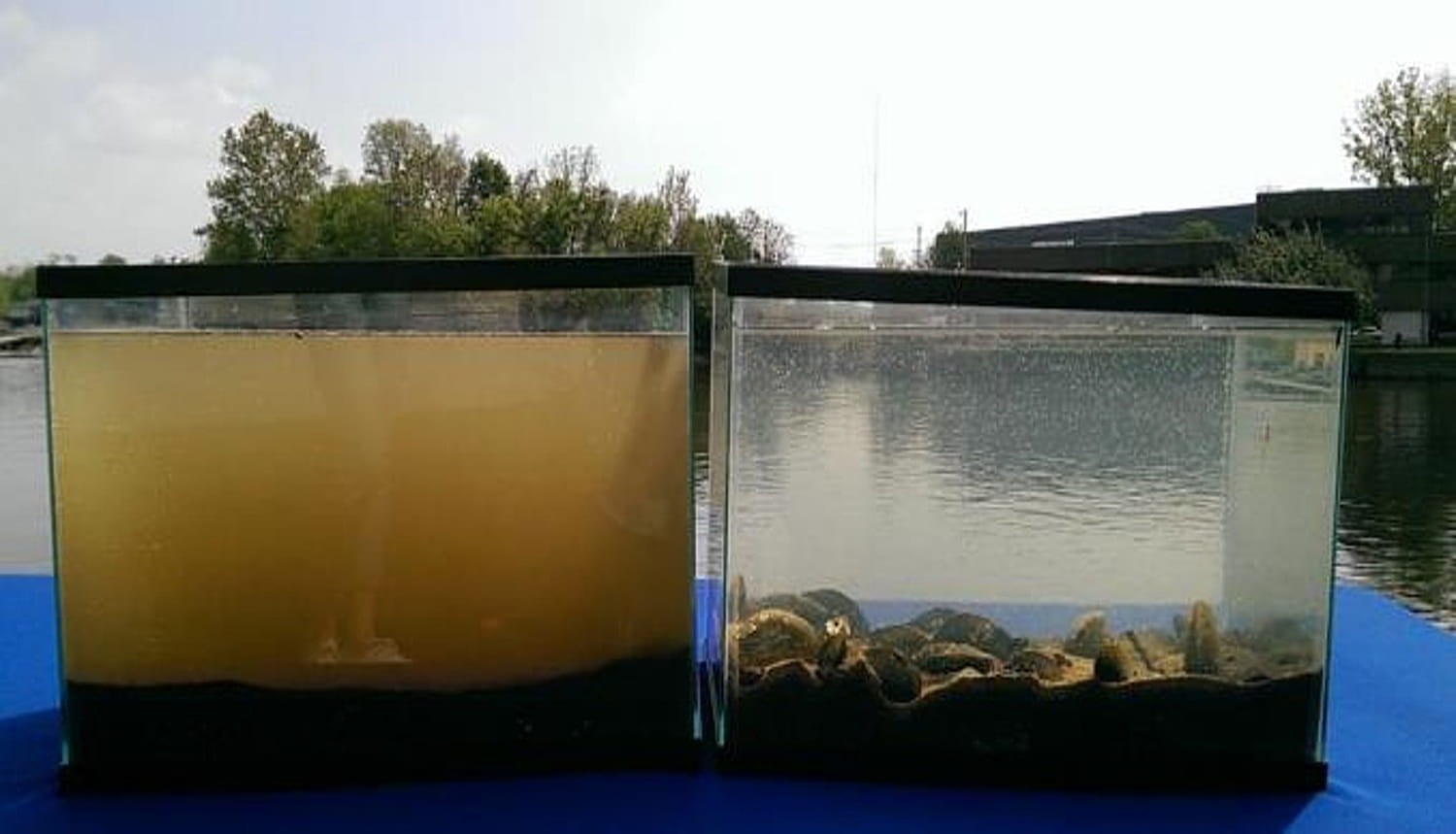
Before and after aquariums showing the impact of mussels on freshwater
Photo by Partnership for the Delaware Estuary
-
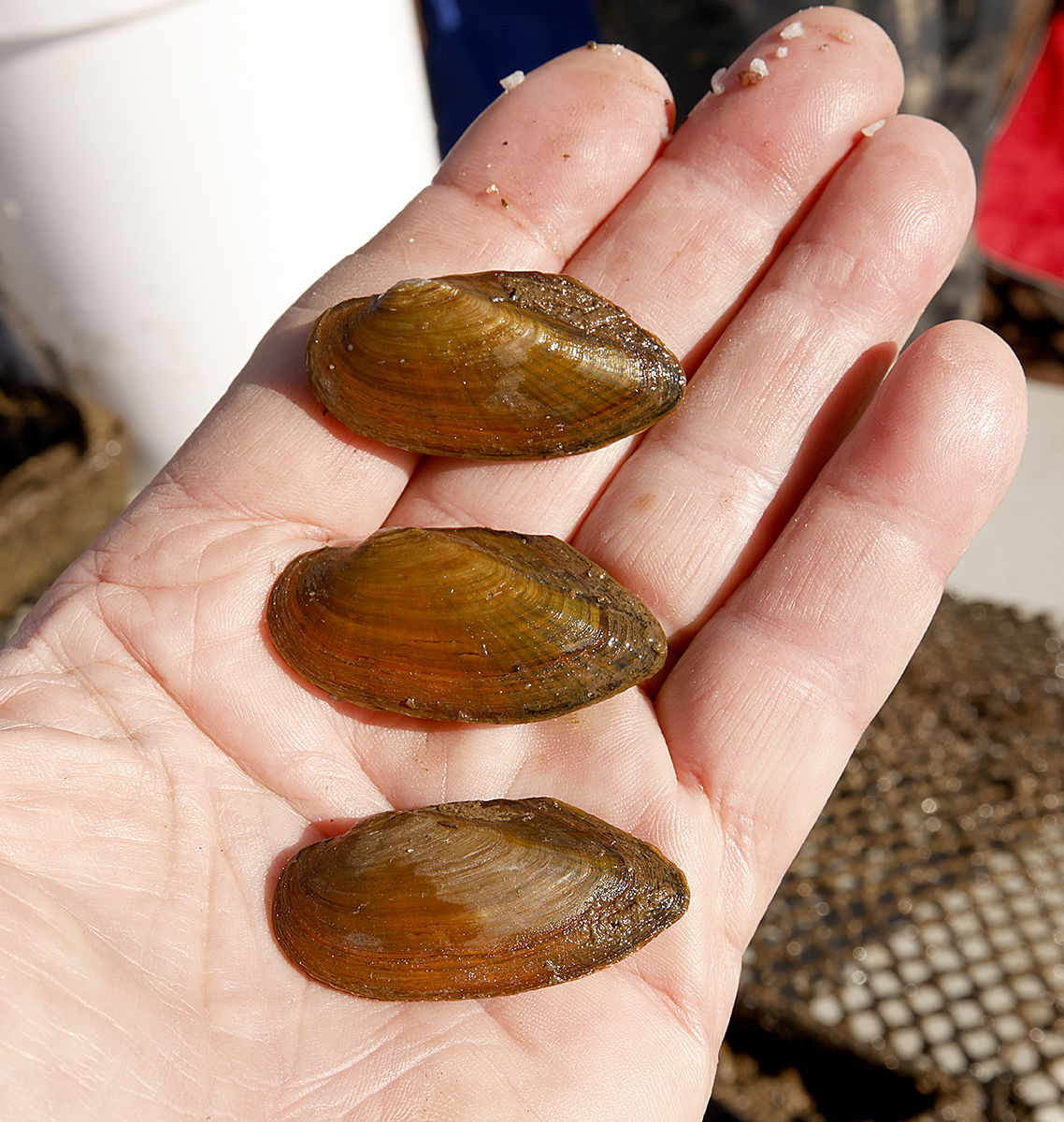
Juvenile freshwater mussels
Photo by Roger Thomas
-
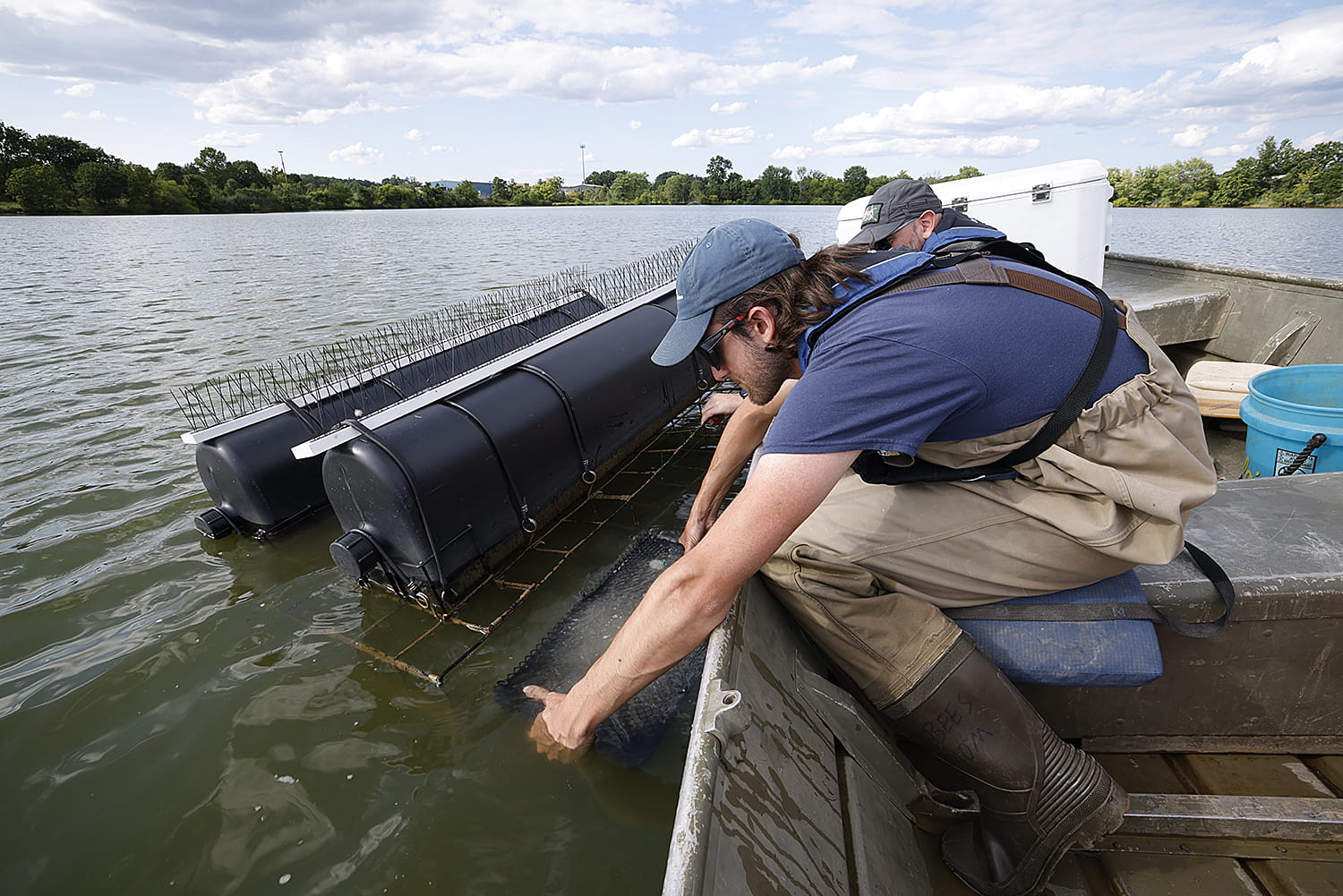
Installing trays for research
Photo by Roger Thomas


