Keeping Birds Safe During Migration Season
Journal

Credit: iuliu illes/Unsplash
Written on: May 11, 2026
Each spring and fall, birders everywhere come out in droves to enjoy peak migration season as flocks make their journey to their winter habitats and back again. But many birds won't make it to their destination.
Up to one billion birds are estimated to collide with buildings and other human-made structures in the U.S. every year, not to mention the many more that happen all over the globe. These collisions occur because artificial light at night and/or glass can cause birds to mistake glass and other surfaces as open space. Unfortunately, most of these collisions are fatal.
Philadelphia and the surrounding area is a critical passage point along the Atlantic Flyway, making residents, businesses and volunteers in the area key players in the effort to protect migrating birds. Below are a few ways to help make the region safer for our feathered friends.
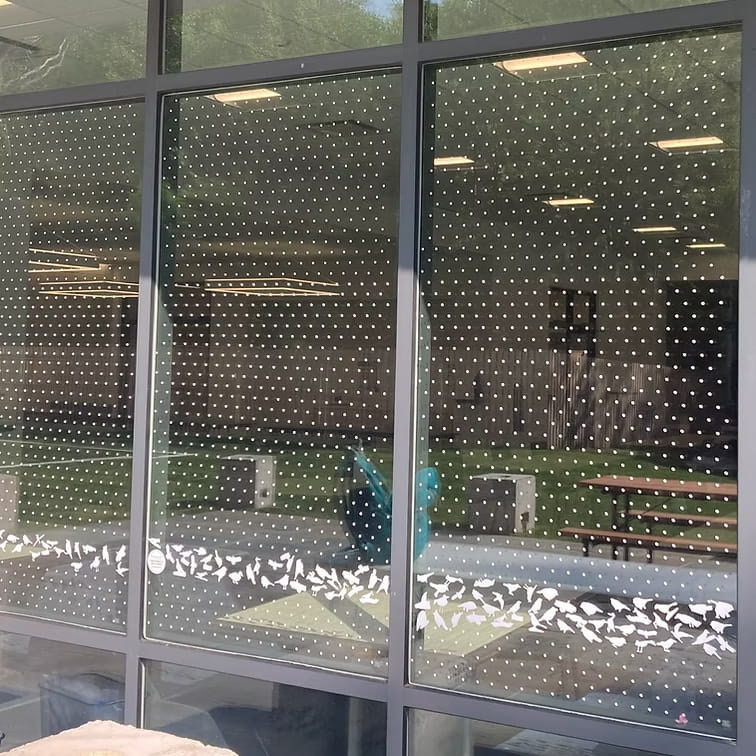
An example of bird safe glass.
Courtesy of Birds Safe Philly
Bird-friendly Buildings
You can make small changes to glass and other reflective surfaces that make it easier for birds to recognize as a hazard. Use bird safe film, tape or other DIY methods to create dense patterns on windows that alert birds before a collision. Screens on the outside or curtains or blinds on the inside can also help.
Check out the Audubon Society’s Guide to make your house bird safe for more tips.
Lights Out
From large commercial buildings to small residential ones, many buildings throughout the city and suburbs pose a risk to migrating birds. At night, their artificial lights can attract birds and increase the likelihood of collisions.
Lights Out Philly aims to reduce that likelihood by asking businesses and residents to turn off all unnecessary lighting during migration season, especially upper level and exterior lights, including flood lights, decorative lights and spotlights.
You can join the effort by taking the Lights Out Pledge, and doing your best to reduce artificial lighting during peak migration season, April 1 through May 31 and August 15 through November 15, from midnight to 6 a.m.
Find and Transport Injured Birds
One of many ways to volunteer through the Academy of Natural Sciences is to work during peak migration season as a bird collision monitor and injured bird transporter.
Scientists and conservationists receive important data each year from bird collision monitors. Monitoring helps determine what species collide with buildings and when the most collisions occur, as well as which buildings or parts of buildings are creating the most collisions. Collision monitors conduct searches through peak migration season for dead or injured birds and help document the collision. Even without setting aside time to search for impacted birds, you can report collisions that you see if you come across them in your day-to-day life. Every collision documented can help researchers learn more about keeping birds safe.
Monitors and other volunteers can also transport injured birds to a local wildlife rehabilitation center, such as The Wildlife Center at the Schuylkill Center for Environmental Education. For a full list of tips for recognizing and assisting injured birds, visit Bird Safe Philly’s website.
About Bird Safe Philly
Bird Safe Philly is a coalition led by the Academy of Natural Sciences of Drexel University, Audubon Mid-Atlantic, Delaware Valley Ornithological Club, National Audubon Society, Valley Forge Audubon Society and Liberty Bird Alliance (formerly Wyncote Audubon Society) that works to engage the community in learning about bird collisions and how we can prevent them. Find out more at birdsafephilly.org.


