Ornithology

The Ornithology Collection at the Academy of Natural Sciences of Drexel University (ANS) is one of the 10 largest collections of birds in the world. There are over 215,000 study skins from more than 8,000 species and over 22,000 tissue samples, making it one of the most taxonomically complete collections of birds.
In addition to the traditional specimen collection, the Academy’s Ornithology Collection includes a unique, first-of-its-kind complementary collection of over 200,000 taxonomically curated bird photographs. The photo collection is known as VIREO (VIsual REsources for Ornithology), and the digitized images are available online for educational and commercial use.
The Academy’s collection of study skins, which preserve a bird’s feathers, beaks and feet, and its tissue samples represent over 80% of the world’s bird species. Specimens of historical importance in the collection predate the founding of the Academy in 1812 and include important early bird collections made by famous collectors such as Alexander Wilson, who is often called the Father of American Ornithology; John James Audubon; and John Gould.
Some of the most studied birds in the collection are the extensive series of species-defining types numbering about 1,600 specimens and 2,500 skins of extinct and endangered species.
Other major series of bird skins in the collection come from South America (60,000), North America (5,000), Asia (25,000) and Africa (20,000), with many additional holdings from Australia and Central America, including birds from the high altitudes of the Andes.
Today, the Academy’s Ornithology Collection is still growing from recently collected and data-rich specimens of North America, South America, Asia, Africa and Australia, allowing scientists to see changes in bird life over time. In fact, the Ornithology Department is actively adding new specimens, locally and internationally, at a rate of about 1,500 per year.
Explore the Specimens
-
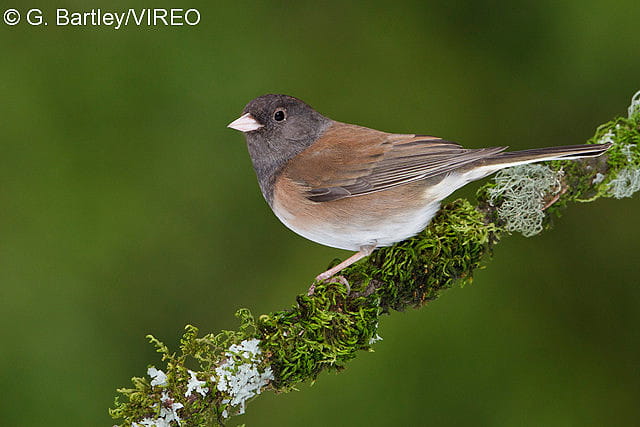
Dark-eyed Junco
© Glenn Bartley/VIREO
-
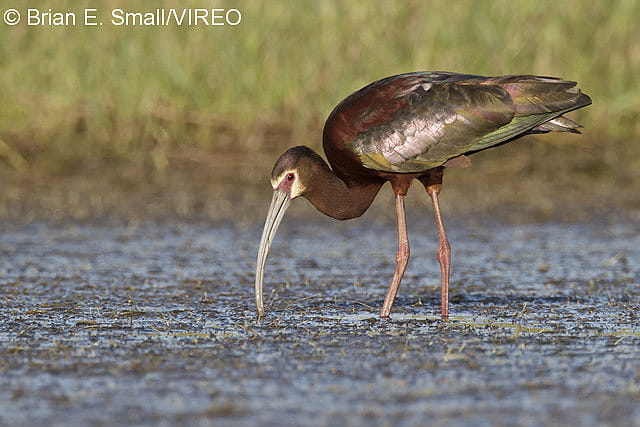
White-faced Ibis
© Brian E. Small/VIREO
-
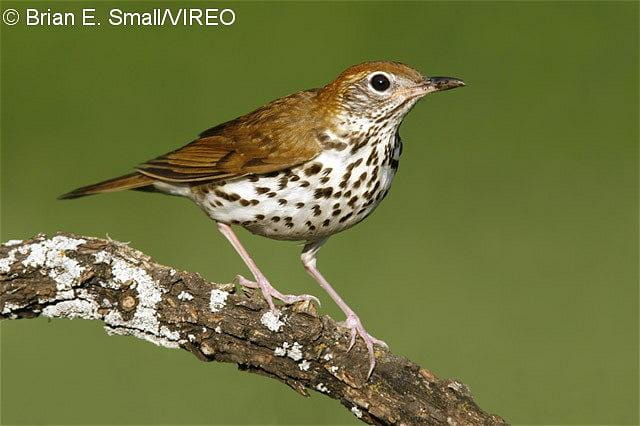
Wood Thrush
©Brian Small/VIREO
-
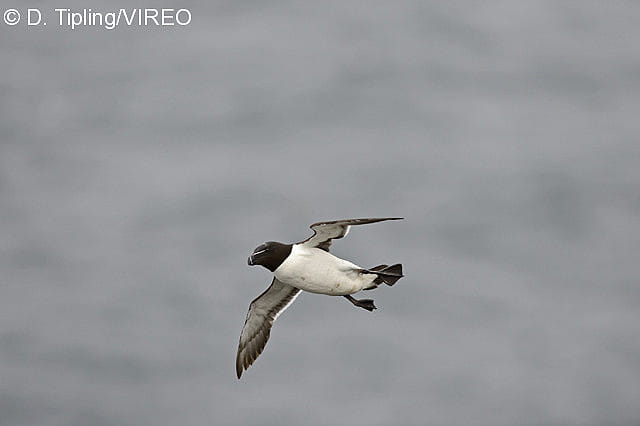
Razorbill
© David Tipling/VIREO
History
From the Academy’s founding in 1812 to present day, many preeminent ornithologists and naturalists have contributed knowledge and specimens to the Ornithology Collection. Early contributors include Alexander Wilson, William Bartram, Thomas Say, Thomas Nuttall, Charles Bonaparte, John James Audubon, John Townsend, Edward Harris, William Gambel, John Cassin, Spencer Fullerton Baird, Graceanna Lewis and Adolphus Heermann.
During the late 19th and early 20th centuries, Witmer Stone revitalized the Ornithology Department, increasing the collection fivefold and public interest in ornithology when he founded the Delaware Valley Ornithological Club (DVOC).
Rudolphe Meyer de Schauensee and James Bond expanded the scope of the collections to Africa, Asia, and, particularly, the Neotropics. The collections and collecting trips they funded form the core of the modern specimen collections with associated data such as exact locality, soft part colors, and gonad size. Meyer de Schauensee realized the importance of making collections from remote regions of the world and hired field preparators Melbourne Carriker and Kjell von Sneidern, who together contributed tens of thousands of data rich bird skins to the Academy.
Curator Frank Gill guided the growth and modernization of the Ornithology Department in the late 20th century. Gill established progressive projects like VIREO, Visual Resources for Ornithology, and began The Birds of North America, a planned series of 720 life histories of the nesting species on this continent. Gill and Fred Sheldon also established the Academy’s avian frozen tissue collection.
Bob Ridgely joined the department in 1982 and produced two volumes of “The Birds of South America,” and two volumes of “The Birds of Ecuador,” which grew from a major field program conducted in Ecuador with MacArthur Foundation funding. Ridgely and collections manager Mark Robbins led a series of pioneering expeditions to remote areas in Ecuador, bolstering the already strong collection of birds from Andean countries and making it arguably the most important collection of birds from this region in the world.
In 1997, Leo Joseph was hired as Ornithology Curator and his innovative research program tied the molecular genealogical data on birds to their biogeographical distributions. He also initiated the first field collecting and research program on Australian birds by Academy scientists in nearly 160 years.
During Leo Joseph’s time as curator, Nate Rice was hired as collection manager and tasked with caring for the Academy’s bird collection, handling loan and information requests, and adding new material to the collection. Nate has continued the Academy’s history of collecting expeditions in Africa, Asia, South America, and Australia. Rice maintains a research program and publishes primarily on the systematics of suboscine passerines.
In 2014, Jason Weckstein was hired as associate curator of Ornithology and associate professor in the department of Biodiversity, Earth, and Environmental Sciences (BEES) at Drexel University. Jason is now curator and professor and teaches two Ornithology courses, Introduction to Evolution and others at Drexel University and is advising undergraduate students, graduate students, and postdocs, who work at the Academy. Weckstein’s lab research program uses molecular genetic methods and focuses on avian phylogenetics, comparative biology and evolutionary history, biodiversity surveys of birds and their parasites and pathogens, and coevolutionary history of birds and their parasites.

Ornithology Resources
Ornithology Resources & Databases
Search the Academy’s Ornithology Collection using the following online portals:
- GBIF Ornithology Collection
- IDigBio Ornithology Collection
- VertNet Ornithology Collection
- VIREO Image Collection
- Arctos Parasite Database
Over 100,000 of the historical and stunning images of the VIREO Collection can be seen at vireo.ansp.org and in field guides, birding apps, text books and nearly anywhere bird images can flock.
Jason Weckstein, PhD
Associate Curator & Associate Professor (Drexel)
Nate Rice, PhD
Collections Manager
Kamila Kuabara, PhD
Lab Manager for Ornithology & Laboratory of Molecular Systematics & Ecology (LMSE)