Say Freeze! Capturing the Microcosm
Journal
Written on: February 10, 2022
“Snow crystals exhibit such a bewildering diversity and beauty.”
Snowflake Bentley
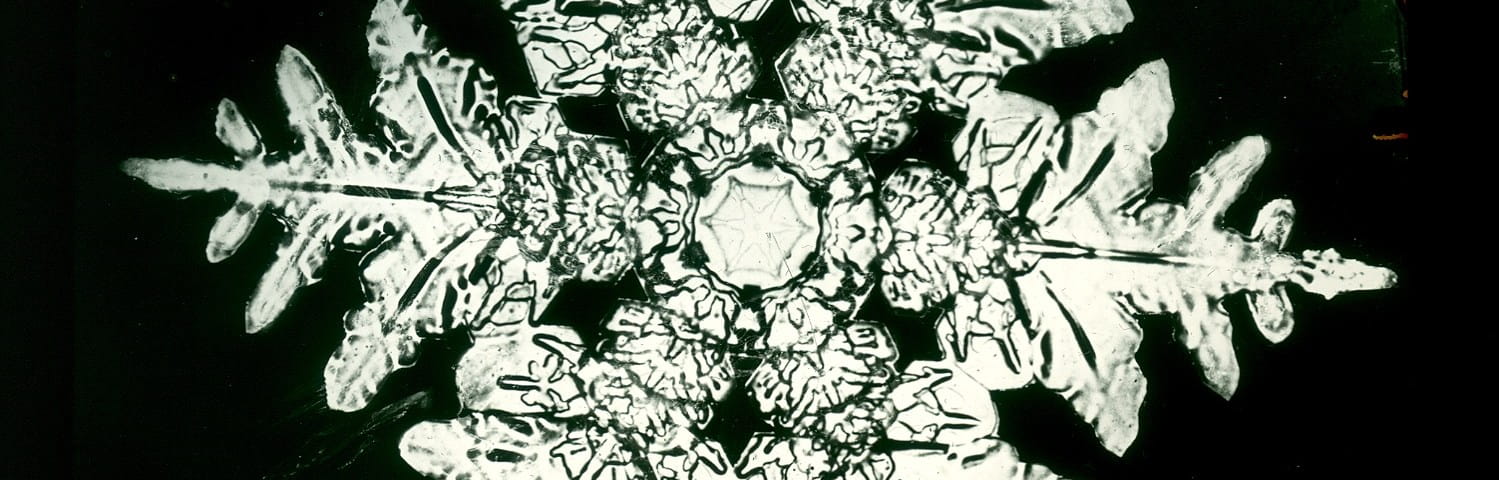
Have you ever wondered how we know that every single snowflake has a completely unique one-of-a-kind design? You can thank photomicrography — the art taking magnified pictures with a microscope — and the pioneering work of Snowflake Bentley.
<sub>Courtesy of Schwerdtfeger Library</sub>
Photomicrography began in the mid-1800s, soon after the invention of photography. Before this development, scientists and observers would have to sketch their findings while peering down at their slides. The earliest microscope photographs were chemically imprinted onto metal or glass plates known as lantern slides. Technology soon evolved to be able to hook a camera up to a microscope and produce pictures through film. When photography became digital, capturing a microscopic image became as easy as holding your smartphone camera onto the eyepiece.
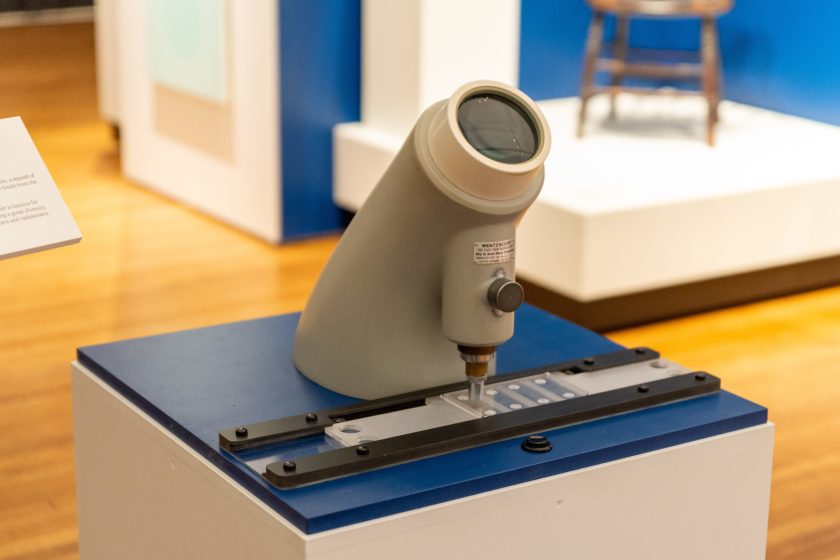
<sub>Microscope at <em>Invisible World of Water</em> exhibit</sub>
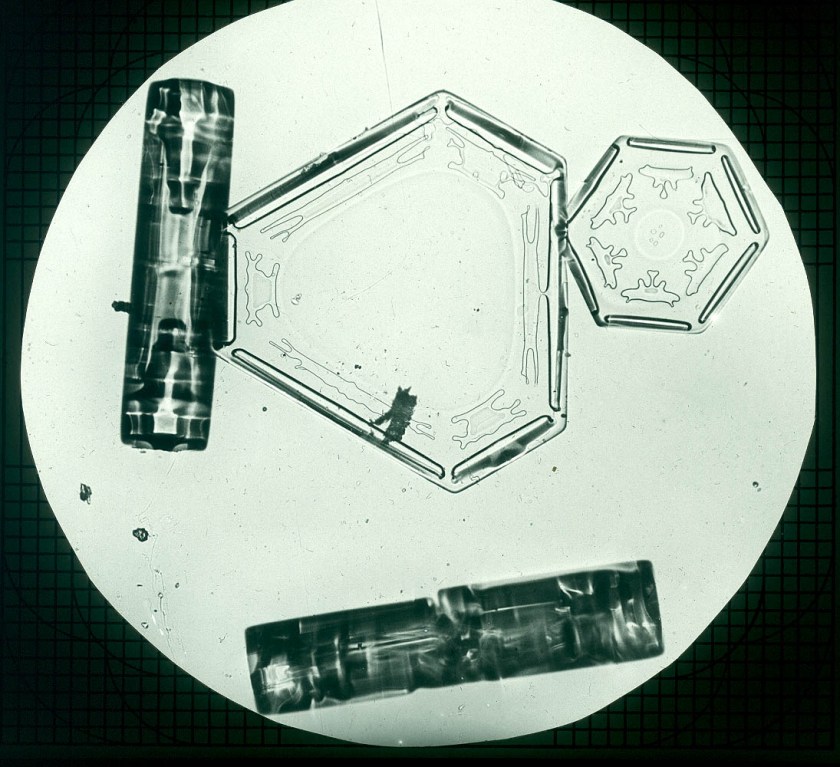
Wilson A. Bentley (1865 – 1931) was the first known person to photograph a single tiny snow crystal in 1885. Using a tray of black velvet, a feather and an expensive, innovative microscopic camera that produced images on lantern slides, he developed a particular method to capture these ‘ice flower’ photographs; of course, after much trial and error.
<sub>Courtesy of Schwerdtfeger Library</sub>
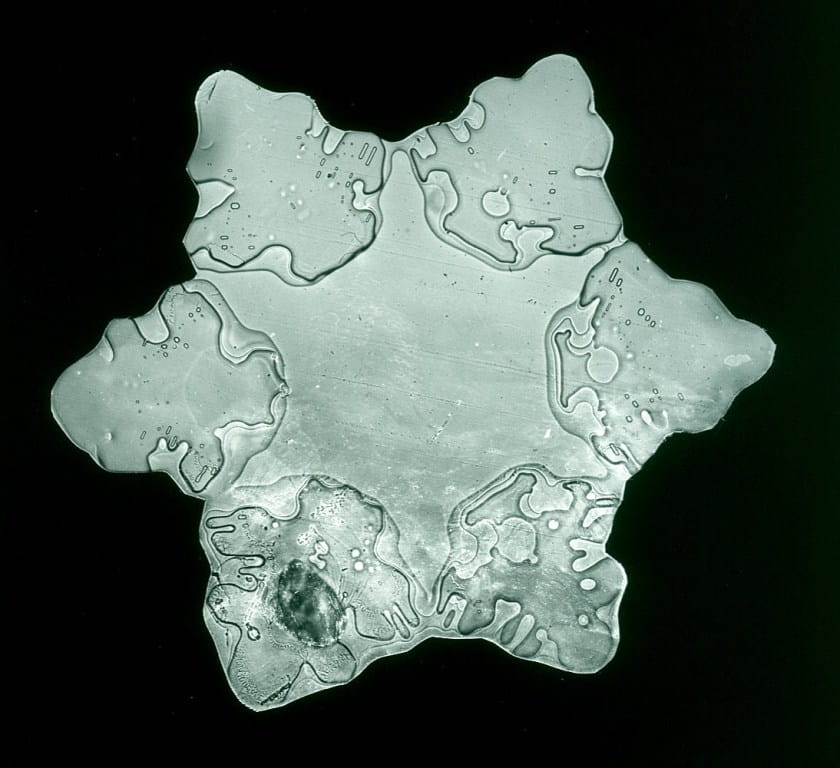
Bentley’s biggest difficulty wasn’t the technology, however; it was the temperature. Snowflakes are frozen ice crystals formed high in the atmosphere on motes of dust and will easily sublimate — in other words, when a solid form skips the water stage and directly transforms into a gas. Bentley writes, “Usually several crystals are placed together on a single slide, a momentary glance being given to each, and care taken while doing this not to breathe on the crystals. The utmost haste must be used, for a snow crystal is often exceedingly tiny … even in zero weather, they last but a very few minutes.” When capturing the microscopic, you have to act fast.
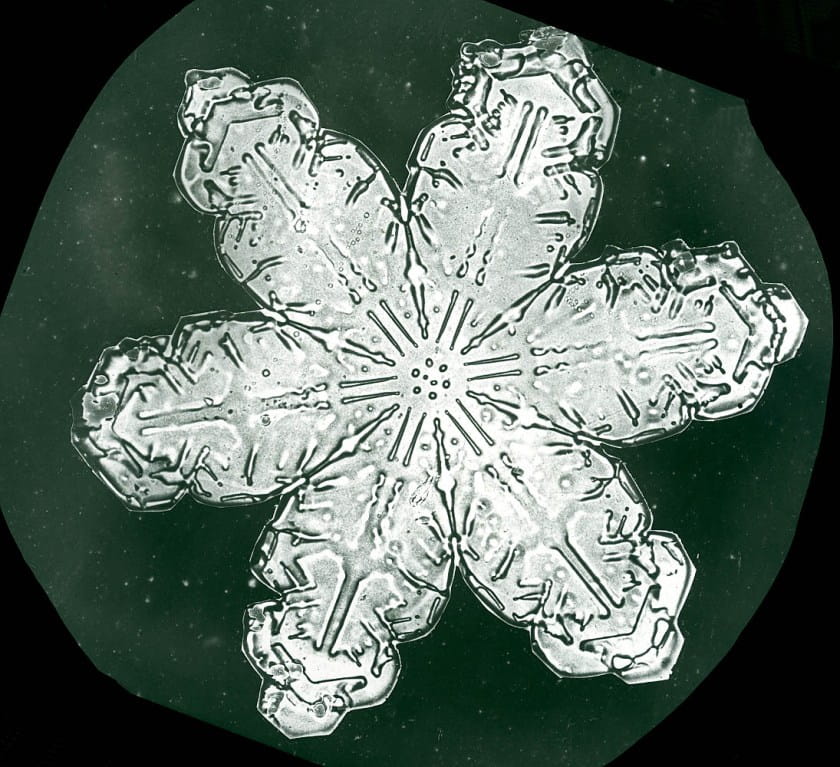
<sub>Courtesy of Schwerdtfeger Library</sub>
Snowflake Bentley, as he is now known to the world, would go on to photograph over 5,000 snow crystals. His dedication to photomicrography and lifelong natural science work advanced the study of meteorology and our understanding of snowflake structures.
Visit Invisible World of Water at the Academy and witness the fascinating and microscopic beauty of snow crystals, water drops and diatoms — hidden just out of sight.


