Dioramas
Exhibit
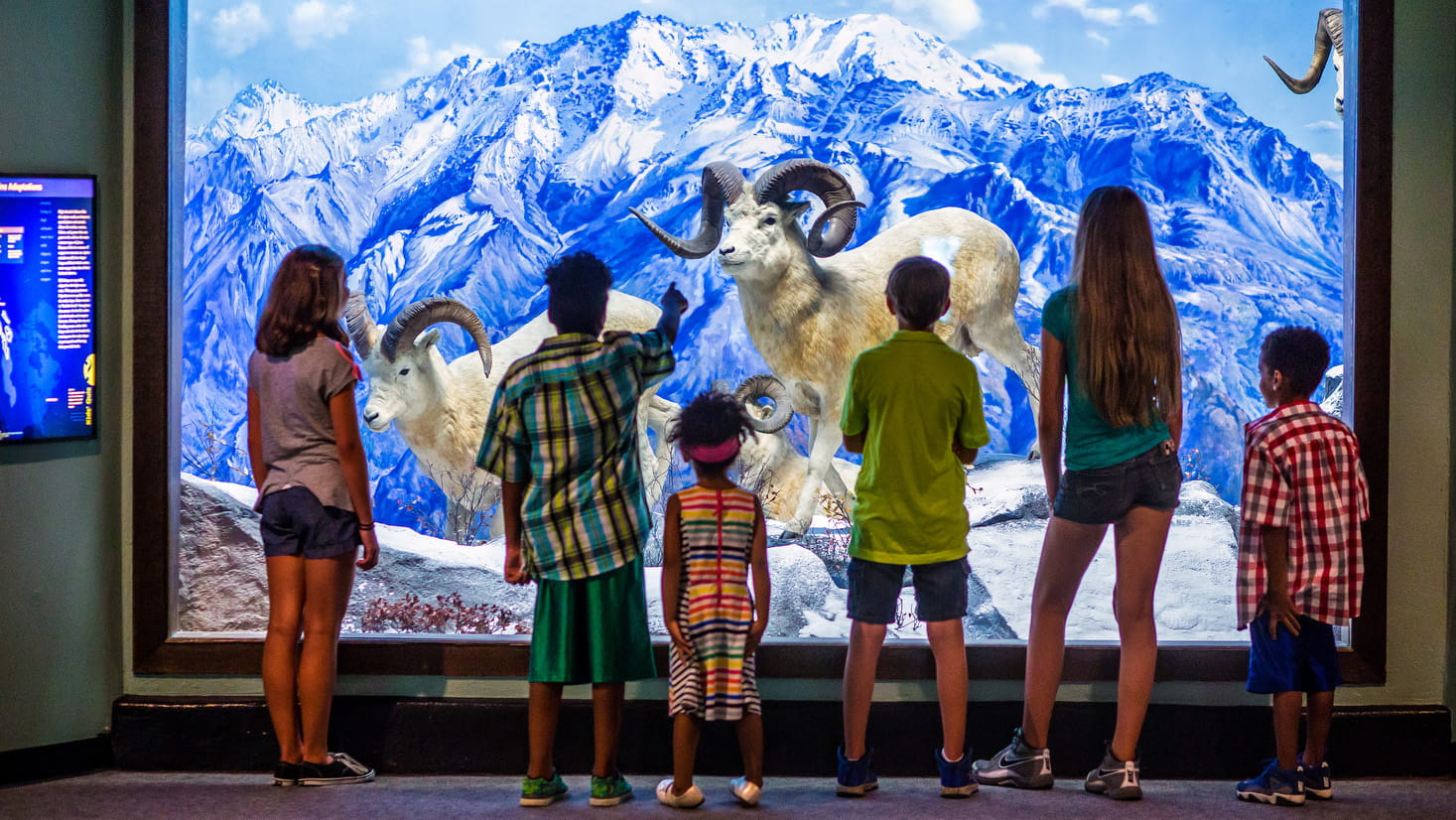
Please note that this exhibit has closed.
Credit: Jeff Fusco for ANS
Dioramas — a distinctive fusion of art and science — have provided windows into the wilderness for generations of museum visitors. Each display, meticulously crafted by hand, is an intimate view into an ecosystem.
There are 37 dioramas at the Academy, the majority of which were created between the 1930s and 1960s. At the time they were made, dioramas provided a rare opportunity to experience faraway places and wildlife.
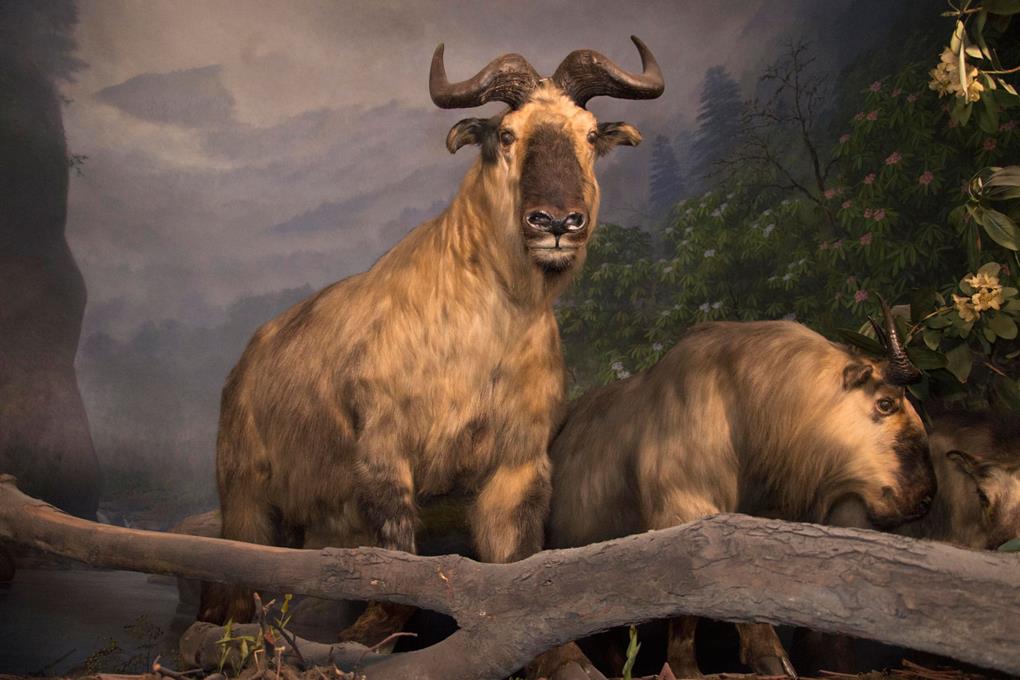
The North American Hall dioramas on the first level feature animals such as bison, musk ox, bears, deer, mountain sheep and moose. Wildlife from Africa and Asia can be found on the second level. Animals from Africa include the lion, zebra, okapi, cape buffalo, gorilla and antelope. Animals from Asia include tigers, takin, kiang, pandas and a yak. Dioramas featuring the extinct passenger pigeon and Labrador duck are located on the third level.
Diorama Highlights
-
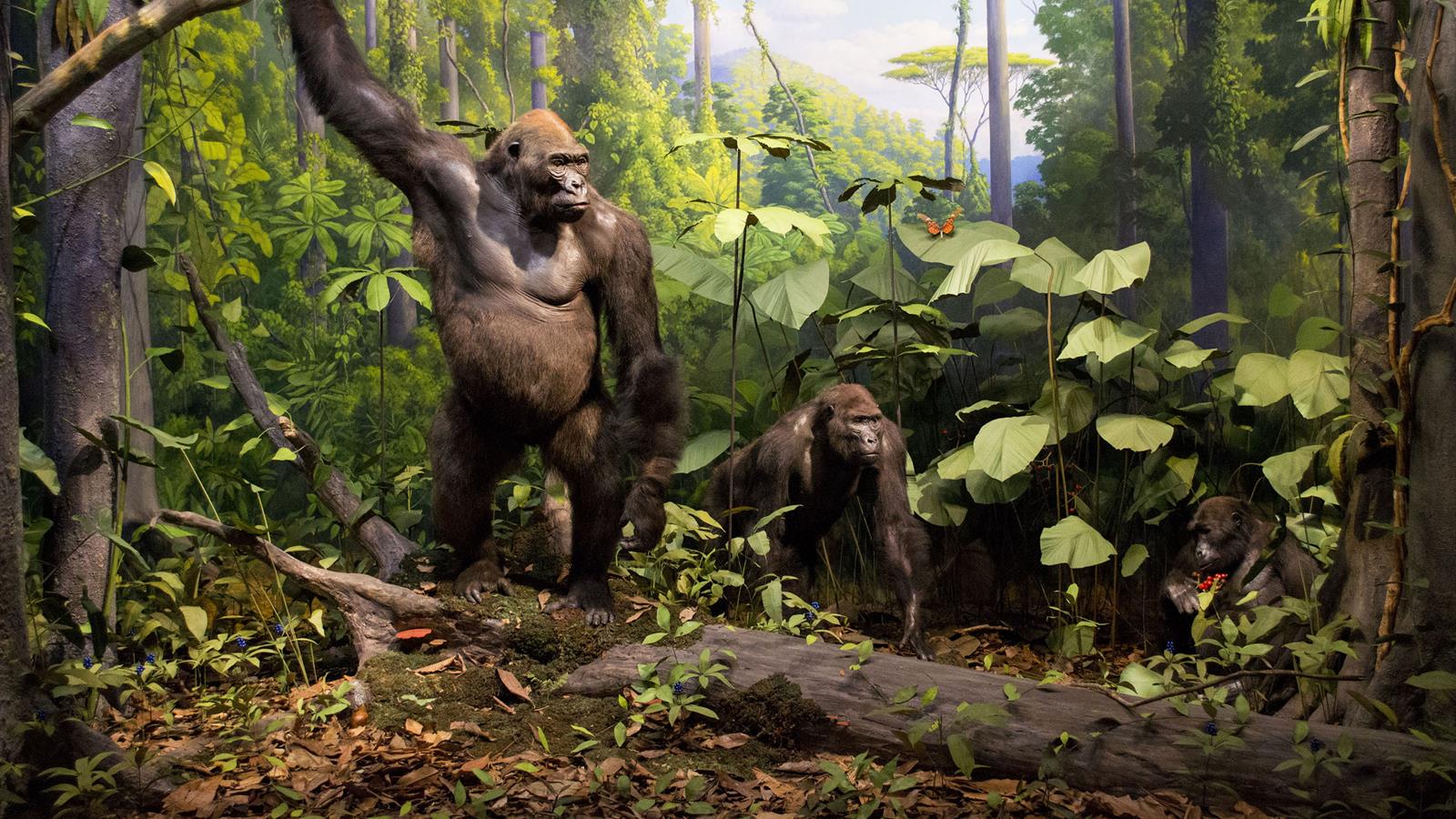
Lowland rainforest diorama
John Hutlemyer/ANS
-
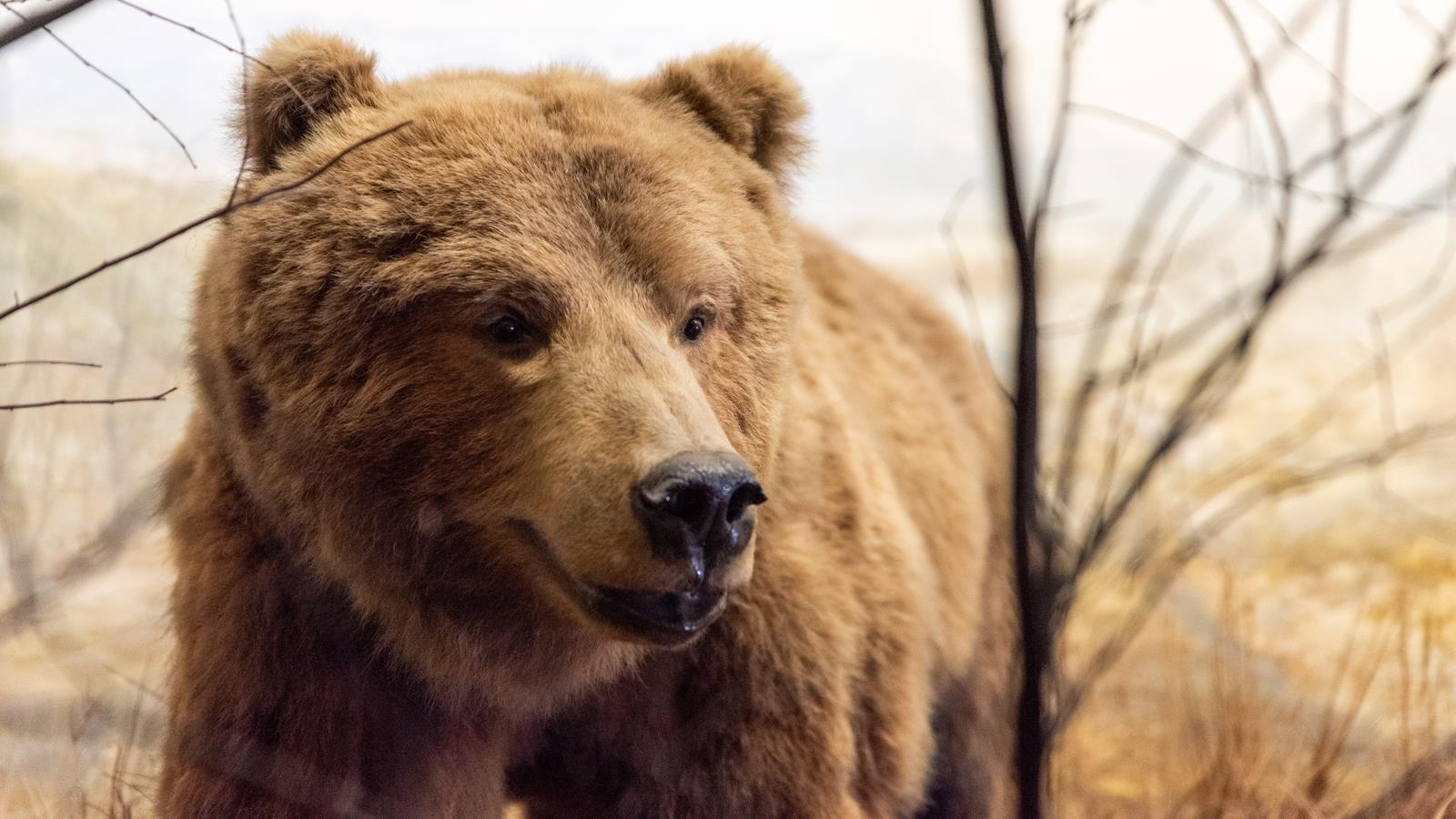
Kodiak Brown Bear Diorama
Ramon Torres/ANS
-
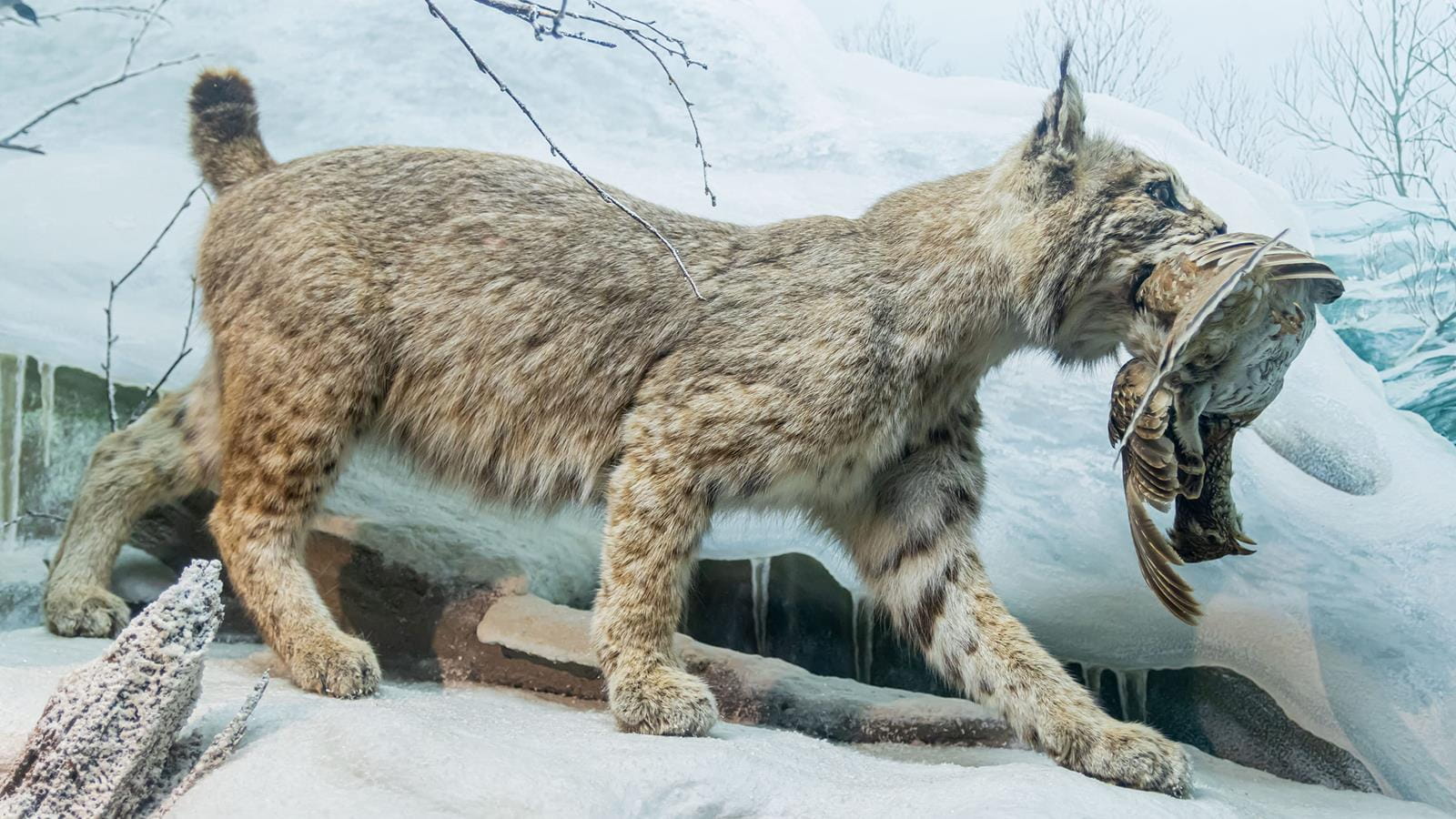
Bobcat Diorama
ANS
-
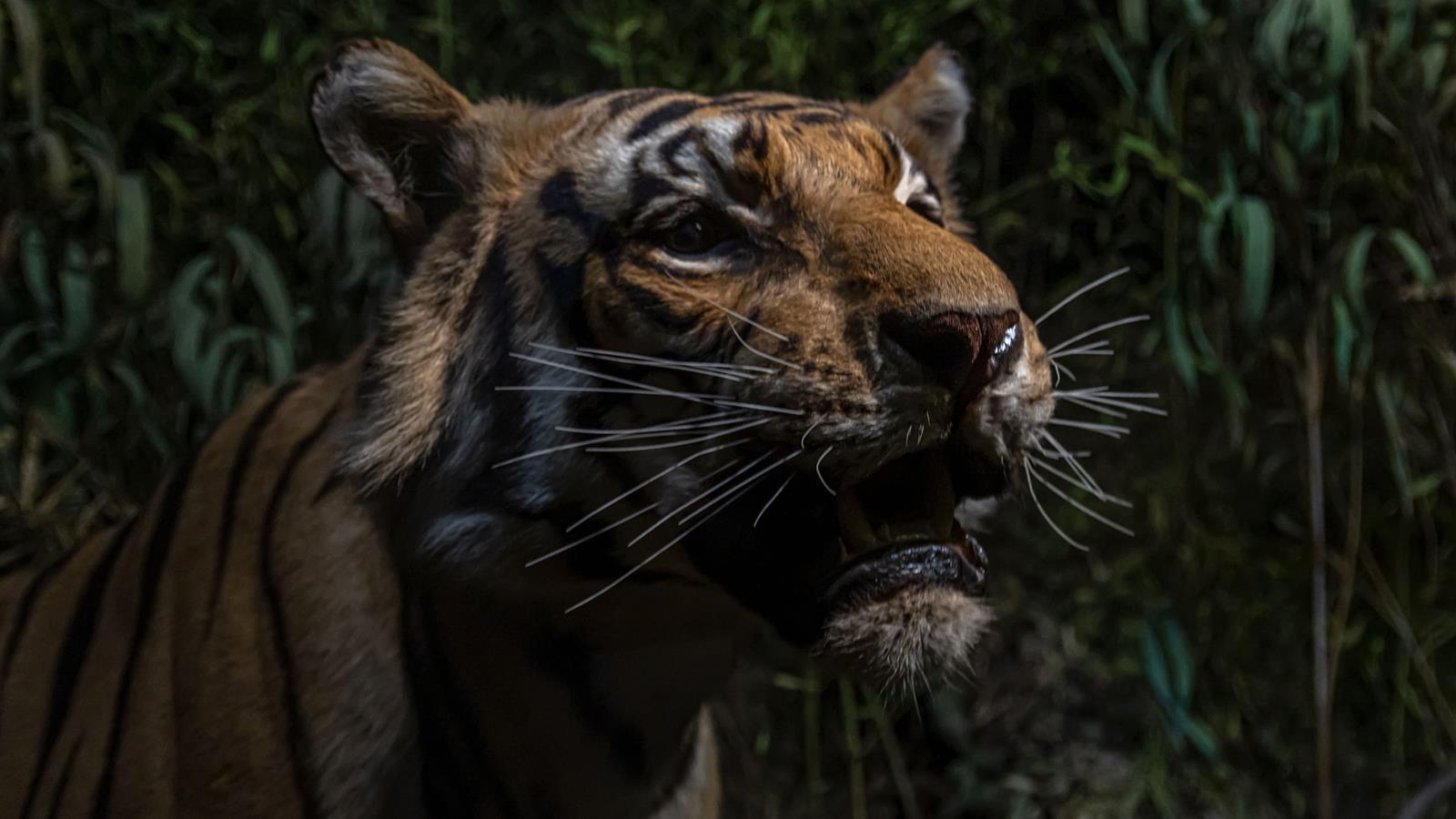
Tiger diorama
ANS
-
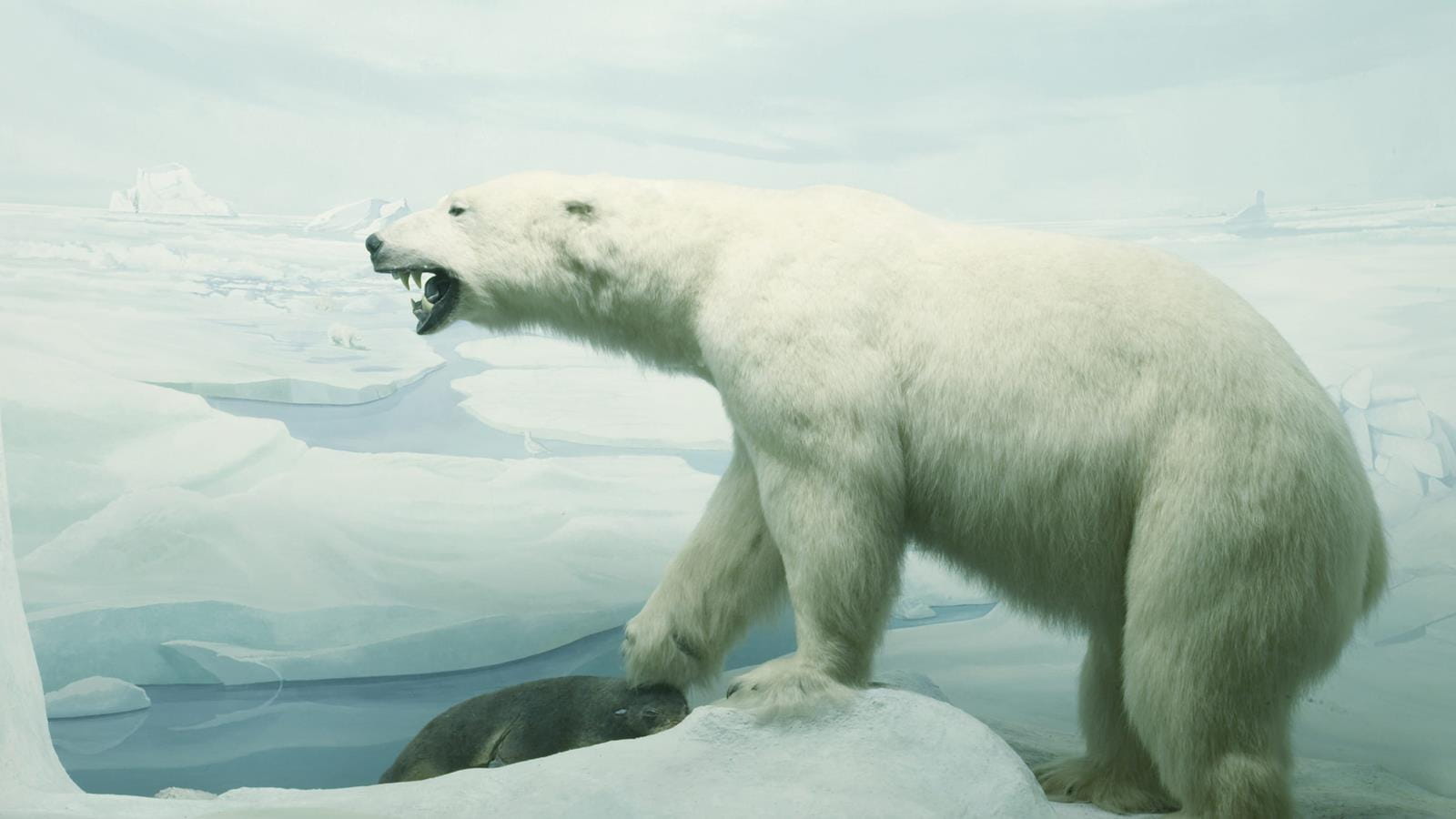
Polar Bear Diorama
ANS


Naturally Awesome: What are Dioramas?

Naturally Awesome: What are Dioramas?
The diorama—a distinctive fusion of art and science—has provided a window into the wilderness for generations of museum visitors. For many, dioramas provided the only opportunity to experience distant places and exotic wildlife.
Credit: John Hutlemyer/ANS
Diorama Renovation
The Academy’s dioramas depicting scientifically accurate animal habitat scenes around the world have captivated generations of visitors for decades. In 2018, two of the oldest dioramas were renovated while remaining on view to museum guests, who watched the action unfold every time they visited.
Conservators, artists, taxidermists and other experts carefully dismantled much of the Sub-alpine Forest diorama and Lowland Rain Forest diorama. They cleaned every inch of the animals, plants and background paintings. New lighting and digital kiosks were installed; layers of dust and debris were removed; faded colors were refreshed; sagging branches were propped; and, in a few instances, errors were corrected. To round out the species featured in the dioramas, the Academy added snails to each scene.
Image Gallery
-
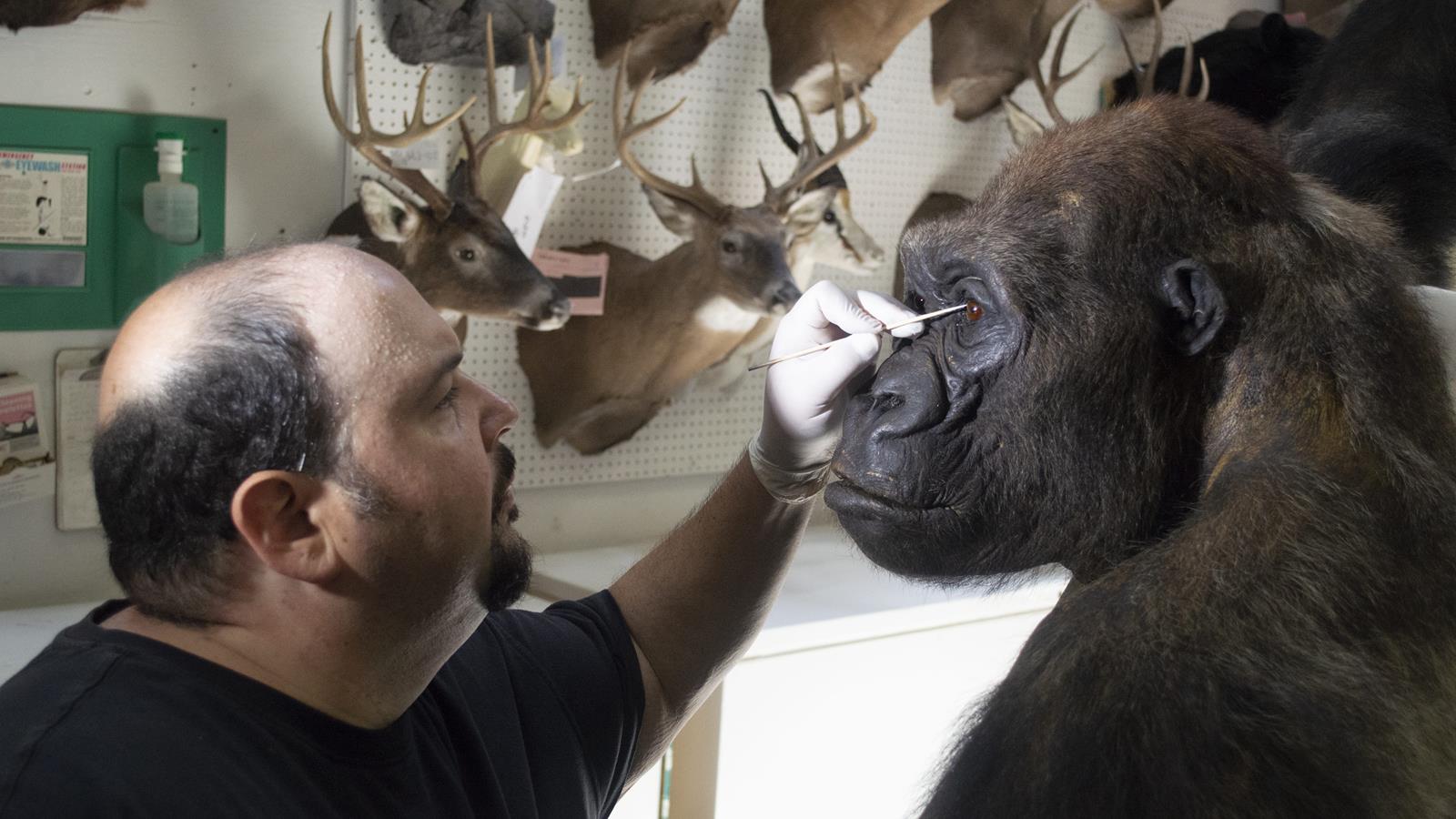
Taxidermist George Dante of Wildlife Preservations at work in his Woodland Park, N.J. studio
ANS
-
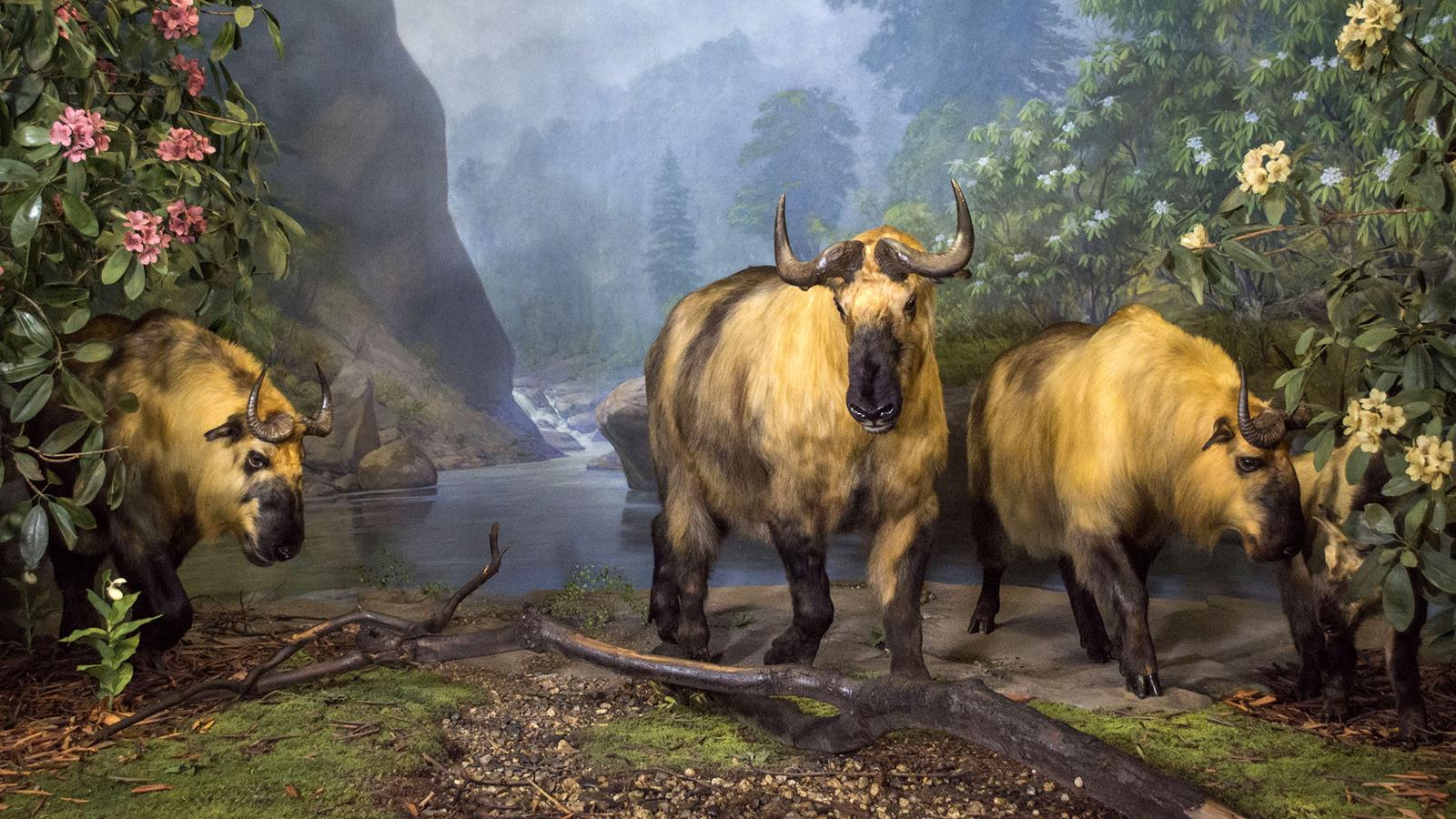
Sub-alpine forest diorama after renovation
John Hutlemyer/ANS
-
Lowland rainforest diorama after renovation
John Hutlemyer/ANS




Sponsors
The Academy of Natural Sciences of Drexel University is grateful for the generosity of the William B. Dietrich Foundation and the E. Rhodes and Leona B. Carpenter Foundation in supporting the diorama restoration projects.