How to Start Composting
Journal
Written on: November 1, 2021
Composting is one of the most productive ways to support sustainability. It nourishes your yard, reduces waste in landfills, strengthens local farming and food production, improves climate resilience in communities and helps create green jobs.
By simply turning organic matter — such as leaves, fruit peels, food scraps, coffee grounds and more — back into nutrient-rich soil, we can make a big difference in the environment.
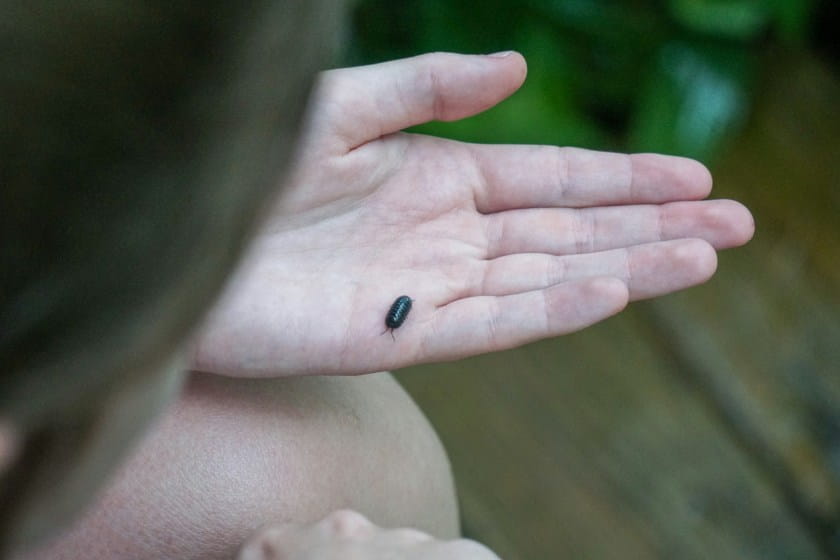
Bugs help decompose the vegetative material faster by breaking it up into smaller pieces. <em>Izzy Park/Unsplash</em>
Got Bugs?
There is a common misconception that compost should not be buggy at all. In fact, as long as it remains active and moist, your compost should quickly become a microcosm of beneficial diversity. Common backyard arthropods, like pill bugs, millipedes, centipedes, flies and beetle larvae, are all crucial creatures to the natural process occurring in your compost bin or pile.
These bugs help decompose the vegetative material faster by breaking it up into smaller pieces, mixing it up with their movements and then of course, depositing out the fragments for others to feed on. And don’t worry about their predators either, like spiders, wasps and even shrews, for they are also supporting this new miniature ecosystem.
Fruit flies tend to be common compost visitors as well. If their numbers become a nuisance, however, simply consider adding more brown — dry leaves, sticks, straw, cardboard or paper — to create a higher ratio of carbon to nitrogen. You can also try airing the compost out by opening the lid or turning it more frequently.
Composting Basics
| Yes! What items can go into compost? | No! What items should not go into compost? |
| Fruit and vegetable peels, cores and ends | Meat and dairy |
| Coffee grounds and filters | Household cleaners and chemicals |
| Paper tea bags | Fats and oils |
| Bread crusts, crackers and cereal (fresh, stale or moldy) | Greasy food scraps |
| Eggshells | Fermented products |
| Leaves and grass clippings without pesticides | Non-edible materials (plastic, foil, clingwrap, etc) |
| Newspapers and brown paper bags | Treated weeds that have gone to seed |
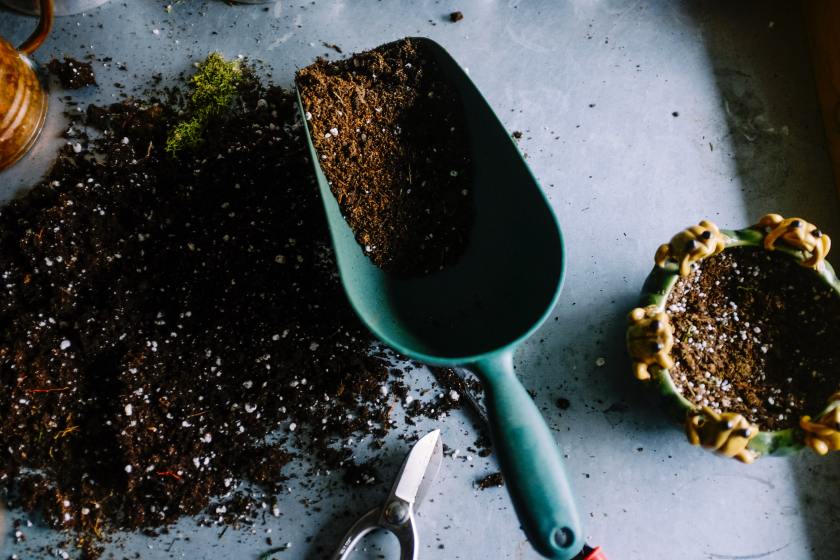
Yard debris and food waste account for nearly 30% of the materials disposed in U.S. landfills. <em>Neslihan Gunaydin/Unsplash</em>
Get Started with Outdoor Composting
Regular composting requires some aeration, or turning, which supplies oxygen for the decomposition process. As it decomposes, your waste heats up, breaks down and develops beneficial bacteria and fungi, excellent byproducts for growing healthy plants. This can be done by turning the materials with a shovel or rake or using a tumbler.
- Gather browns such as dry leaves, sticks, pine needles, newspapers, wood scraps, paper waste, dead flowers and other dry organic matter.
- On about 9 square feet of land, surround the heap of organic, compostable materials with inexpensive fencing to keep out uninvited animal guests, or place your items into a garbage can that is drilled with holes. You can also use a ready-made compost bin.
- Alternate layers of browns with layers of greens, which include your vegetable and kitchen debris, grass clippings, weeds, eggshells, coffee grounds and tea bags.
- Always keep a layer of browns on top of the pile.
- Periodically, using a shovel or pitchfork, turn and aerate the pile, rotating items from the center to the outside of the pile. This will help the waste break down. Keeping pieces small will speed up the process. Avoid adding meat and dairy products to home compost piles, as these can decompose slowly and attract animals.
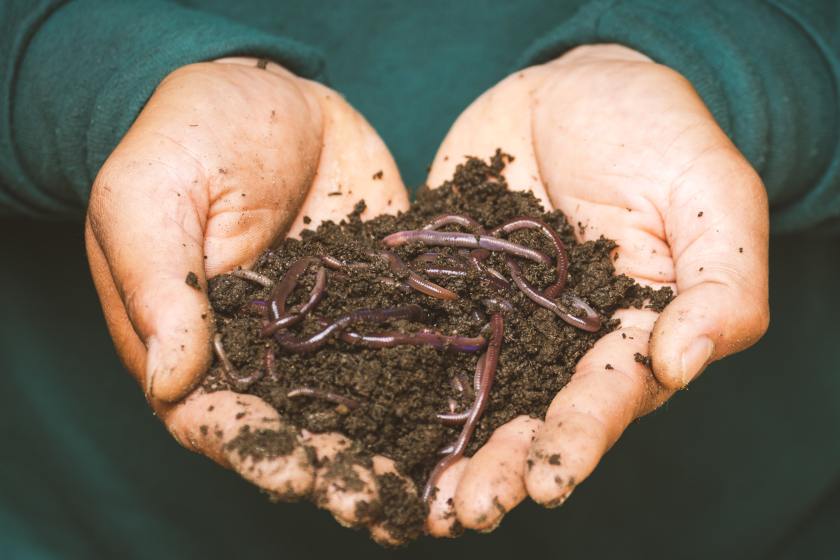
Regular earthworms do not digest food fast enough and make poor vermicomposters. <em>Sippakorn Yamkasikorn/Unsplash</em>
Get Started with Vermicomposting
If you lack outdoor space and have an empty kitchen or bathroom cabinet and a penchant for reducing your household waste, give vermicomposting a try! Vermicomposting, or worm composting, is simple and requires less space, effort and material than regular composting. All you need is an empty bin, newspapers and some food waste — the worms will take care of the rest.
- Build a worm bin using leftover Styrofoam containers or wood planks. Plastic storage bins can be used, or you can start with a commercial, ready-made compost bin.
- Drill small ventilation holes in your bin on the sides and bottom. Holes on the lid will help but cover these with a cloth to protect against fruit flies.
- Layer the bottom with a hefty amount of moist newspaper and then some handfuls of soil.
- Add your worms! The recommended species are red wigglers (Eisenia fetida or Eisenia andrei), and they can be purchased online. Regular earthworms do not digest food fast enough and make poor vermicomposters.
- Then add your food waste and cover with more newspaper. Spray with a little water. It might take some time for the worms to get started, so add your scraps in slowly and at small intervals.
- The bin should be left in a cool, dark place like under the kitchen sink or in the basement and should be disturbed as little as possible. Over time, be sure to check which types of foods your worms prefer, and regularly add more moist newspaper if needed.
- For harvesting and troubleshooting your worm bin, check out Rodale Institute’s user guide for helpful hints and tips.
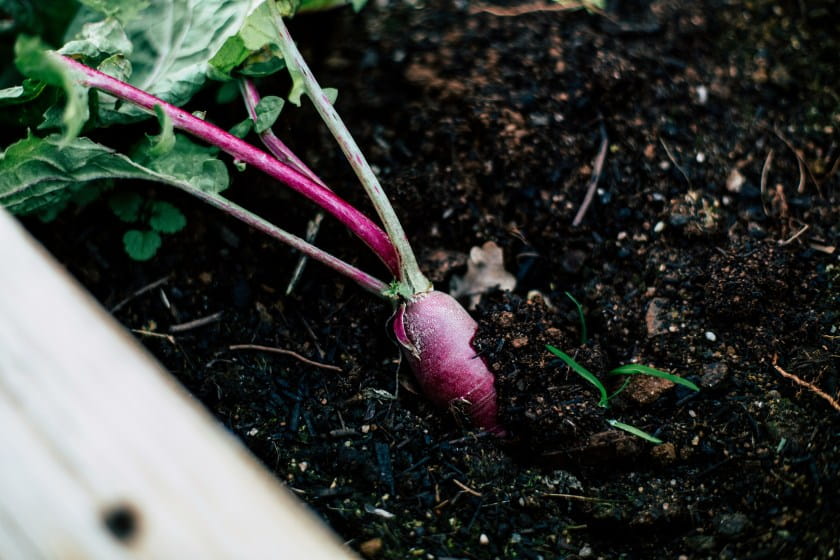
Your compost is ready when it starts to look like soil. <em>Markus Spiske/Unsplash</em>
Winterizing your Compost
Composting does indeed continue to decompose throughout the winter months despite the cooler temperatures. Collect leaves, twigs and pine needles in autumn and store them to use as “browns” in the upcoming cold months. Chop them up into smaller pieces to encourage faster breakdown. Be sure to store these materials covered so they don’t get wet.
Harvest your compost, if it is ready or looks like soil, in the autumn so there is plenty of room in your bin or tumbler — compost can build up faster in the winter due to slower decomposition. Consider insulating your bin or tumbler with straw bales or bags of leaves to block out the freezing wind. And there is no need to turn it until warmer temperatures arrive, as it will let out the necessary heat inside.
Adding meat and dairy products to your compost should be avoided. <em>Sigmund/Unsplash</em>
Urban Composting
While this alternative waste method is becoming increasingly popular all over the country, not everyone has access to municipal composting systems or available backyard space to consider composting. In cities like Philadelphia, where renters make up almost half the population, it can be especially challenging.
So, if you find that you have too much compost and not enough space to put it, consider giving it away to a local school, church or community garden that might need it. Work with your friends or the people on your block who also have too much and organize a donation to a compost collection and pick-up company. Swap your compost with a friendly neighbor for extra vegetables or offer it to others on an online Buy Nothing group.
Not sure what to do with it in your rowhome or apartment? You can mix compost with soil for your potted plants or window boxes. Make a natural liquid fertilizer by steeping the compost in water for a day then removing it. And you can also simply rake it over your lawn, green space or add it with mulch for extra nutrients.


