Recycling 2021
Journal
Written on: January 6, 2021
Last January when we wrote about recycling we suggested keeping your recycling bin contamination free, avoiding wishcycling and knowing what must go to a special facility to be recycled. Many of our tips from that post are still relevant. But of course, 2020 has been a year like no other, and plenty of things have changed.
What’s changed since January 2020
The Pandemic
The COVID-19 pandemic has affected the entire world and disrupted everyday life in so many ways. Our waste habits changed almost overnight, municipalities struggled to adapt and many still are struggling. On top of people’s home waste habits changing quickly, our sanitation workers have been essential workers throughout the pandemic, and outbreaks and quarantine requirements have impacted workforce availability.
Philadelphia saw a 25% increase in curbside waste tonnage starting in March. Streets Department Commissioner Carlton Williams says, “To put this figure into perspective, a 25% increase in tonnage is equivalent to more than one full day of extra trash curbside each week.” With fewer workers available and the increases in waste, it has been a true recipe for disaster.
Philadelphia’s Struggles
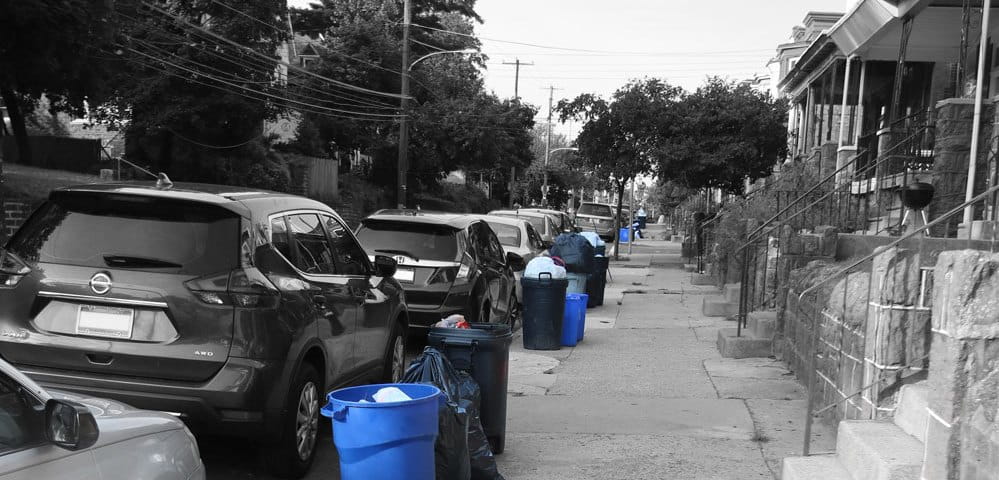
Among other cities, Philadelphia particularly has struggled specifically during the pandemic, but many would argue the seeds for the struggle were in place well before 2020. I have watched as my recycling and trash are hauled away in a single truck. The response from the city is that they do this to “reduce health risks and buildup of litter associated with uncollected material.” But social media groups and anecdotal evidence indicate that waste and recycling being hauled together happens frequently and in almost every neighborhood, including outside the city limits.
What can you do if your curbside recycling is not working? First off, put pressure on your elected officials to make it work as much as possible, or at least work better. Nothing is going to change until those in charge feel the pressure to improve the broken system.
The second thing to do is take matters into your own hands. The city’s Sanitation Convenience Centers accept recycling (and have blue bins available for pickup), in addition to accepting oversized items. While far from ideal, taking matters into your own hands might be one of the best ways to know that your recyclable materials are going to be, in fact, recycled.
Work on Reducing
Several of the topics covered by our Small Actions Spark Big Changes campaign in 2020 can help you understand how to reduce how much you put out for both trash and recycling. In December, we looked at reducing and reusing STUFF, in November we talked about the benefits of composting, and in July, we discussed the specific reduction in plastic use. Plastic recycling remains problematic, with many plastics only being able to be recycled once or maybe not at all. Aluminum and glass can almost be recycled infinitely when done correctly, and the market for recycled paper products continues to grow.
Recycling at Home Best Practices
One of the main reasons that much of Philadelphia’s and the United States’ recycling is so expensive to sell is that it is deeply contaminated. You can help address this problem by knowing what you can recycle and how best to clean your recycling.
How clean should it be?
What does it mean to have clean recycling? Your can of tomatoes, jar of jam or bottle of milk need to be rinsed of visible residue before you put them into the curbside recycle bin. Cardboard boxes (flattened, with stickers and labels included) are almost always ok, unless debris and grease have soaked into the fibers. Pizza boxes, for example, are often greasy, but if the top of the box is clean you can tear it off and recycle it curbside, discarding only the soiled portions.
You can recycle glass bottles, but do not include broken glass, window glass, light bulbs (recyclable at some home improvement stores) and porcelain in your curbside recycling. Don’t even consider adding in napkins, paper towels, used paper plates, waxed coffee cups, tissues or straws — they are as off limits as the Styrofoam containers and packing peanuts that often come in shipped materials. Plastic bags, including those air-filled packs that often come in shipping boxes, cannot be recycled curbside, but many grocery stores accept them along with regular grocery store plastic bags if they are clean and dry.
What bin should you use?
The city of Philadelphia provides bins for residents. They are available for pick up at Sanitation Convenience Centers throughout the city. Click here for more details and for specific locations.
You can use any sturdy container of 32 gallons or less that is clearly marked “recycling”.
You cannot put recycling out in a plastic bag (even the blue recycling bags. The bags get stuck in the machinery at recycling facilities and clog them).
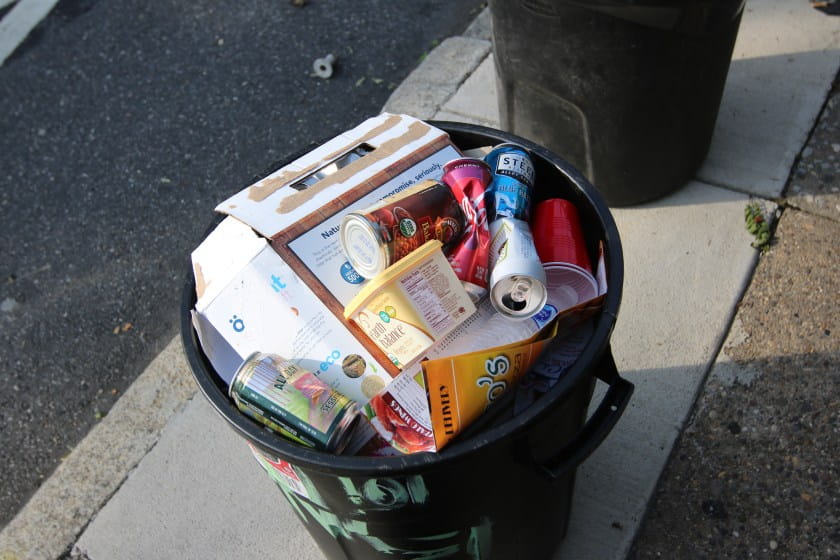
What can you recycle curbside?
- Glass jars and bottles
- Paper (non-metallic)
- Newspaper
- Cartons (milk, juice, broth, wine)
- Flattened cardboard (try to keep it dry!)
- Books and magazines
- Egg cartons (cardboard cartons, Styrofoam should be put in the trash)
- Plastic containers (rinsed, lids and caps ok)
- Aluminum cans
- Metal tins
- Steel cans and lids
- Empty paint cans
- Empty aerosol cans
What can’t you recycle curbside?
- Plastic bags
- Disposable takeout containers made from Styrofoam or paper
- Greasy pizza boxes
- Styrofoam
- Disposable plates, coffee cups
- Compostable plastics
- Pet food bags
- Chip bags
- Diapers
- Aluminum foil
- Light bulbs
- Propane tanks
- Garden hoses
- Cassette tapes
- Tissues, paper towels and napkins
What can you recycle by taking to a special facility?
- Plastic bags
- Chip bags
- Batteries
- Drink pouches
- Shoes
- Candy bar wrappers
- Corks
- Brita filters
- Electronics (computers, radios, etc.)
- Paint
- Light bulb
How can you reduce the amount of recycling or waste you create?
Reduce: You know the phrase reduce, reuse, recycle. It’s especially important to remember the first part of it. In a world where almost any item is available to be delivered right to your home or office via the click of a button, being aware of the environmental impact of having that item shipped to you is of utmost importance. If you suspect something will come in unrecyclable plastic or with excess packing material, consider if you really need that item or if you can purchase it in a more sustainable way.
Reuse used goods: When you need to purchase an item or you find yourself with more than you need, Philadelphia is full of consignment shops, thrift stores, used clothing boutiques, children’s sales and home goods and electronics resale shops that both accept used goods and offer gently used items at a fraction of the price of purchasing new. Facebook Marketplace, Craigslist and several apps and websites also provide places to buy and sell everything from leftover birthday party swag to shoes and baby gear. You can donate bedding, car seats, prom dresses and even used textiles (including very worn clothes) at a number of locations, listed on Green Philly’s website.
Buy Bulk: Many supermarkets (including Philadelphia branches of Mom’s Organic, Whole Foods, Wegman’s and Weaver’s Way) allow you to buy items such as laundry detergent, rice, pasta, spices, nuts, beans and more in bulk with your own container. Make sure to note the weight of your container and subtract it from the full weight of your purchase.
Yard Waste and Composting
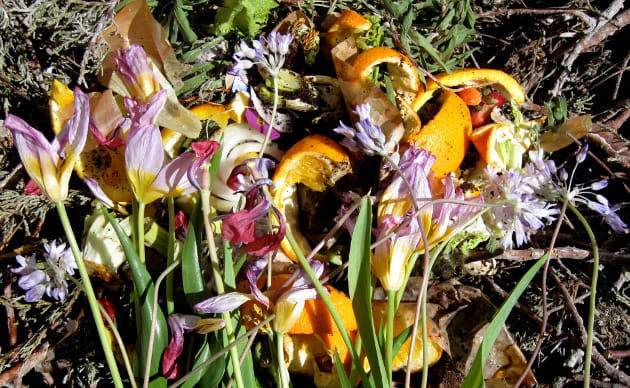
compost pile
Yard Waste: Many municipalities, including the city of Philadelphia, have special pickups during the year (particularly in the fall) for yard waste. Instead of throwing your yard waste in the trash, it can be collected separately and used to create compost and mulch. Philadelphia’s sanitation centers accept Christmas trees, and many neighborhoods have private events that allow residents to bring their trees for nominal fees for reuse as compost or wood chips.
Composting: Food scraps and yard waste are close to 30% of what we throw away (epa.gov). When thrown into an oxygen-deprived landfill, the very same items break down slowly and produce methane, contributing directly to global warming. Composting enables you to turn your organic waste — items such as fruit peels, food scraps, coffee grounds, leaves and more — into a resource that can help nourish your soil and spruce up your yard. You can compost at home or with the help of compost collection services in certain communities and markets, such as Mom’s Organic in Center City.
Recycling in the Philly Suburbs
Recycling requirements differ from county to county, and your municipality may have specific guidelines for your curbside trash and recycling. You can find out more about
your municipal requirements online or by calling your local administration building. You may also have access to county-wide recycling events for hazardous waste, electronics, shredded paper or other items that do not comply with municipal guidelines. Here are some links to county-specific resources to help you and your family start a conversation about recycling:


