Composting: A Guide
Journal
Written on: October 30, 2020
It’s garbage day, and you’re dragging a heavy bag outside to the curb. You’ve just cleaned out your fridge, and despite your best intentions, your blueberries got moldy, your spinach grew slimy and your celery is gummy and yellow.
Feeling the burden of that waste is making you think, though. Is it ok to have this much trash? Is the landfill the best place to send your food waste? And could you dispose of old food (or certain other organic waste) in ways that are beneficial to the environment?
Credit: Mary Alice Hartsock
It turns out that the fall season is a great time to answer these questions. Starting with collecting the leaves that are falling around you, there’s something you can do to make a difference.
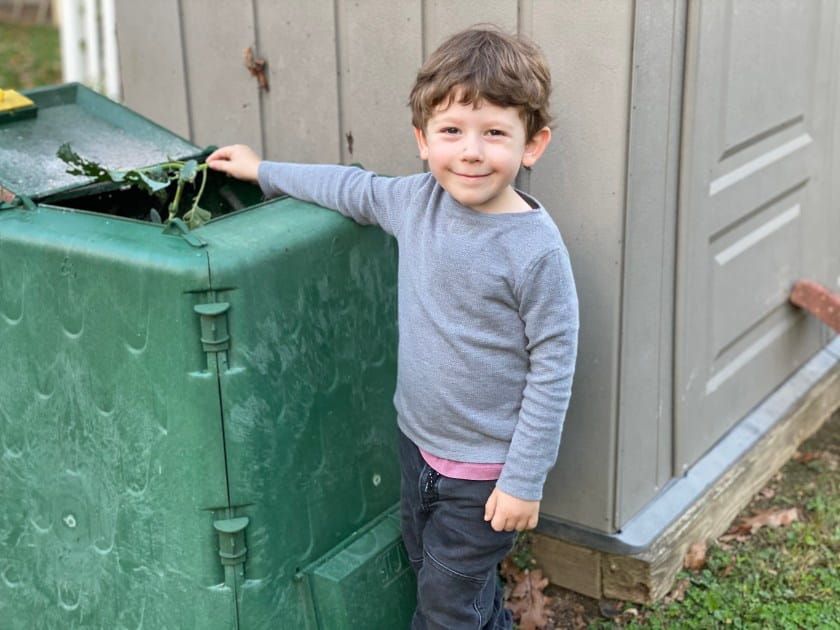
Composting enables you to turn organic waste — items such as leaves, fruit peels, food scraps, coffee grounds and more — into a resource that can help nourish your soil and spruce up your yard. When thrown into an oxygen-deprived landfill, the very same items break down slowly and produce methane, contributing directly to global warming.
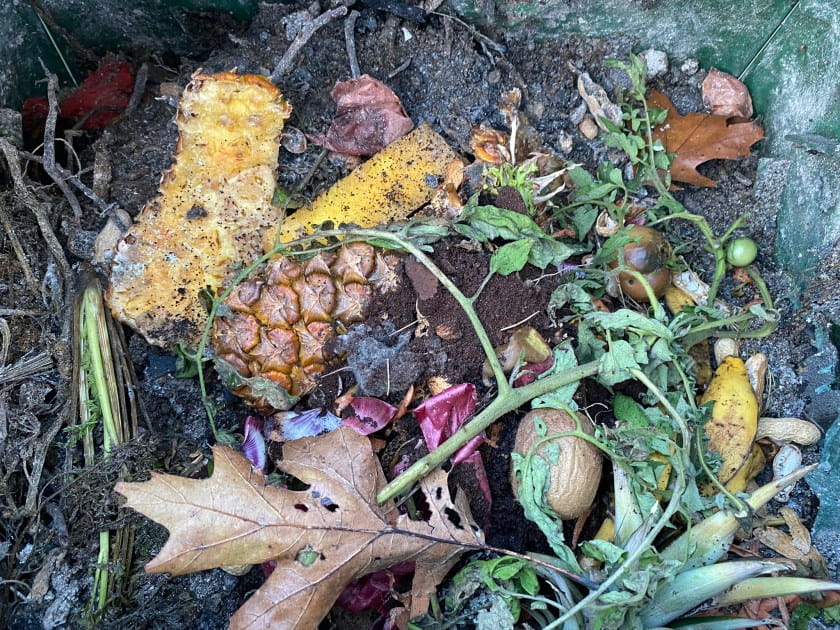
Composting requires aeration, which supplies oxygen for the decomposition process. As it decomposes, your waste heats up, breaks down, and develops beneficial bacteria and fungi, excellent byproducts for growing healthy plants.
Credit: Mary Alice Hartsock
Compost is great for your garden because it helps improve the structure of the soil so that it can better retain water. It also contains nutrients, so it supports plant health when mixed with garden soil, added to potted flowers or incorporated into raised beds.
Here‘s how to get started if you have space to compost outdoors:
- Start this fall by gathering your dried leaves—these, along with newspapers, wood scraps, paper waste, dead flowers and other organic matter are considered “browns.”
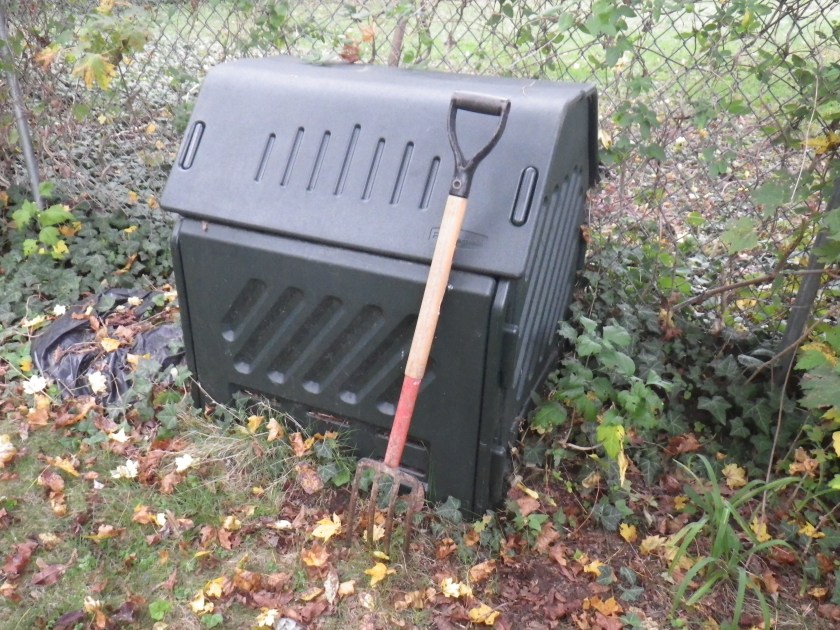
- On about 9 square feet of land, surround a heap of organic, compostable materials with inexpensive fencing to keep out uninvited animal guests, or place your items into a garbage can that is drilled with holes. You can also use a ready-made compost bin.
- Alternate layers of browns with layers of “greens,” which include your vegetable debris, grass clippings, weeds, egg shells, coffee grounds and tea bags.
- Always keep a layer of browns on top of the pile.
- Periodically add oxygen by using a shovel or pitchfork to turn and aerate the pile, rotating items from the center to the outside of the pile. This will help the waste break down. Keeping pieces small will speed up the process. Avoid adding meat and dairy products to home compost piles, as these can decompose slowly and attract animals.
Credit: Paul Callomon, Malacology Collection Manager
If you don’t have space to compost outdoors, you can try taking part in community or city composting programs, cut down on trash and even support local business at the same time.
Here are some tips for composting when you don’t have outdoor space to spare:
- Your township or county may have a drop-off location that accepts compostable items you’ve collected inside your home.
- For shared spaces such as offices or apartment complexes, consider working with management to gather information on composting, pricing and logistics.
- Search for a community garden or school garden that accepts donations to its compost pile.
- Team up with neighbors or set up a curbside compost service on your own.
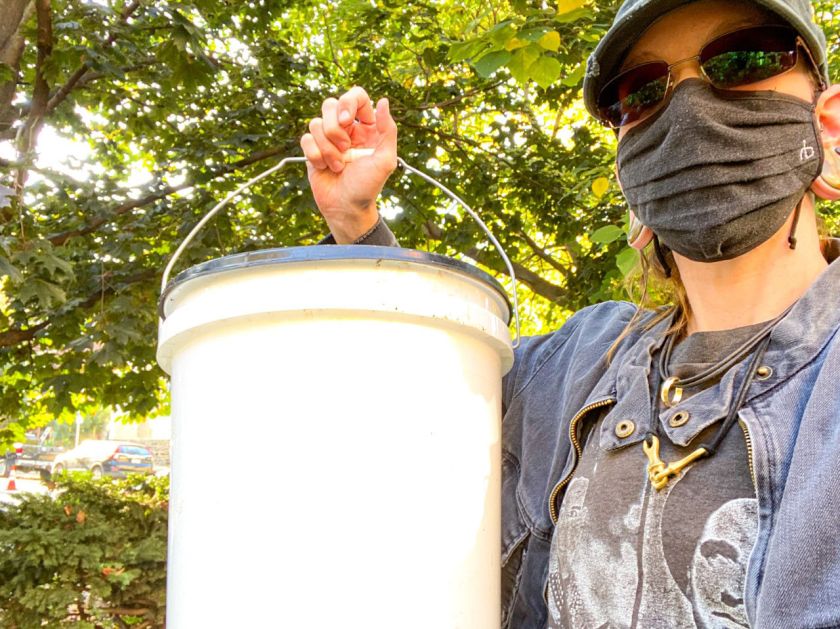
Credit: Lauren Duguid, Exhibit Designer
By taking just a minute each day to compile organic waste, you can reduce your contribution to the landfill, put your kitchen and yard waste to good use, enrich your soil and benefit the environment at the same time. It’s also a fun family activity and a great way to teach your students or the young people in your life about practical ways to support our planet.
Learn more about composting, hear composting success stories, find resources and more on our website.
By Mary Alice Hartsock


