May’s Migrants
Journal
Written on: May 5, 2020
As sure as April showers will bring May flowers to our area, April skies will bring May migrants. In today’s uncertain times, these simple, undeniable facts can bring a welcome respite to open eyes. As bird migration really hits its stride in the next few weeks, it will be the open eyes crammed into a pair of binoculars getting the best looks, as our most colorful visitors are among the smallest.
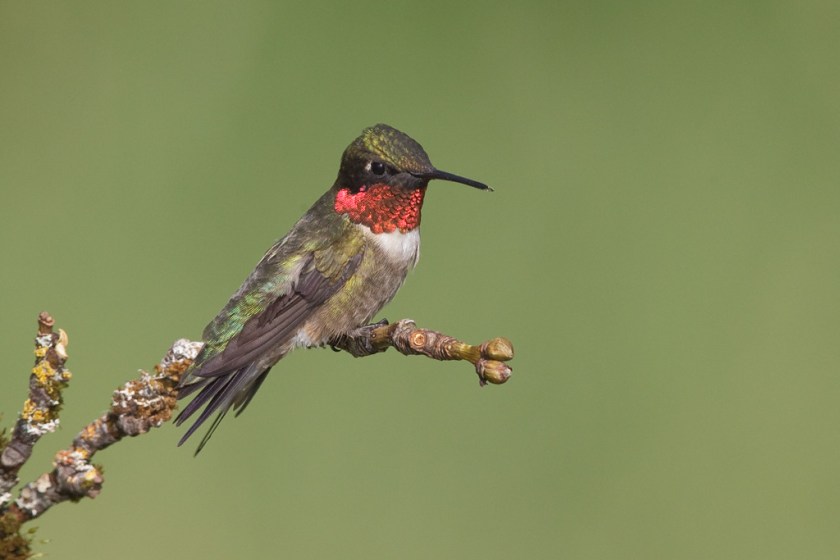
Adult male Ruby-throated Hummingbird (Archilochus colubris) <br>© Brian E. Small/VIREO
None are smaller than the Ruby-throated Hummingbird, the only hummer we see regularly on the East Coast. It often surprises people to learn how omnipresent these birds can be in our area during the breeding season, once they learn how to spot them. If you have never seen one before, think large, fast bug, like a cicada on fire. Since nectar can make up 80% or more of the bird’s diet, nectar-rich, tubular flowers are great spots to stake out over the summer. This time of year, when nectar sources are less prevalent, hummers can often be found hunting insects from the treetops, accounting for the bulk remainder of their diet.
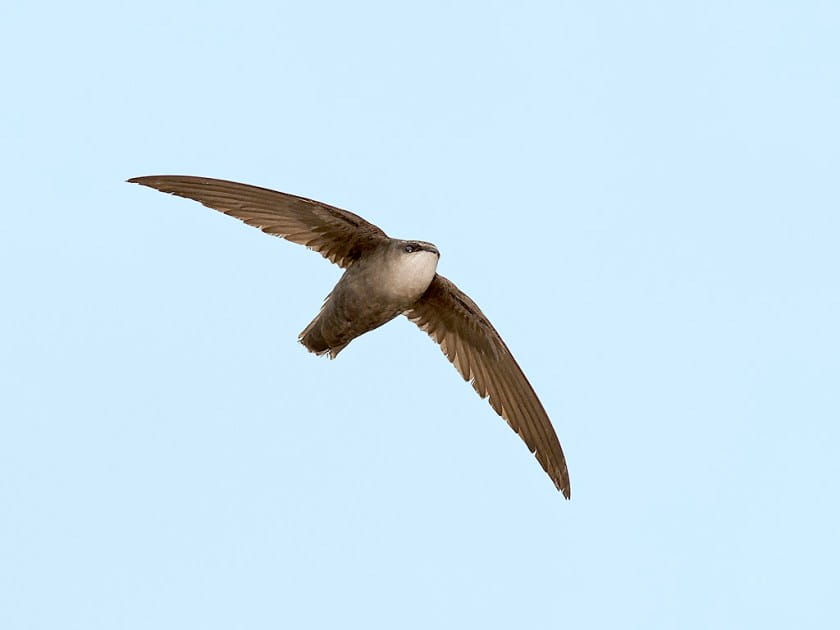
Chimney Swift (Chaetura pelagica) in flight. © Rob Curtis/VIREO
Returning now over Center City is what some might find a surprising relative to hummingbirds: the Chimney Swift. While almost every single species of the roughly 350 species of hummingbirds sports some shimmering, iridescent plumage, Chimney Swifts look rather dull, drab and well, sooty. Their lifestyle is no less remarkable though, as they literally live on the wing. They have to – they simply cannot perch due to their short legs and pamprodactyl feet, meaning all four toes are facing front. This adaptation is perfect for clinging to vertical surfaces where they roost and nest though, like the interior of a hollow tree or, you guessed it -chimneys! Sadly though, Chimney Swift populations have been in steep decline, in correlation with the disappearance of the once common open chimneys in our cities and suburbs.
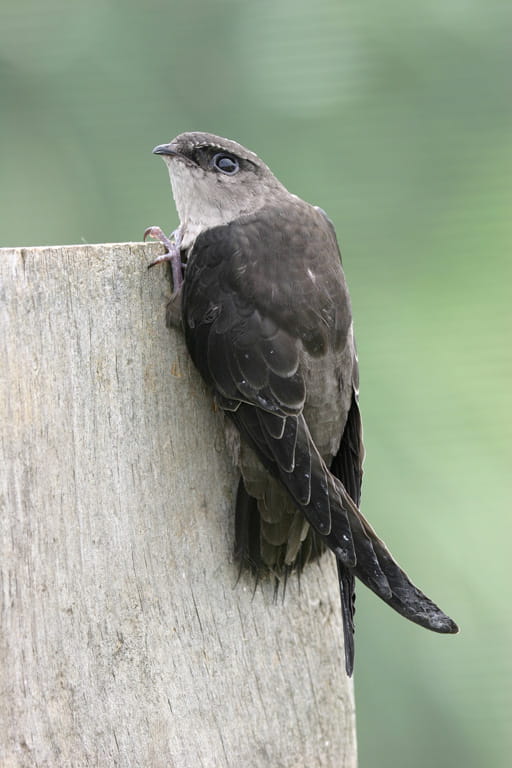
A rare glimpse of a Chimney Swift (Chaetura pelagica) perched on a fence post. <br>© George Armistead/VIREO
The first wave of wood warblers began moving in and through the region in the last few weeks of April. Yellow-rumped Warblers dominate the trees, if a diminutive warbler can do such a thing. Due to their numbers, they will be the easiest warbler to spot for the uninitiated. As with most warblers, listen for a short, quick somewhat delicate song and look for a small, fast-moving object, mostly in the upper two thirds of the trees. As implied, a bright lemon-yellow patch on the posterior might be the first distinction you see. Males will be more distinctively marked then their counterparts, but these “butter butts” are probably middle of the road as far as adorned warblers go.
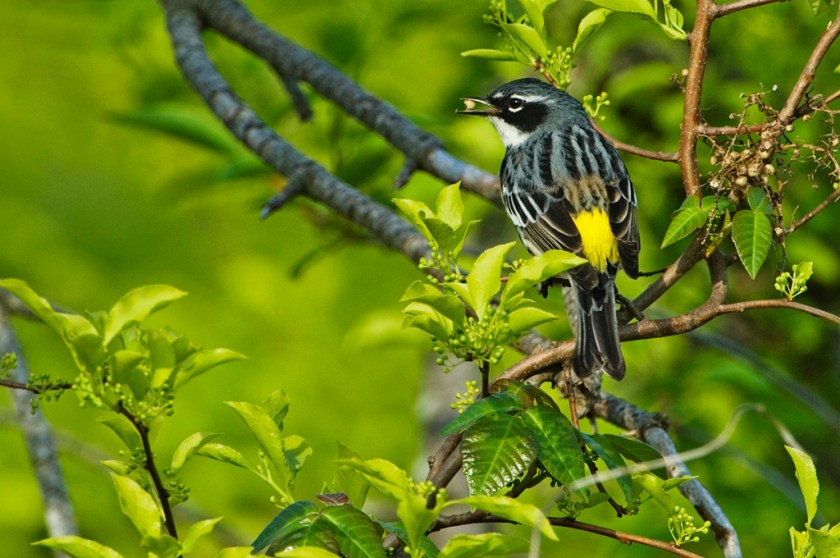
Yellow-rumped Warbler (Setophaga coronata) dining on poison ivy berries during migration. <br>© Johan Schumacher/VIREO
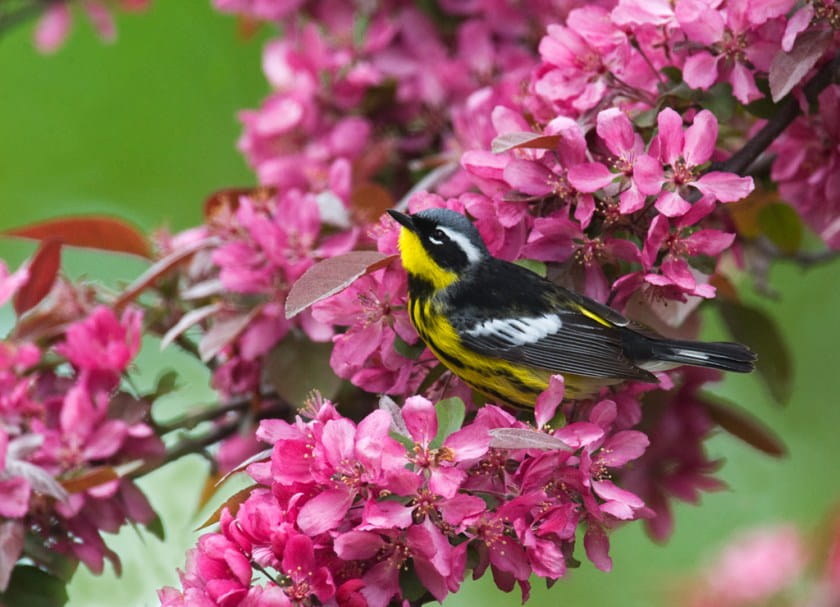
Magnolia Warblers are showing up now too and looking a bit more bold, with a lot more yellow below. Yellow Warblers have more yellow still and are present also, along with the yellow color scheme you may have noticed by now. In contrast, Black-and-white Warblers feature no yellow feathers or any color other than their name implies, but are striking nonetheless. They are another good entry-level warbler that’s not too small, high in the canopy or elusive to find. Look for them clinging to the sides of tree trunks and branches as they wind or hitch their way around trunks and limbs seemingly immune to gravity.
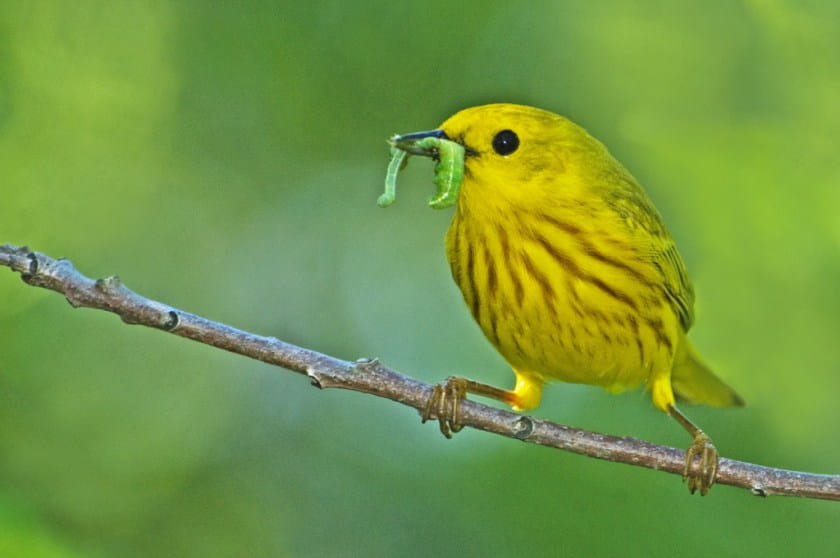
Adult male Yellow Warbler (<em>Setophaga petechia</em>) from Jamaica Bay, NY<em>.</em> <br>© Johan Schumacher/VIREO
Adult male Magnolia Warbler (Setophaga magnolia) in Chicago, IL. <br>© Rob Curtis/VIREO
This week and next will bring some truly eye-opening bird biodiversity to our area, and quite arguably the best birding of the year. It looks like it will be paired with some of the nicest weather we’ve seen yet this year, so there is no time like now to take in your next Zoom meeting on the deck with your binoculars.
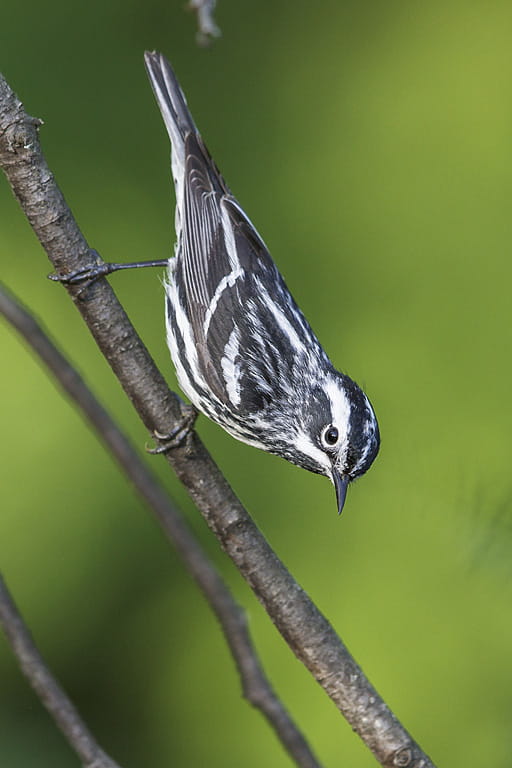
Adult male Black-and-White Warbler (Mniotilta varia) from Ontario, Canada. <br>© Glenn Bartley/VIREO
VIREO (Visual Resources for Ornithology) is the foremost global collection of bird photographs taxonomically curated at the Academy of Natural Sciences of Drexel University. As both a contributor to and user of, VIREO recommends Audubon Guide Apps, the Stokes Guide to Birds of North America and the Fieldstone Guide to Birds of North America, all of which feature thousands of photos from the VIREO Collection.
by Dan Thomas
VIREO Collection & Intellectual Property Manager


