Is COVID-19 Affecting Our Water?
Journal
Written on: May 18, 2020
The COVID-19 pandemic has resulted in many lifestyle changes around the globe, namely — people are staying at home.
The onset of this extreme, sudden and nearly universal social isolation has prompted our Biogeochemistry Section scientists to ponder what kinds of changes in water quality they might see due to COVID-19.
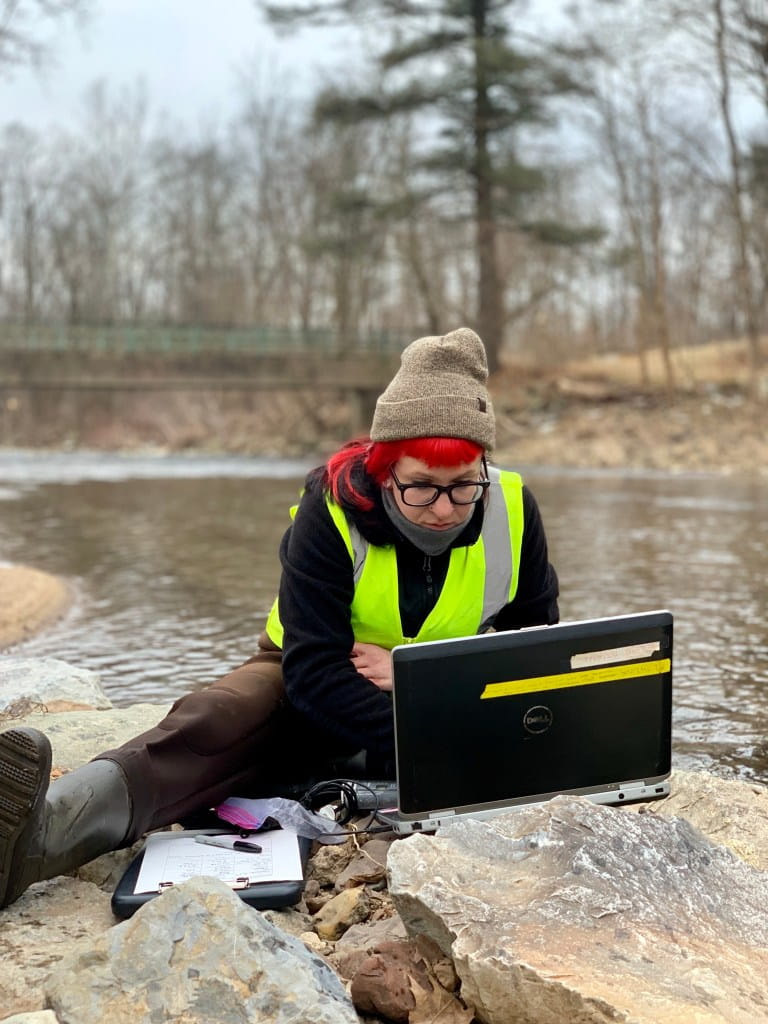
Co-author Staff Scientist Tracey Curran streamside pre-pandemic
With the large-scale shift to people working at home and sheltering in place, there will likely be an increase in suburban wastewater effluent. Effluent is an outflowing of water or gas to a natural body of water, from a structure such as a wastewater treatment plant, sewer pipe or industrial outfall.
Will this cause changes in water quality that we will be able to detect over time, as social distancing measures continue to be in effect?
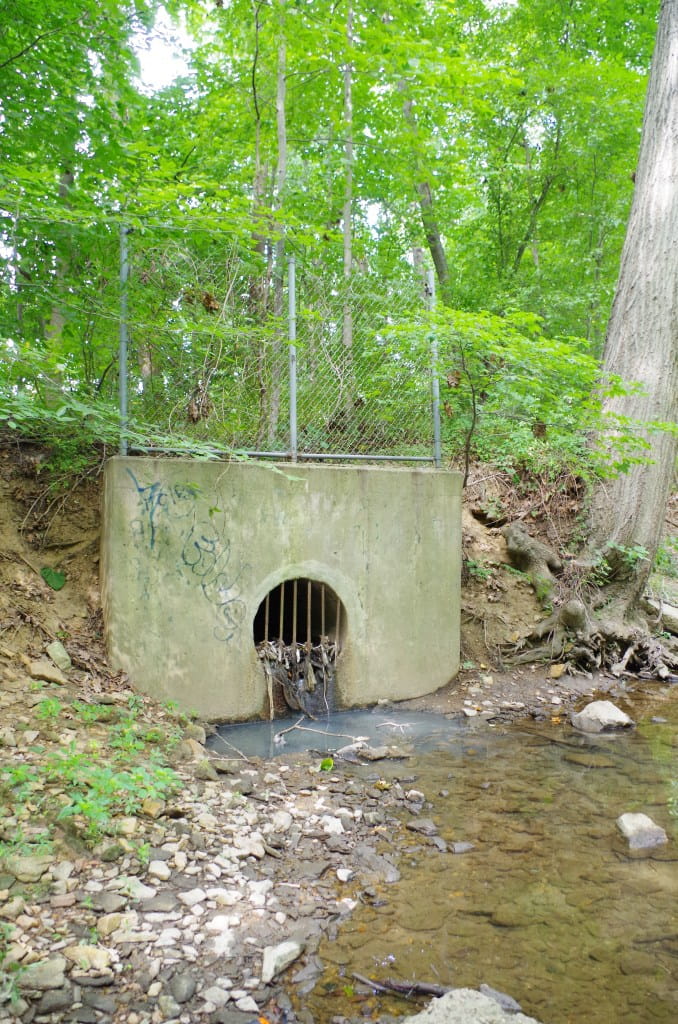
Have you seen this sewer pipe at Poquessing Creek, Philly?
Since they can’t go out to collect physical samples from streams because of the stay-at-home orders, our scientists will rely on gathering data from the U.S. Geological Survey and other sources that use various real-time sensors deployed in streams. Data from these sources can be accessed online.
To infer any impacts from wastewater effluent, they will look for data from sensors that capture nitrates and conductivity, for example.
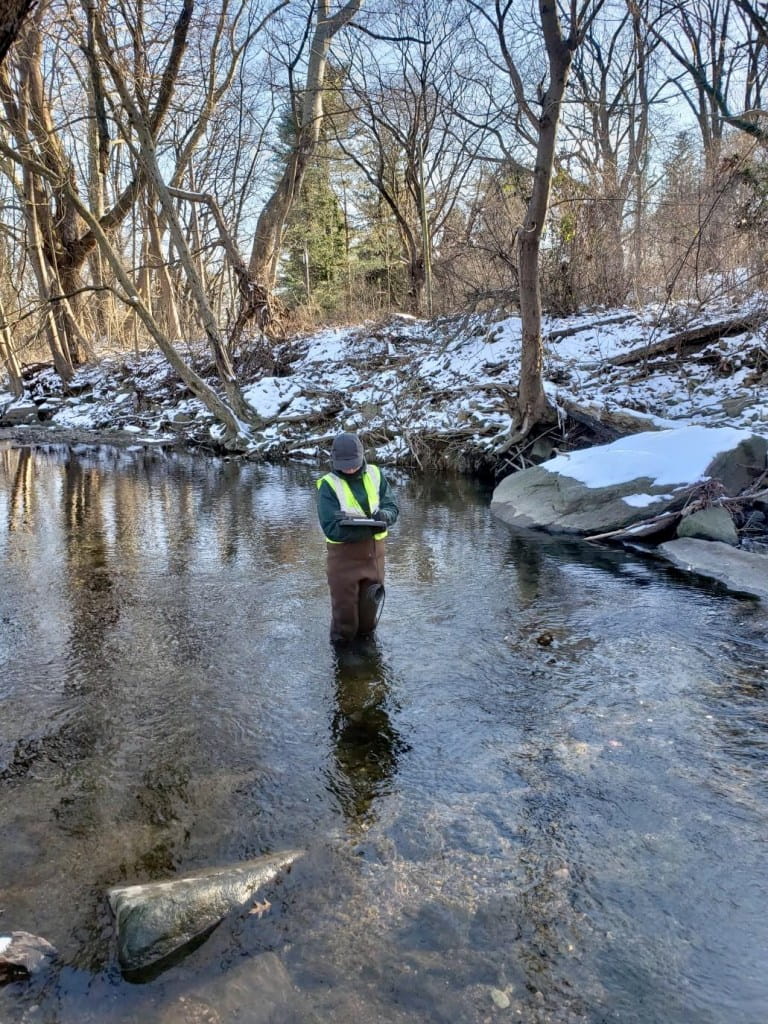
Biogeoscientist Melissa Bross takes a YSI reading in Cobbs Creek, Philly, pre-pandemic.
The scientists are especially interested in streams that are impacted by CSOs — combined sewer overflow systems that are designed to discharge excess wastewater into waterways when runoff from rainstorms maxes out the capacity of the sewer systems. They will focuse their attention on streams in suburban Philadelphia including the Wissahickon, Cobbs, Tacony, Frankford, Pennypack and Poquessing creeks, and the Schuylkill River.
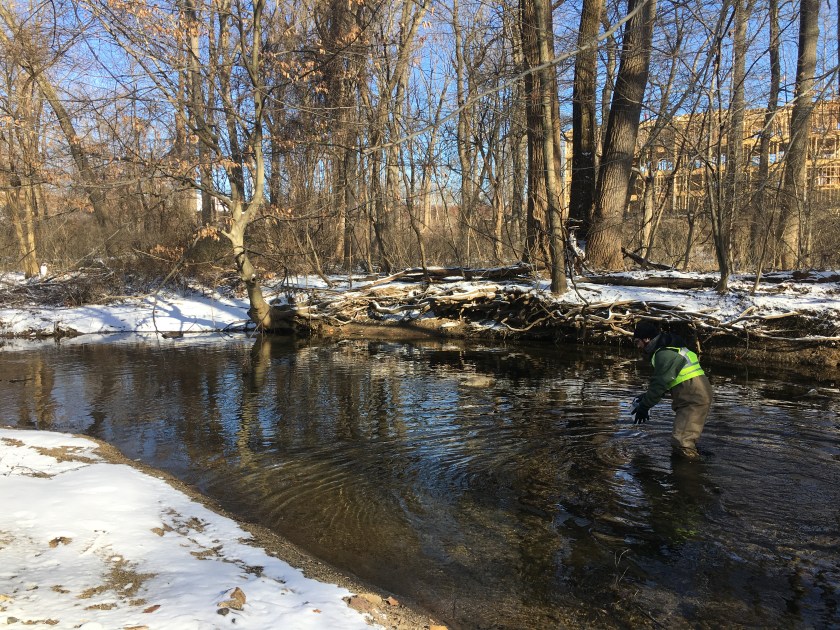
Sampling water in Poquessing Creek, Philly, pre-pandemic
This is a developing hypothesis. When studying natural systems, it can be hard to predict if or when trends in the data will be detected. So stay tuned for further updates. We’ll let you know what we found!
BY Tracey Curran, Staff Scientist, and Kathryn Christopher, Manager of Science Communication and Outreach
We need your support now more than ever. If you believe that science matters, please consider a donation to support the Academy’s efforts to ensure a healthy, sustainable and equitable planet.

Give Now: button


