They’re Baaaack!
Journal
Written on: June 17, 2020
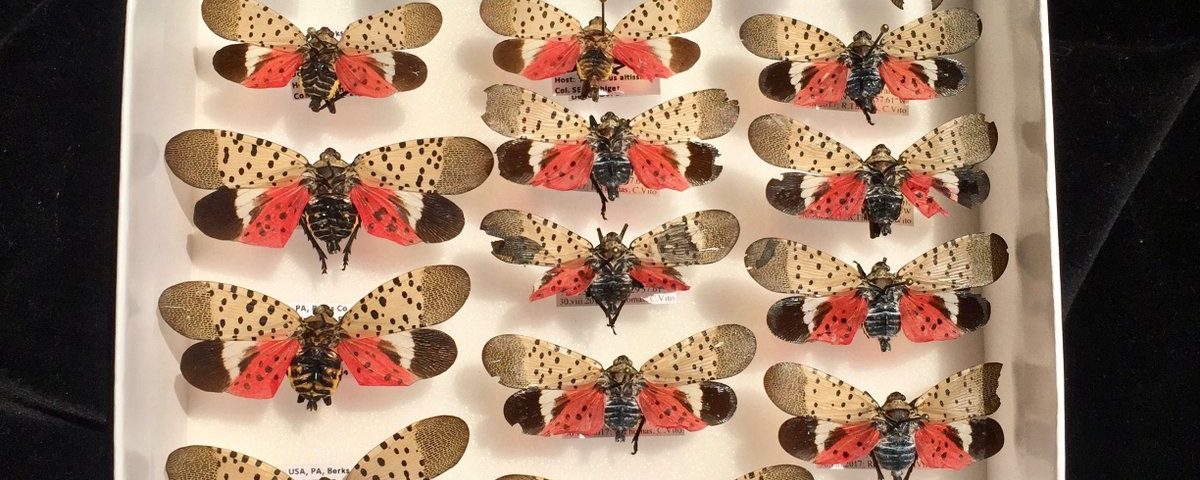
Pennsylvania’s first spotted lanternfly hatch of 2020 was found in West Philadelphia on April 20 by an employee of the U.S. Department of Agriculture. This was not a cause for celebration.
With COVID-19 already invisibly ravaging the human population, the last thing we all need is a plague of insects laying siege to our crops and trees. But the non-native spotted lanternfly is here to stay for the foreseeable future.
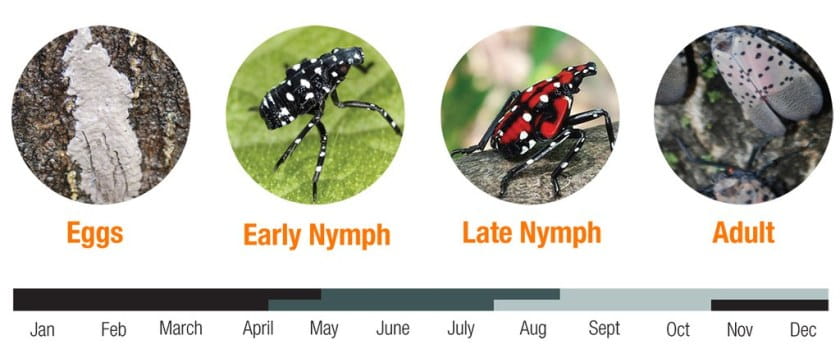
Spotted Lanternfly Life Cycle <br>image via Penn State College of Agricultural Sciences
The colorful invasive species is native to China, Vietnam and Bangladesh and was first discovered in Pennsylvania in 2014 in Berks County. Now the species has spread to 26 counties, mostly in the southeastern portion of the state.
We asked Academy Animal Programs Developer Karen Verderame what we can expect to see regarding the pesky plant hopper between now and the fall and what we can do about it.
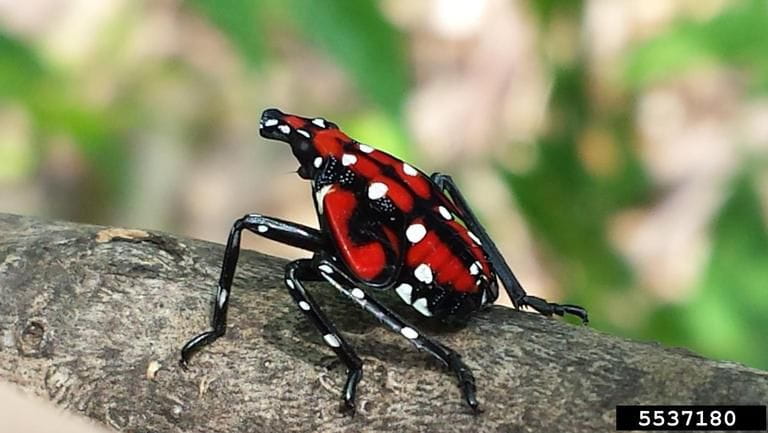
spotted lanternfly nymph
What’s the situation out there now?
Spotted laternflies started hatching in mid- to late April and into May. People will have started seeing little nymphs that are black with white spots in May. As the nymphs grow in May, June and July, they become black with red spots. August into September is when we’ll see them flying as adults with wings.
Will summer heat and humidity kill them off?
The heat and humidity will not kill them off. In fact, they thrive in those conditions.
What should we do if we see them?
If you see any spotted lanterfly egg masses (like hard muddy blotches) you should scrape them off the tree. If you see nymphs or adults you should dispose of them. The nymphs don’t have wings, but they are excellent hoppers and can be quick.
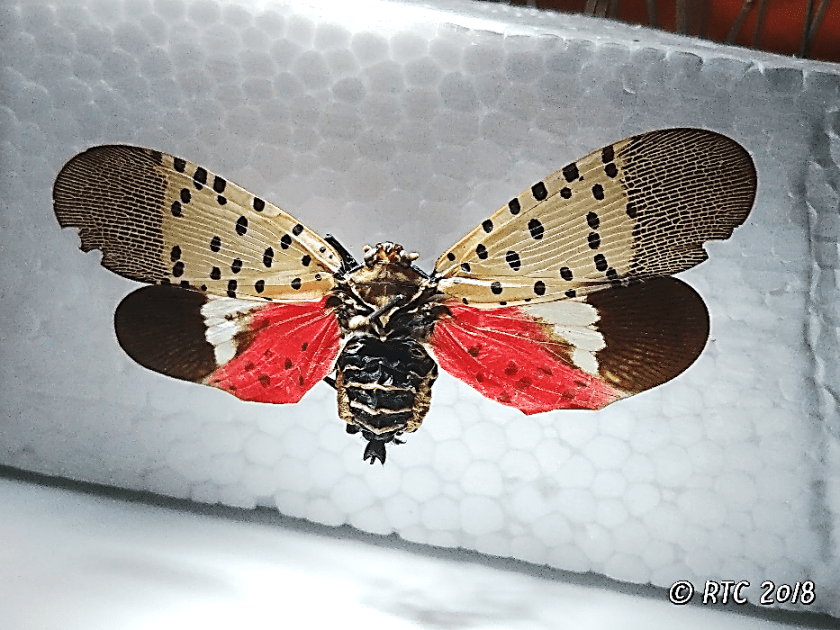
single lantenfly
Are spotted lanterflies harmful to humans?
They do not pose a harm to humans. They cannot bite or sting. However, they can cause a lot of damage to hardwood trees, vineyards and orchards, destroying crops and trees.
Are they good at all for the environment?
Spotted laternflies are not native to this area and are considered very destructive to our native trees and vines. In their native habitat in Southeast Asia, they can be a good food source for a variety of animals.
What about using pesticides or sticky tape tree wraps to kill the spotted lanternflies?
Non-pesticide traps are always recommended before introduction of pesticides. If you plan to use sticky traps, you should put chicken-wire cages around the sticky traps to help prevent birds and other native wildlife from getting stuck. You could also use circle traps. Penn State Extension has a nice how-to on their website and more helpful information about managing infestations. If the swatting and trapping isn’t enough and you feel you need to apply a pesticide, it is important to use an insecticide that’s safe and approved by the Environmental Protection Agency. It is very important to read labels and follow directions carefully for safety and to protect pollinators. There is a dish soap solution that kills the nymphs, or slows them down to be squished. However, one should use caution with homemade solutions as they can also be harmful to plants and environment.
Personal tips?
Whenever my family is walking around or on hike, we always keep our eye out for any signs of egg masses, nymphs or adults depending on the time of year. Whenever we find any, we destroy them. It is always good to check wooden fence posts, sunny basking spots and rose bushes.
To see an Academy Blog post with more details about the spotted lanternfly invasion in summer 2018, click here.
By Carolyn Belardo with Karen Verderame
We need your support now more than ever. If you believe that science matters, please consider a donation to support the Academy’s efforts to ensure a healthy, sustainable and equitable planet.

Give Now: button


