Reduce Your Household Energy Use
Journal

Written on: August 4, 2020
It’s hot and humid, and you just got back from a COVID walk-around-the-block break from your bedroom office. All you want to do is open the refrigerator door and stand in front of it.
Don’t do it! You’ll feel cooler, but letting that cold air escape wastes enough energy to power 50 loads of laundry. Plus, it costs you money and affects the environment.
Whether your motivation is to save money or to decrease your carbon footprint, making small adjustments to reduce your daily energy consumption can have a positive effect on the environment and help reduce the amount of energy consumed by your community.
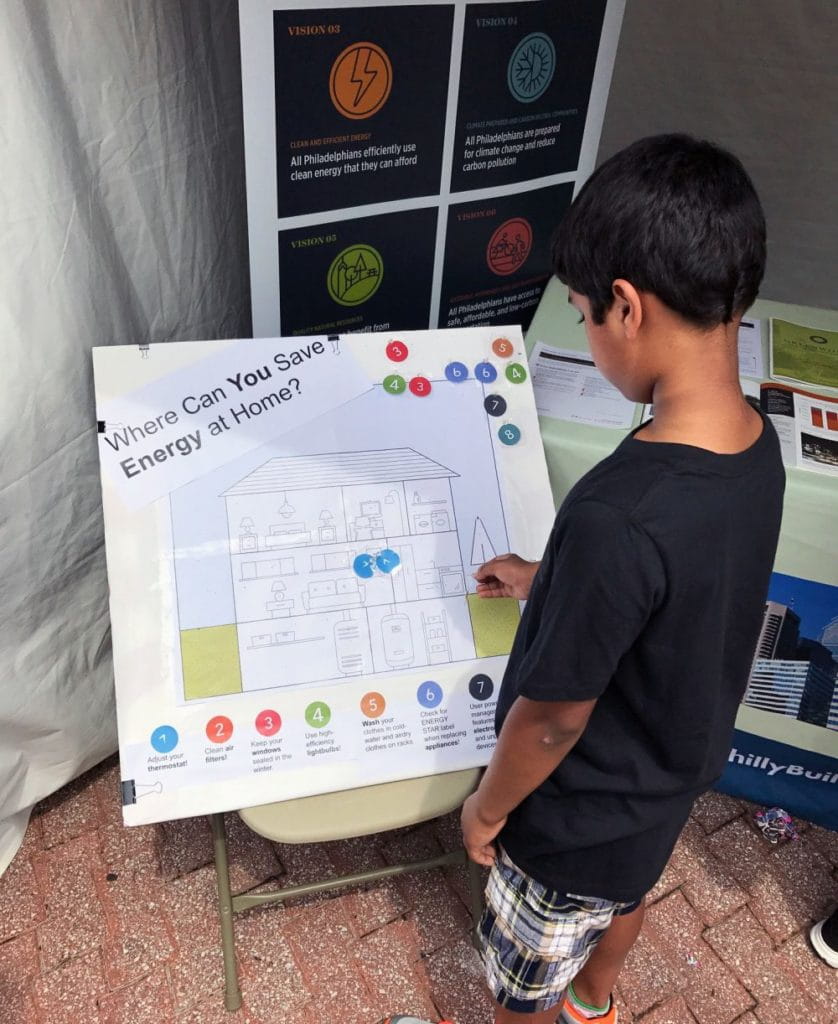
boy with chart
U.S. energy consumption is on the rise
The U.S. houses less than 5% of the world’s population, but consumes 17% of the world’s energy and accounts for 15% of the world’s gross domestic product, according to the University of Michigan Center for Sustainable Systems. In comparison, the European Union has 7% of the world’s population, uses 12% of its energy, and accounts for 16% of its GDP. China has 18.5% of the world’s population, uses 24% of its energy, and accounts for 18% of its GDP.
If projections are correct, U.S. energy consumption is expected to rise by over 7% in the next 20 years, according to The National Academies of Sciences, Engineering, Medicine. Global energy consumption is expected to rise 40%.
There’s a direct connection between energy use and the environment. When we consume less power, we reduce the amount of toxic fumes released by power plants, conserve the earth’s natural resources, and help protect ecosystems from destruction. Perhaps the most notable way that reducing energy helps the environment is by decreasing the harmful byproducts, such as carbon dioxide, from power plants that produce the electricity. Cutting back on energy consumption reduces the amount of electricity that power plants have to make.
Reducing energy use is easier than you may think. Living in smaller houses, living closer to work, and using public transportation are examples. Households can save as much as 15% a year on heating and cooling bills by simply turning the thermostat back 10-15 degrees for 8 hours a day, according to the U.S. Department of Energy.
Although your own energy saving adjustments may seem inconsequential, small steps become great leaps when multiplied by 7 billion others just like you. Try switching up some of your lifestyle habits with these easy tips. Then tell us in the comments section below or on social media what you do to reduce your energy use.
40 Ways to reduce household energy use
- Shut down your computer at night or set it to sleep when not in use.
- Choose the right light. LED bulbs are the most energy efficient. They use 75% less electricity than incandescent bulbs and last 25 times longer.
- Unplug electronics. Even when off, TVs, microwaves, scanners and printers use standby power.
- Unplug the charger. Some chargers still pull small amounts of energy when left plugged in. If it feels warm even when not charging a device, it’s using energy.
- Use a power strip. Prevent phantom energy loss by flipping the switch on a load of plugs all at once, rather than pulling plugs individually.
- Turn off lights when you leave a room, hallway light too.
- Use natural light. Do you really need that lamp on? Two 100-watt incandescent bulbs switched off an extra two hours per day could save you $15 over a year, according to BC Hydro.
- Install automatic light sensors or timed sensors on outdoor lighting.
- For landscape lighting, install solar-powered devices.
- Buy energy efficient appliances. Look for the ENERGY STAR label, which is a federal guarantee the thing will use less energy. ENERGY STAR clothes washers consume 25% less energy and 45% less water than conventional ones; refrigerators 9% less energy than the conventional.
- Hang clothes to air dry (at least sometimes) instead of using a clothes dryer.
- Use cold water in the washing machine whenever possible.
- Only wash full loads of laundry.
- Wash dishes by hand (at least sometimes) instead of using a dishwasher.
- Seal leaky windows that let in cold in winter and let out the cool in summer.
- Use timers on the holiday lights.
- Use ceiling or floor fans instead of air conditioning.
- Use a timer and sleep mode on the AC overnight.
- Adjust the AC temperature setting a degree or two higher than you normally would and pretend you didn’t. Each degree increase saves about 10% energy use.
- Clean or replace filters on furnaces and air conditioners once a month or as recommended.

LED bulbs last 25 times longer than incandescent light bulbs.
- Clean warm-air registers, baseboard heaters and radiators as needed and make sure they are not blocked by furniture, carpeting or drapes.
- In winter, keep the drapes and shades on south-facing windows open during the day to allow warming sunlight to filter in. Close them at night to keep out the cold.
- In summer, keep the window coverings closed during the day to block the sun’s heat.
- Dust lamps and lightbulbs frequently. Aging light bulbs and dust buildup can reduce total illumination by 50%.
- Close the chimney flue when not in use to keep out not only bats, but also cold air.
- Open the refrigerator or oven door only when necessary so the cold and the heat don’t escape. Your appliances will thank you for not having to work extra hard to do their job.
- Thaw frozen foods in the fridge, not on the counter. This will help keep the fridge cold.
- Thaw meats and casseroles completely before cooking to reduce cooking time.
- Wait until hot foods cool before placing them in the fridge. This will keep the fridge from having to work overtime to keep its contents cool.
- Match the size of your cooking pot to the size of the burner. Using a larger burner allows heat to escape into the room.
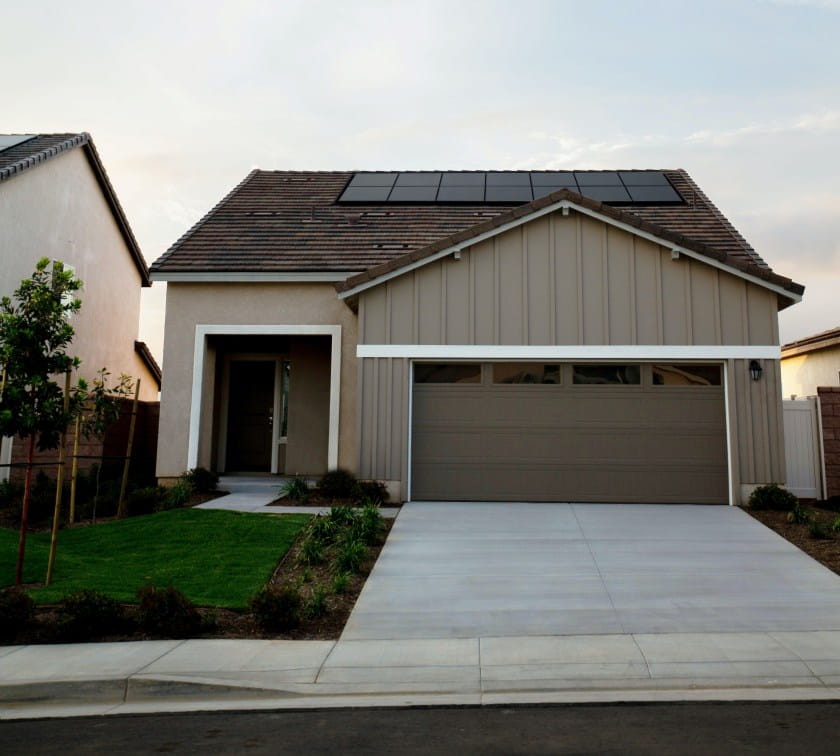
It can be difficult to calculate how much money and energy solar panels on your home would save. <a href="https://www.solarreviews.com/blog/what-is-the-average-solar-savings-for-a-residential-solar-installation-in-the-us#:~:text=How%20much%20do%20solar%20panels%20save%20the%20average%20home%3F&text=This%20means%20that%20if%20each,run%20to%20%241%2C408%20per%20year.">Here’s a guide to help you calculate.</a>
- Putting a lid on a pot allows the contents to cook or boil quicker, using less energy.
- Install a programmable or smart thermostat.
- Cook foods in larger quantities than you need that day; eat the leftovers the next day.
- Only buy the appliances you really need, not just want.
- Purchase the smallest size appliance that you need. Do you really need a toaster that browns four slices at once if you live alone?
- Consider investing in a pressure cooker. Foods cook in about one-third the time of using the oven or stovetop and you can make large quantities of soups or stews for the freezer.
- Instead of using energy to boil water for tea, put the tea bag(s) in a glass pitcher or jar and place it out in the sun to get hot. (Our staff reports the tea is less acidic than if boiled water is used.)
- Reduce paper waste and energy use by limiting what you print out at work and at home.
- Turn off the office lights and computer when you leave work for the day.
- On October 1, celebrate National Energy Action Month, also known as Energy Awareness Month and National Energy Awareness Month, by continuing to do the above small actions.
To watch a video and see how the Academy is doing its part to reduce energy, visit our Small Actions Spark Big Changes webpage.
By Carolyn Belardo, Director of Public Relations

Give Now: button
Please consider a donation to support the Academy’s efforts to ensure a healthy, sustainable and equitable planet.


