Spring Bird Migration – Find Five Colorful Birds Arriving in Philadelphia Now
Journal
Written on: May 6, 2019
By Simon Housner with photos from the VIREO Collection
Spring has finally sprung and a daunting migration is already underway for a vast number of birds!
Some species, such as the Dark-eyed Junco (slate-colored) are departing the Delaware Valley to head farther north towards Canada. Usually observed in small flocks, juncos are regular visitors to feeders during the winter.
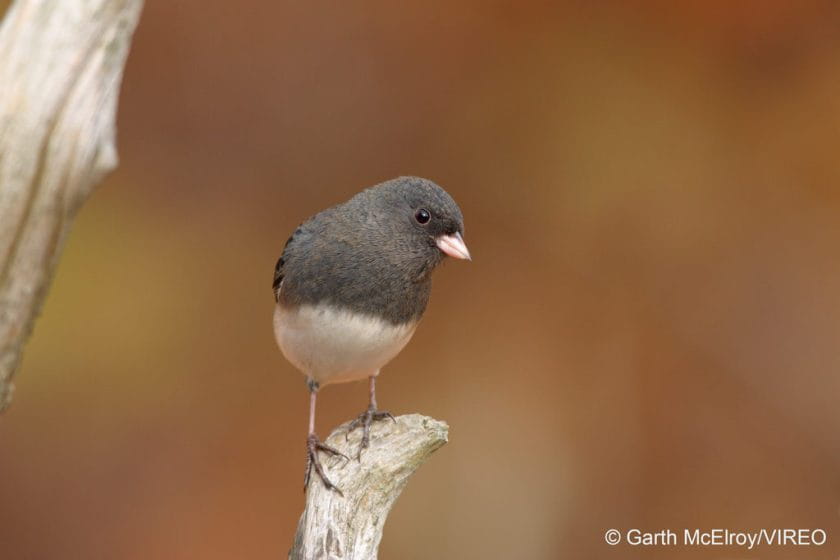
Dark-eyed Junco
Many other species of birds will be arriving in Eastern North America after enjoying a warm winter close to the equator. While spring migration rapidly approaches, here are five colorful species to look out for as they return to the Philadelphia area to breed and raise their young.
Tree Swallow
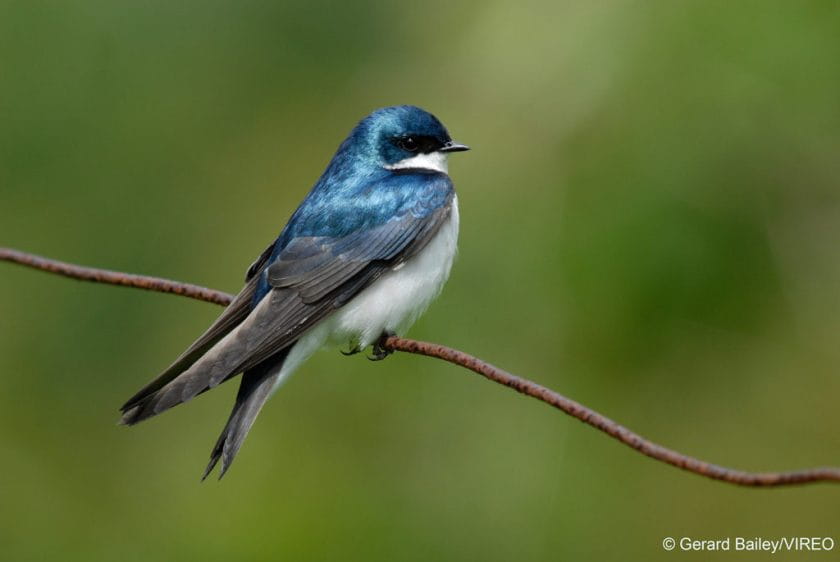
Tree swallow
Tree Swallows live in Florida, Central America, and the Gulf coastline during the winter months. Every March, they begin their migration to the Northern United States and Southern Canada. Tree Swallows readily accept nest boxes in open areas near lakes, rivers, and marshes. Consuming mainly insects and spiders, they are North America’s only swallow species that are omnivorous, supplementing their insect diet with a variety of berries.
Local hotspots: Schuykill River, John Heinz National Wildlife Refuge
Common Yellowthroat
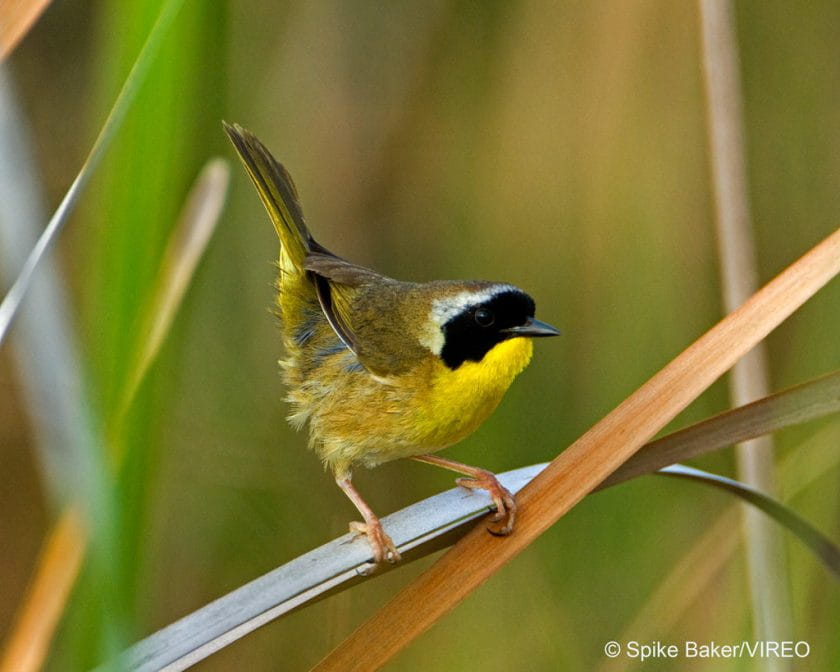
Common Yellowthroat
Common Yellowthroats are infinitesimal warblers that winter throughout Central America and the West Indies. With a distinctive appearance, males wear a bandit-like black mask and sing an unmistakable “witchety-witchety-witchety” song. This secretive warbler favors habitats near water like reedy marsh edges and brushy fields. Look for Common Yellowthroats to arrive in the Philadelphia area in late April.
Local hotspots: Bartram’s Garden, John Heinz National Wildlife Refuge, East Fairmount Park
Ruby-throated Hummingbird
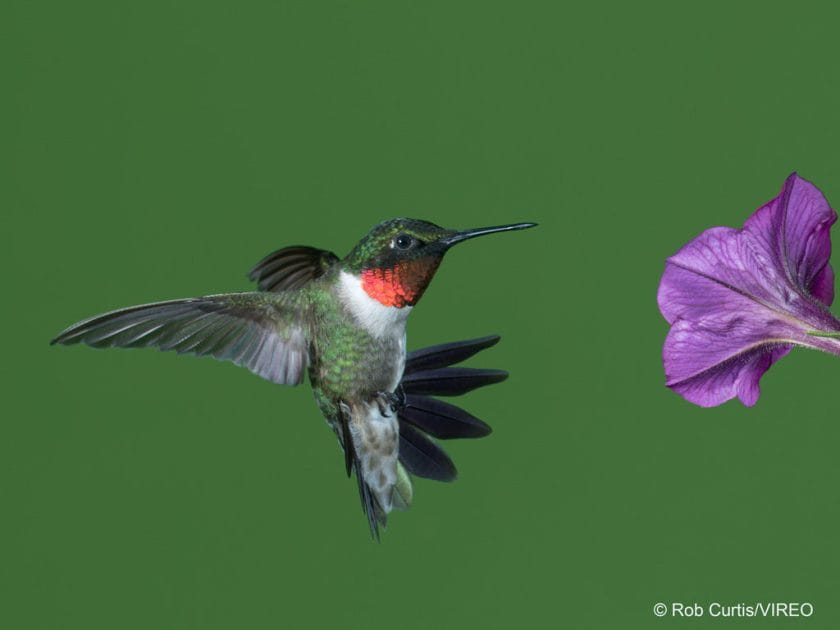
Ruby-throated Hummingbird
One of our tiniest migrants, Ruby-throated Hummingbirds are the only hummingbird species that breeds in Eastern North America. Part of their annual migration involves traveling across the Gulf of Mexico, which can be a 500 mile journey over water without a rest stop. Ruby-throated Hummingbirds arrive in late April and can be attracted to your yard with hummingbird feeders or by planting some of their favorite flowers such as Cardinal Flower, Monarda, Butterfly Bush and Honeysuckle.
Local hotspot: Bartram’s Garden
Baltimore Oriole
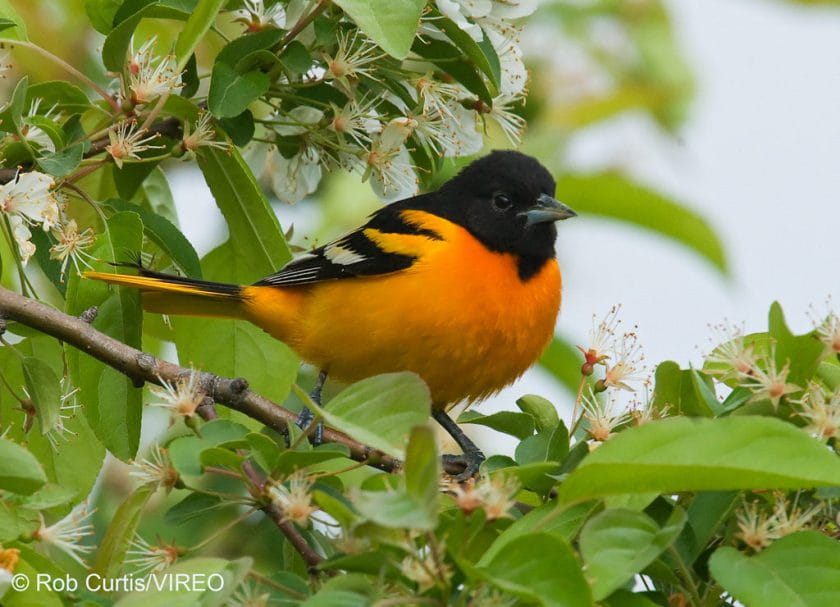
Baltimore Oriole<p> <p>
Baltimore Orioles migrate south, as far as Columbia (more than 2,000 miles!) in order to avoid snowy weather. They arrive in the Philadelphia area in late April and early May. Baltimore Orioles weave intricate hanging nests with an assortment of grass, tree bark, and other fine fibers. The common name “oriole” is derived from the Latin word “aureolus” meaning golden. Look for them high in the tops of tall trees or you can try attracting them to your yard or garden by putting out nectar feeders, orange halves, or even grape jelly.
Local hotpsot: East Fairmount Park
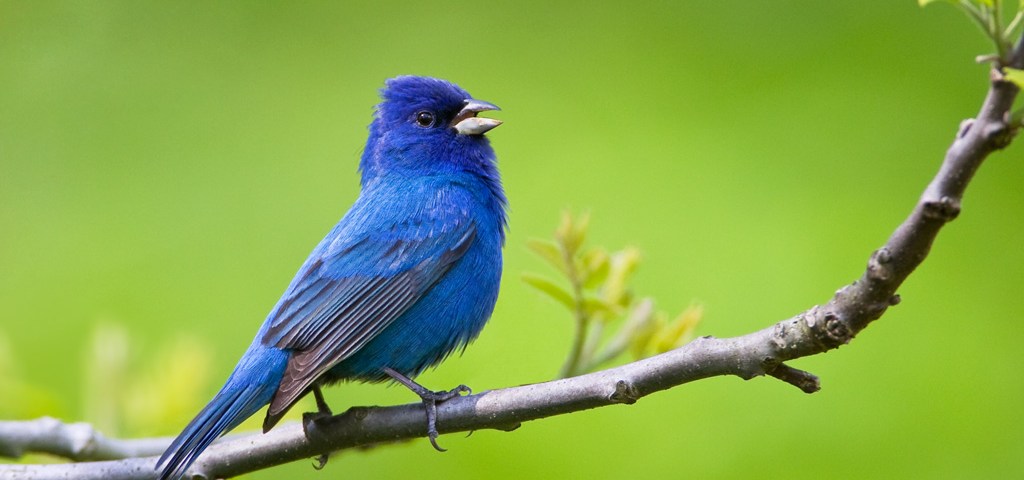
Indigo Bunting
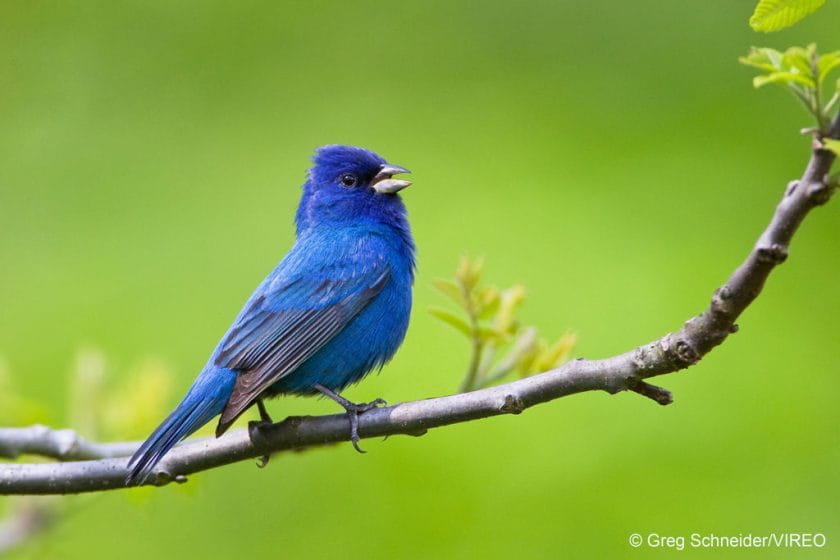
Indigo Bunting
Also returning from Central America and Northern South America, Indigo Buntings will be making an appearance in late April and early May. Their spring migration path takes them across the Gulf of Mexico where they amazingly use the stars to navigate at night. A songbird in the cardinal family, they favor open, brushy and weedy habitats with trees where insects and berries are plentiful, so look for an overgrown field next to a forest edge. Indigo Buntings relish bird feeders that serve mealworms and seeds.
Local hotspots: Bartram’s Garden, Franklin Delano Roosevelt Park


