Chrysalises Emerge
Journal
Written on: October 15, 2018
If you’ve been to the Academy’s Butterflies! exhibit, you know you can often see butterflies from around the world fluttering overhead, eating fruit or resting on tropical plants. But how do we get those butterflies into the exhibit?
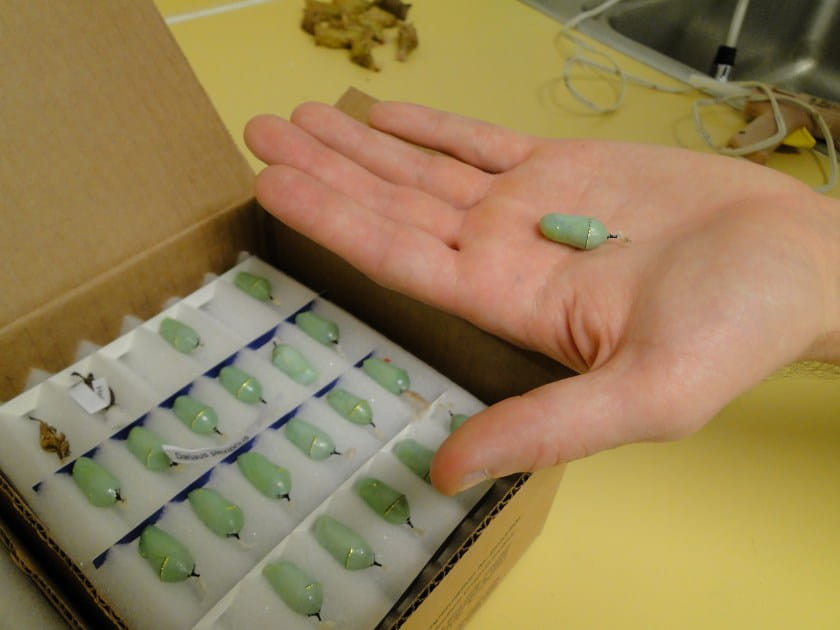
In the video below, Butterfly Exhibit Coordinator David Schloss prepares a shipment of chrysalises for placement in the Academy’s Butterflies! exhibit. He describes where the chrysalises are from, what their colors mean, why they are named as they are and so much more.
After carefully unpacking the chrysalises, inspecting them, and pinning them to the foam underside of a shelf, Schloss places them into a warm, humid, chamber. In the Academy’s Butterflies! exhibit, you can watch as butterflies emerge from the chrysalises. You may see butterflies from Central America, South America, Sub-Saharan Africa, and Southeast Asia.
The chrysalises in the photographs below traveled from a butterfly farm in Costa Rica. Unlike the many local farmers who must clear tropical forest habitats to plant their crops, Costa Rican butterfly farmers rely on native vegetation to support butterfly reproduction. Farmers gather butterfly eggs and care for them as they hatch into caterpillars. These caterpillars generally require about two weeks of feeding before they develop into chrysalises that can be placed into cardboard boxes for export.


