Camping (For Fossils) in Antarctica
Journal
Written on: November 28, 2018
Loads of dark chocolate. Reams of toilet paper. Dozens of hand warmers. Six snowmobiles and a leaf blower. Academy Curator of Paleontology Ted Daeschler is all packed for his next big camping adventure. He leaves tomorrow for a month in Antarctica.
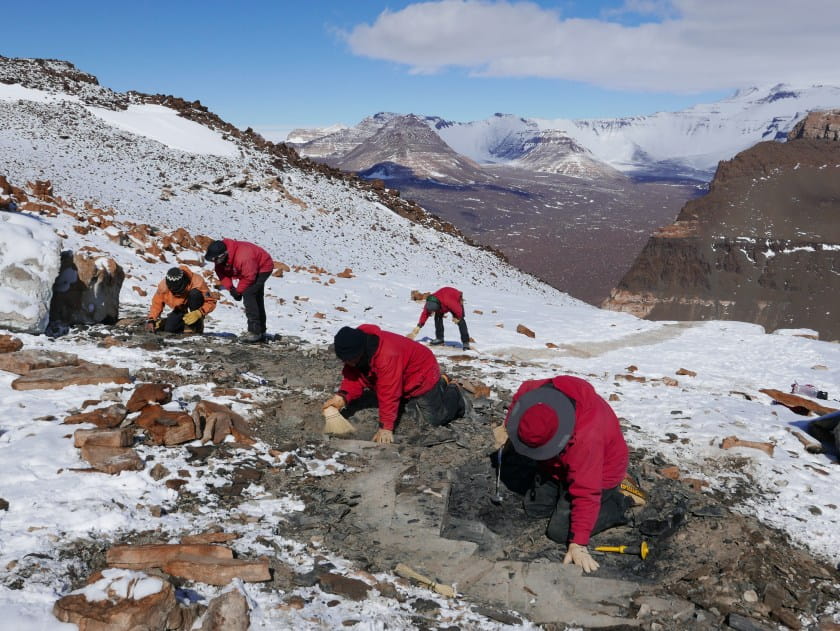
Daeschler’s first expedition to Antarctica two years ago yielded hundreds of Devonian fossils of ancient predator fish. This is a scene from Beacon Valley, Antarctica. The team will be in a different location on this second trip.
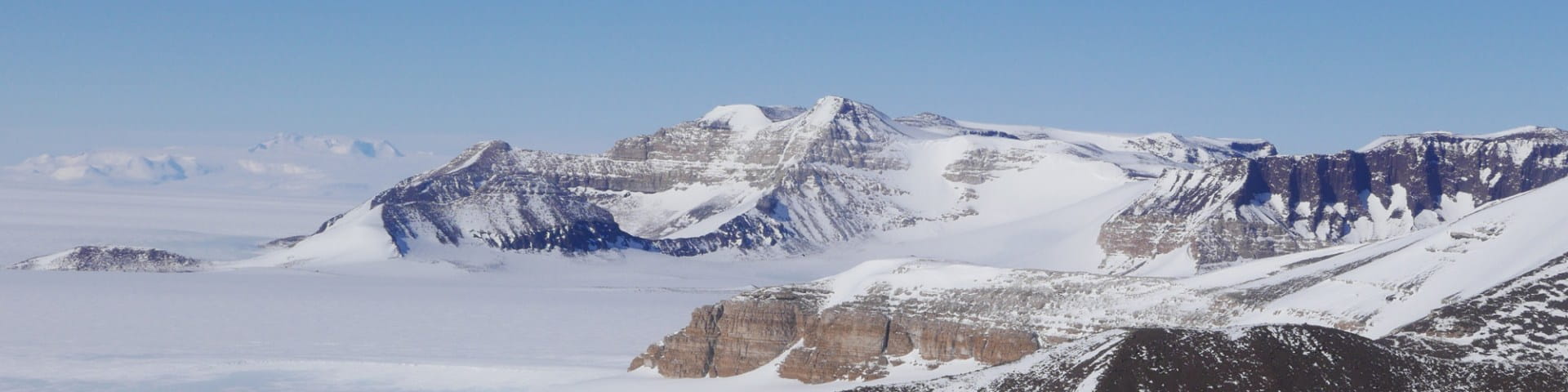
Daescher is co-leading a team for a second field season of fossil research and collecting at the bottom of the world. This time he will scour a targeted region in the Transantarctic Mountains of Southern Victoria Land. He’s looking for 390-million-year-old vertebrate fossils from the Aztec Siltstone, specimens that will shed more light on the evolution of the earliest limbed animals, Daeschler’s specialty.
“I can’t wait,” he said, after ticking off the extreme conditions that await him, while the rest of us grouse about 35-degree weather and bake cookies for the holidays.
Reality check:
- Temperatures in Antarctica will hover around 5-15 degrees F. The wind takes it down below zero.
- There are no living things except for invisible microbes and his five teammates. The upside: No need to tote a rifle like on his Arctic expeditions where polar bears were a threat.
- The team is trained in how to recognize if a colleague “is turning stupid” from the cold and isolation. No, no one lost their mind on the first Antarctic excursion in 2016.
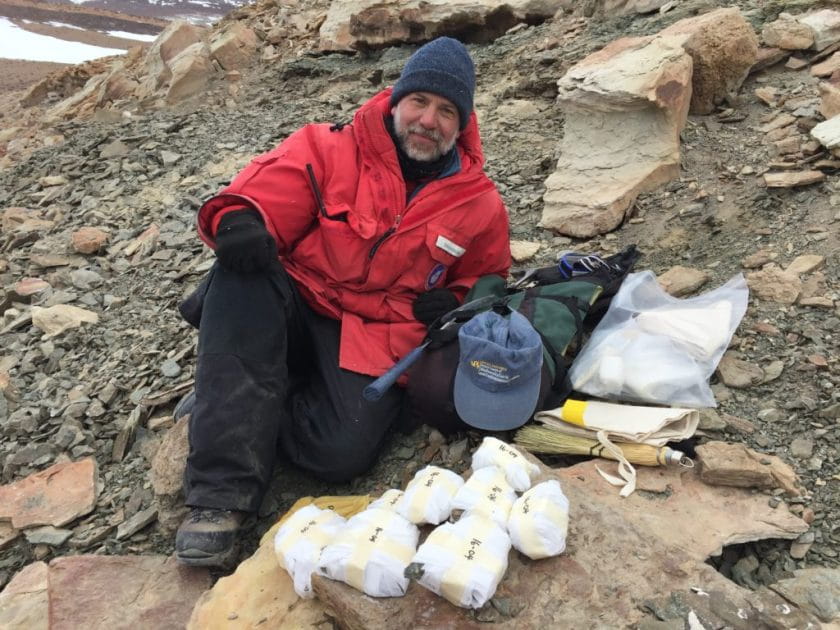
Ted Daeschler in 2016 with some of the fossils wrapped and ready to be transported to Philadelphia.
- “Last time I did feel some of my fingers going.” Daeschler, with the most experience in fossil wrapping, was in charge of wrapping in layers of toilet paper each fossil the team extracted from the rock. Hard to do with bulky gloves on. The toilet paper (you thought he was packing all those reams for another purpose?) protects the fossils for their long journey to Philadelphia.
- There aren’t any leaves in Antarctica, but the leaf blower will be used to shoo snow off the rocks, so the fossils will become visible.
- Pounds and pounds of dark chocolate is not a guilty pleasure. It’s a necessity, and it tastes good.
- A skilled mountaineer will accompany the field crew and help them survive the barren, inhospitable land.
Listen in as the intrepid Academy explorer talks about his trip four days before departure.
Daeschler, PhD, is a professor in the Department of Biodiversity, Earth and Environmental Science. His Antarctic research is funded by the National Science Foundation.
During the first field season, his team collected hundreds of fossils from a wide range of Middle Devonian vertebrates including the scales of agnathans and acanthodians, armored fish plates (placoderms), primitive shark teeth, early actinopterygians (ray-finned fish), and sarcopterygians (lobe-finned fish). The Academy now houses one of the largest collections of Devonian fossils from Antarctica.
Check back over the next six weeks for Daeschler’s blog posts from Antarctica. On April 3, he will recount his adventures in a free Academy Town Square talk.
By Carolyn Belardo


