Fisheries

Fisheries science is the practice of understanding and managing fish populations. The Fisheries Department (Fish Conservation and Management) uses its expertise in life histories and population distribution of freshwater and estuarine fish populations to protect, restore and understand fish communities and their ecology.
In the Field
Fisheries Services
The Fisheries Department solves problems for environmental management and specializes in the fields of conservation, invasive species, and bioindicators of water quality. Staff have extensive knowledge of freshwater and estuarine fish life history, distribution, and assessment techniques. Developing tailored sampling designs and applying novel techniques to solve problems with fish are of particular interest.
Conservation
Fisheries Department biologists work to restore and conserve fish communities, often in collaboration with other conservation-minded groups. This work includes the assessment and ecological restoration of endangered species, species of greatest conservation need (SGCN), and migratory species of conservation concern. Examples of imperiled species that the department has worked with include rare minnows like the Ironcolor Shiner, Bridle Shiner and Rio Grande Silvery Minnow; native catfishes; and migratory species such as American Eel, American Shad and River Herrings. Recent ecological restoration work has included prioritization of activities, dam removal, habitat suitability determinations, and the identification of sites for species reintroduction.
Invasive Species
We study the effects of invasive species on aquatic resources, biodiversity and species of concern. We are particularly interested in the implications of invasive species for future fisheries management. Studies have focused on understanding the distribution, abundance, diet, and ecosystem impact of these species. Invasive species of recent focus include Northern Snakehead, Threadfin Shad, and Freshwater Drum.
Bioindicators & Water Quality
Fisheries Department biologists routinely evaluate the effects of industry on fish and fish communities throughout the United States. To aid in regulation-setting and to understand the effects of pollutants, we have researched the effects of natural gas drilling on fishes, assessed toxins in fish, and developed bioindicator criteria for aquatic systems. Additional studies have included assessing water quality standards and species requirements. One example of this type of assessment is to determine what concentration of dissolved oxygen (the form that oxygen takes in water which allows it to be taken in by aquatic organisms) is needed in the Delaware Estuary for aquatic species to live and reproduce there.
Fisheries Staff


Academy's Fisheries Trip to Kirkwood Preserve

Academy's Fisheries Trip to Kirkwood Preserve
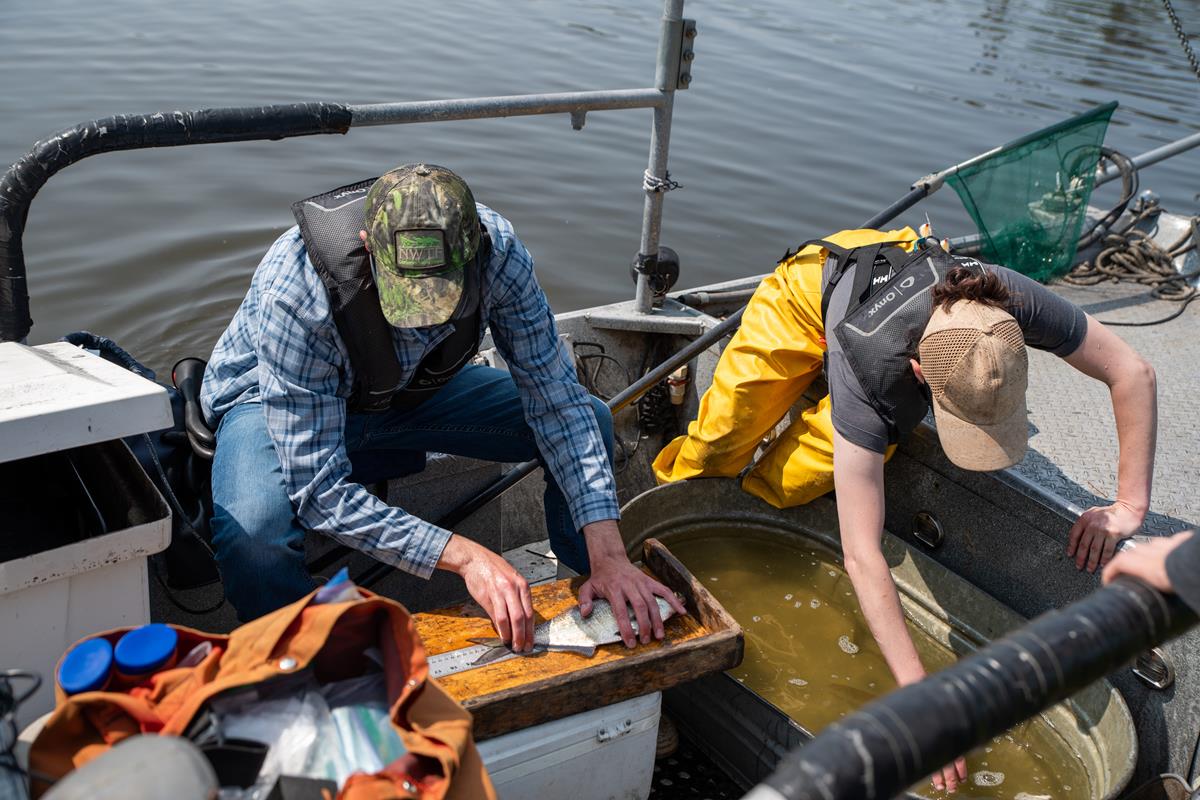
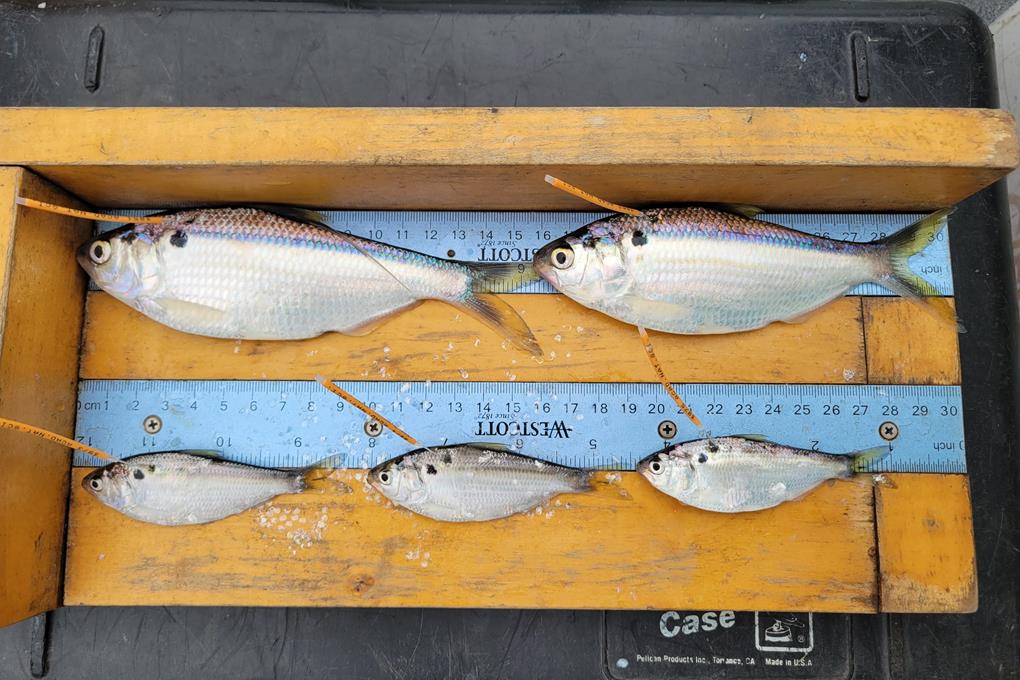
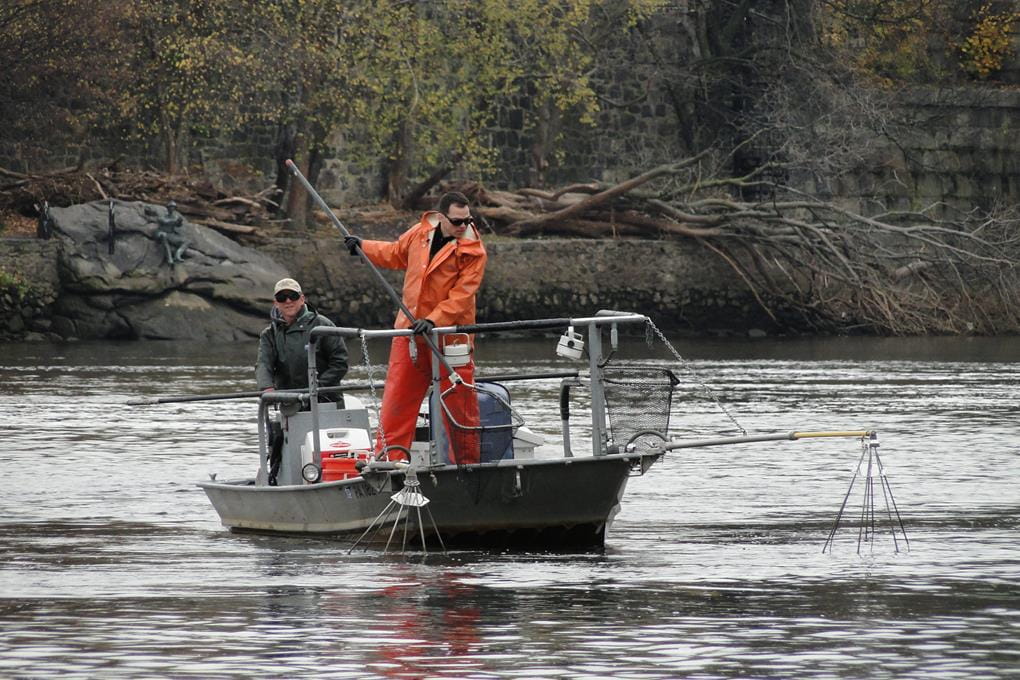
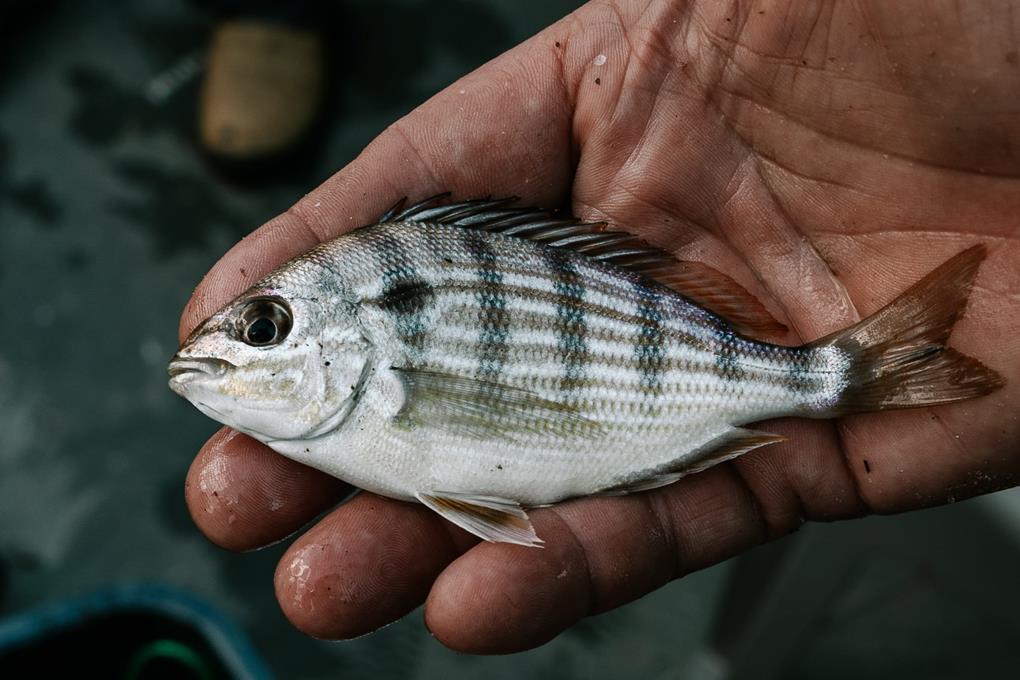
The Academy's Fisheries Section surveys fish, assesses their distribution and abundance and explores how humans have changed this environment.
Credit: John Hutelmyer/ANS
Conservation Project Examples
-
Cooper River Migratory Fish Project
Keller, D.H., K.R. Morgan, and N.E. Sheridan. 2025. Assessment of migratory fishes in the Cooper River: implications for fish passage at the Kaighn Avenue Dam. Report covering the period of October 31, 2023 – October 31, 2025. PCER Report no. 25-2. NFWF Grant ID: 0403.23.079175. Final report submitted December 2025 to Upstream Alliance. 22 pp.
Download this report -
Cooper River Migratory Fish Project
Keller, D.H., C.R. Rohrback, and D.P. Morrill. 2024. Indications of recovery of anadromous fishes in a mid-Atlantic estuary of North America: Spatial and seasonal patterns near a dam. Marine and Coastal Fisheries: Dynamics, Management, and Ecosystem Science, 16, e10320. https://doi.org/10.1002/mcf2.10320
Download this report -
Columbia Dam Removal
Pearson, C.F., M. DiBlasio, E. Creveling, D.H. Keller, J. Vile, M.C. Allen, and B. Styler Barry. 2026. Long-term monitoring to quantify the success of river restoration through dam removal in the Paulins Kill NJ, USA. Frontiers in Ecology and Evolution. 14:1771839. doi: 10.3389/fevo.2026.1771839
Download this report -
American Shad and River Herring Dam Removal Prioritization
DeSalvo, L.L, M. DeLucia, E.H. Martin. D.H. Keller. 2022. Delaware River Basin Restoration Roadmap for American Shad, Alewife, and Blueback Herring. The Nature Conservancy’s final report to National Fish and Wildlife Foundation (Grant No.: 65162). The Nature Conservancy, Harrisburg, Pennsylvania.
Download this report -
Ironcolor Shiner Conservation
Keller, D.H., K.R. Morgan, N.E. Sheridan, and Zoe Kerrich. 2026. Assessment of the endangered Ironcolor Shiner and co-occuring at-risk species to inform restoration and conservation planning in New Jersey. PCER Report no. 26-1. NFWF Grant ID: 0403.23.079334. Final report submitted to National Fish and Wildlife Foundation. 103 pp.
Download this report
Invasive Species Project Examples
-
Northern Snakehead Feeding Habits
Keller, D.H., K.M. Pagenkopp Lohan, C.R. Rohrback, R. DiMaria, K. Geronimo-Anctil, K. Colacicco, D.P. Morrill, and P. F. Overbeck. 2024. Assessment of Northern Snakehead relative abundance and diet in the Delaware River estuary: implications for management. PCER Report no. 24-1. NFWF Grant ID: 0403.21.072066. Final report submitted July 2024 to the National Fish and Wildlife Foundation. 38 pp.
Download this report -
Threadfin Shad
Keller, D.H., C.R. Rohrback, and D.P. Morrill. 2024. First records of threadfin shad (Dorosoma petenense Günther, 1867) in the upper Delaware River estuary indicate northward range expansion. BioInvasions Records 13(2): 551–556, https://doi.org/10.3391/bir.2024.13.2.19
Download this report
David Keller, Section Lead, Fisheries
Section Lead, Fisheries
Phone: 215-299-1150
Kendal Morgan
Fisheries Scientist