Diatom Herbarium

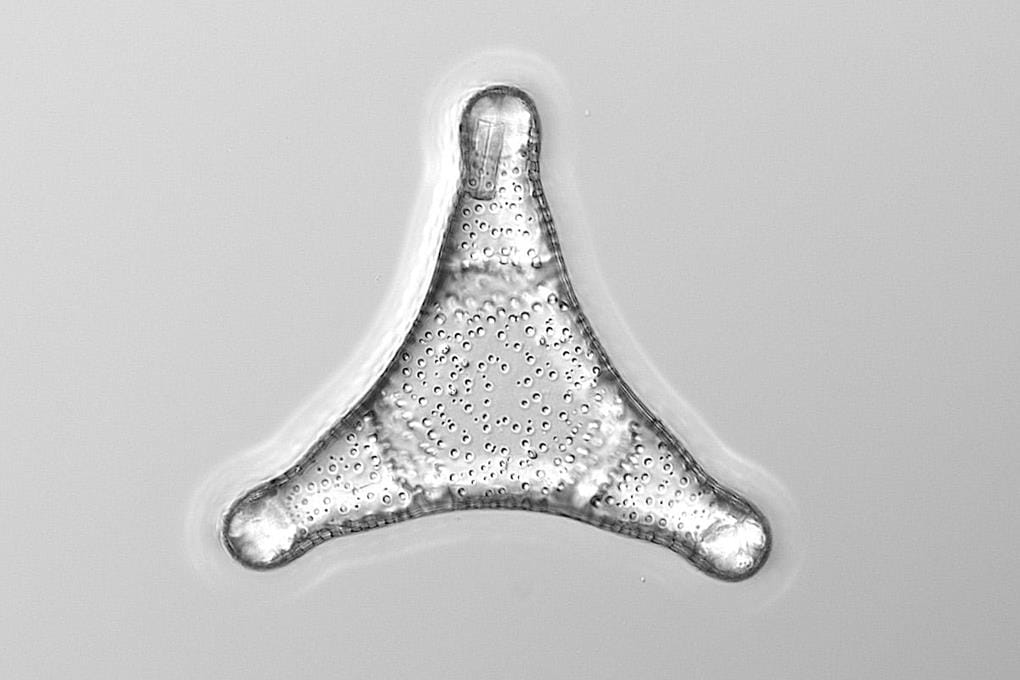
The Academy of Natural Sciences of Drexel University’s Diatom Herbarium, one of the two largest in the world, includes approximately 252,000 permanent slides and 130,000 samples of recent and fossil diatoms.
In addition to its world coverage and inclusion of fossil diatoms, the herbarium has an extensive record of materials collected as part of environmental surveys of lakes, rivers and marine coasts conducted by Federal and State agencies, Academy employees and other researchers throughout the United States. Often extending over decades, these surveys offer a unique resource to study long-term changes in diatom populations and ecology.
The Diatom Herbarium materials include historically important collections of prominent diatomists C.S. Boyer, P.T. Cleve, A. Cleve-Euler, T. Eulenstein, C. Febiger, L.R. Freese, Fr. Héribaud-Joseph, F.J. Keeley, F.T. Kützing, N.G.W. Lagerstedt, F.W. Lewis, I.D. Möller, M. Peragallo, H. Peragallo, L. Rabenhorst, J.H.K. Schumann, J.A. Shulze, H.L. Smith, W. Smith, J.A. Tempère and H.F. Van Heurck. The core of the herbarium holdings are diatom collections made since the 1940s by ANS staff, environmental agencies, corporations and individual researchers.
Recent important acquisitions include collections of diatom surface and core sediment (460 samples and 4,000 slides made by the late Sherri Cooper, PhD, on the Eastern and Western U.S. coasts); a collection of 3,800 mostly marine planktonic and benthic diatom slides from Paul Hargraves, PhD; 340 lake and pond diatom samples and corresponding permanent slides from Peter Siver, PhD; extensive collections of diatoms from the Pacific Northwest donated by Loren Bahls, PhD; and several thousand benthic and planktonic diatom samples from rivers, lakes and wetlands across North American collected through the U.S. Geological Survey, Environmental Protection Agency surveys and state-funded surveys of rivers, lakes and wetlands across North America. Herbarium materials are partially databased, and images of many type specimens are available online.
Explore the Specimens


History
The history of diatom research at the Academy starts in the early 1860s with the publication of the papers of F.W. Lewis in the Proceedings of the Academy of Natural Sciences. Two principal diatomists at the Academy in the late 19th century were Christian Febiger and John A. Schulze. From the beginning of the 20th century to 1927, the most active scientist was Charles S. Boyer. His most significant work was the publication of "Synopsis of the North American Diatomaceae," (1927), the first such account for North America. During his tenure at the Academy, Thomas Stewart, PhD; Frank Keeley; and T. Chalkley Palmer, a past president of the Academy also contributed specimens, time and money to the collection.
After the death of Boyer in 1928, the collection was relatively dormant until 1937, when Ruth Patrick became the curator of the Leidy Microscopical Club Collections. During her first years at the Academy, Patrick took on the tremendous job of organizing the various individual collections and specimens into a single, more meaningful diatom herbarium. She also acquired other collections, including a large amount of materials from the Naturhistoriska Riksmuseet, Sweden’s Royal Natural History Museum in Stockholm; the Rabenhorst Collections from the Missouri Botanical Garden; and the Pease Collection from Penn State University.
Under the leadership of Ruth Patrick and Charles Reimer, in the 1950s through the 1970s the herbarium became the main center of diatom research in the U.S., with many diatom scholars visiting, training at and donating their collections to the Academy. The culmination of this era was the publication of two volumes of “Diatoms of the United States” in 1975 and 1996 by Patrick and Reimer, a major (and so far, the only) printed comprehensive diatom flora of the U.S.
Diatom Resources
Diatom Resources & Databases
Search the Academy’s Diatom Collection using the following online portals:

Dr. Marina Potapova
Curator
Laura Aycock
Collections Manager