Dinosaur Hall
Exhibit

Come face-to-face with T. rex, Hadrosaurus foulkii and more in Dinosaur Hall!
Credit: Ramon Torres/ANS
Information
Dates
Permanent Exhibit
Location
Academy of Natural Sciences
1900 Benjamin Franklin Parkway
Philadelphia, PA 19103
Cost
Exhibit included with admission
Adult (13+): $22
Child (3-12): $18
Military and Student: $19
Senior (age 65+): $19
Measuring up to 42 feet long and weighing in at an estimated 7.5 tons, Tyrannosaurus rex was one of the largest predators to ever walk the earth. It’s one of the first things you will see when you enter the Academy of Natural Sciences.
This impressive animal is one of many dinosaurs and other Mesozoic creatures you’ll encounter in Dinosaur Hall. More than 30 species are represented, about half of which are full skeletal mounts, including Avaceratops, Chasmosaurus, Corythosaurus, Pachycephalosaurus and Tylosaurus.
In addition to the skeletal mounts, visitors can view fossils, including a Torosaurus skull, an Ichthyosaurus slab, dinosaur eggs, a touchable Tyrannosaurus rex bone fragment and a dinosaur footprint. The gallery also features sculptures, life-size models, murals, paleontologist tools and a green-screen video studio where guests can virtually transport themselves into a world full of dinosaurs.
Exhibition Highlights
-
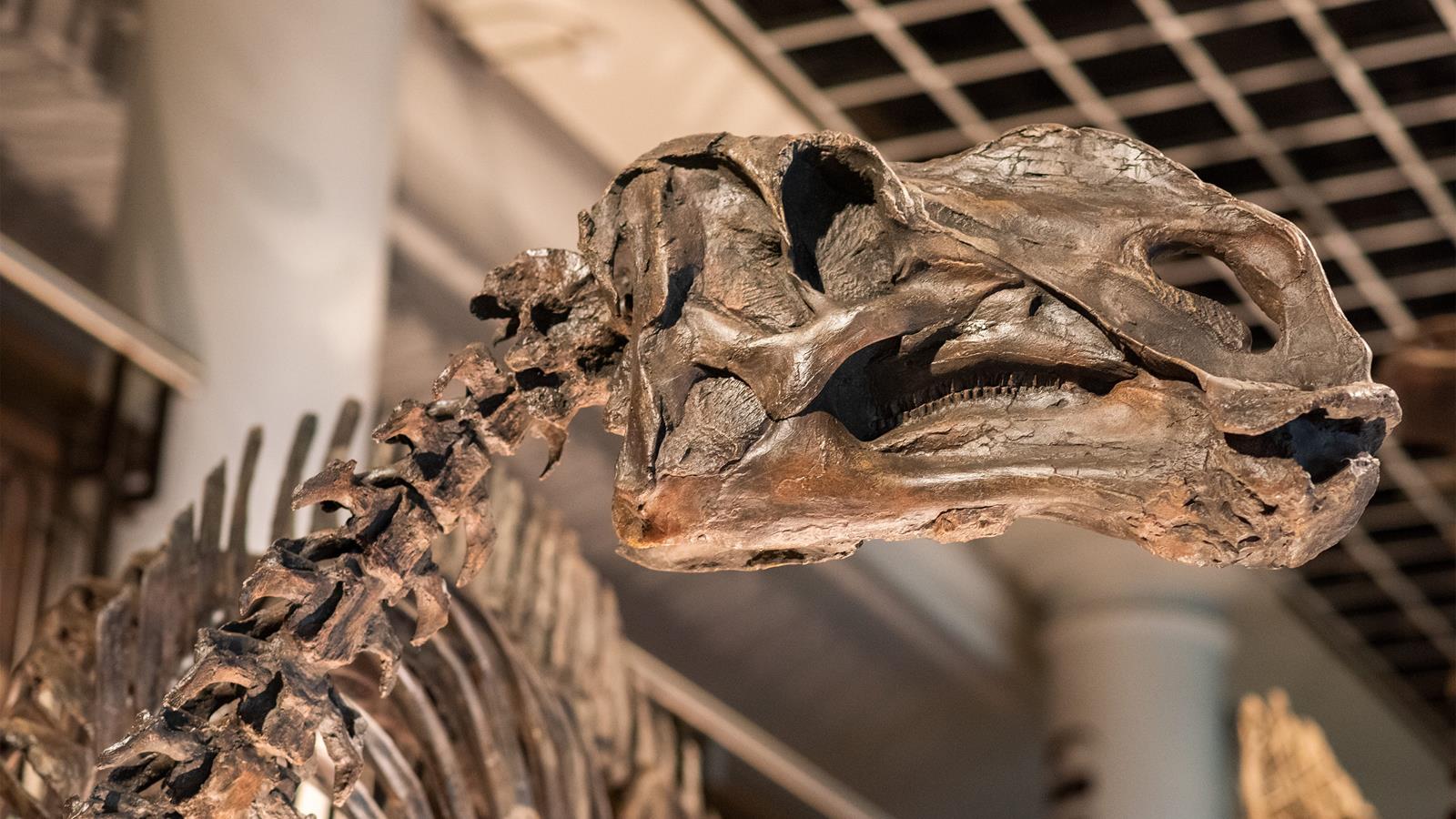
New to Dino Hall: Hadrosaurus foulkii
Ramon Torres/ANS
-
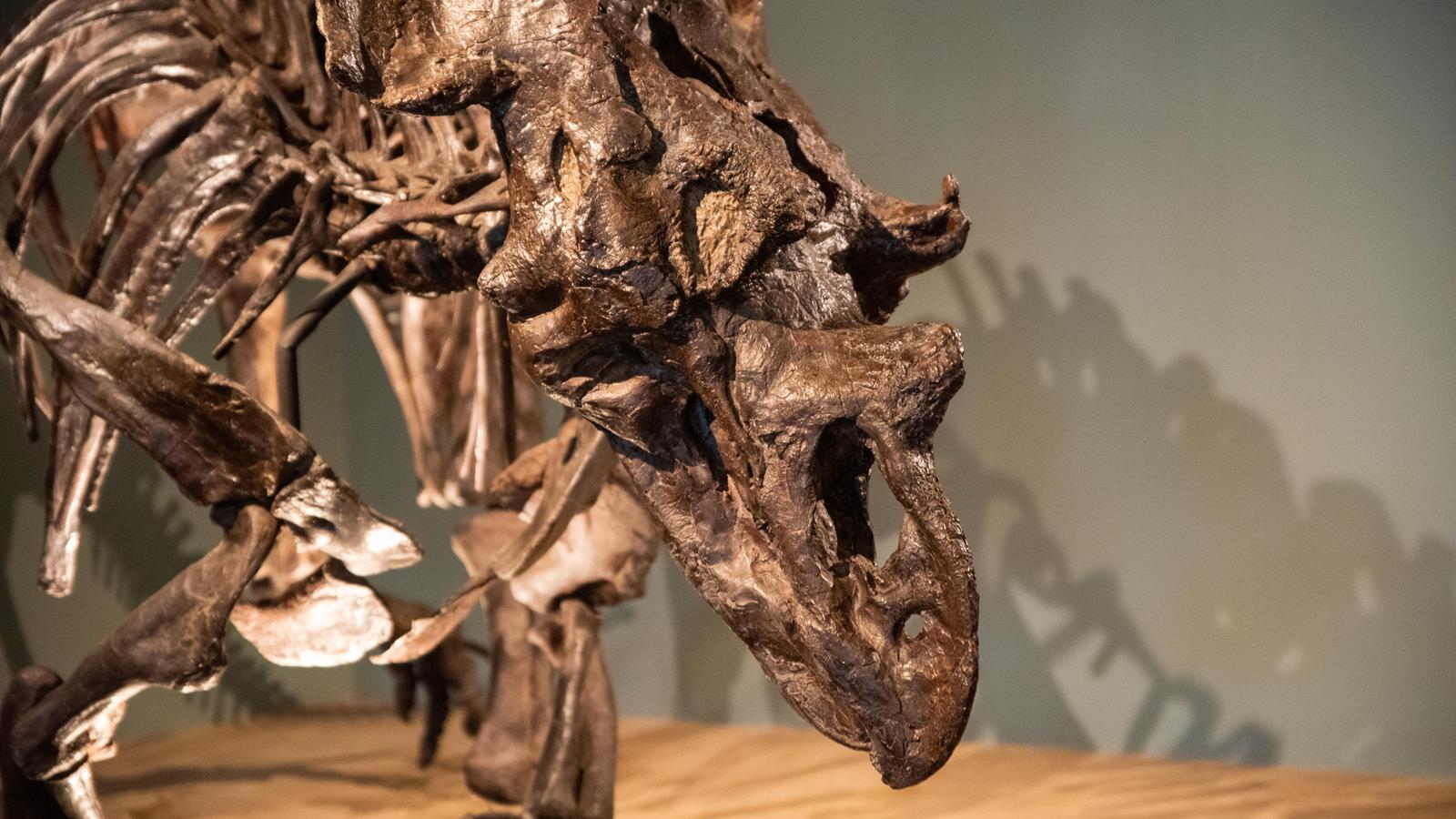
Chasmosaurus belli
Ramon Torres/ANS
-
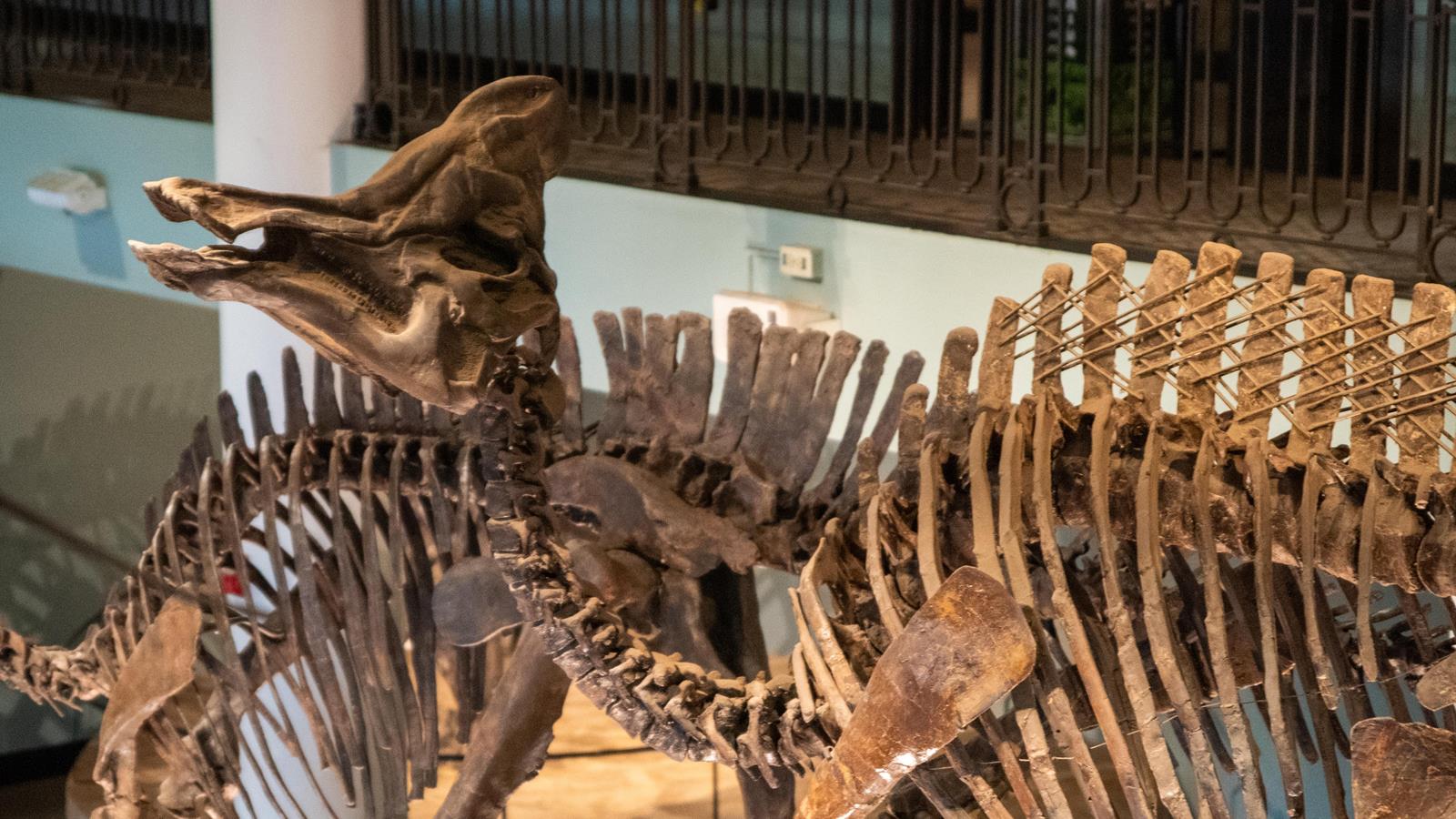
Corythosaurus casuarius
Ramon Torres/ANS


Welcome Back, Hadrosaurus foulkii
The Academy of Natural Sciences in Philadelphia made remarkable contributions to U.S. paleontological research in the early emergence of the field as a scientific discipline. In 1868, the Academy became the first institution in the world to publicly display an articulated dinosaur mount - Hadrosaurus foulkii. Affectionately referred to as Haddy, the dinosaur returned to display several times at ANS before taking up permanent residence in the Academy’s Dinosaur Hall in summer 2025.
Hadrosaurus foulkii was excavated from the Late Cretaceous Woodbury Formation of Haddonfield, New Jersey, in 1858 by lawyer and historian William Parker Foulke and his farmer friend, John Hopkins, who lived on the lands of the excavation site. Edward Drinker Cope of the Academy of Natural Sciences created the name Hadrosauridae in 1869. Hadrosaurids get their nickname as the “duck-billed” dinosaurs from their wide and flat snouts.
Hadrosaurus foulkii likely lived 81–79 million years ago in the Campanian, Late Cretaceous Period in the forested, coastal regions of what is now New Jersey, when sea levels were higher than they are today. After the animal died, its remains were washed out to sea and sank to the seabed.


