Botany of Nations
Exhibit

Information
Dates
Open now through February 14, 2027
Location
Academy of Natural Sciences
1900 Benjamin Franklin Parkway
Philadelphia, PA 19103
Cost
Included with general admission
Experience Botany of Nations, a groundbreaking exhibition that provides a new perspective on the legendary Lewis and Clark Corps of Discovery.
Co-curated with Enrique Salmón, PhD, an ethnobotanist and author of IWÍGARA: The Kinship of Plants and People, and developed with contributions from Indigenous cultural historians, Botany of Nations offers a culturally layered view of the plants of North America.
Collected on the famous expedition, some of the oldest plant specimens in the country today are housed in the Academy’s own Lewis and Clark Herbarium. Learn how the Native Nations Meriwether Lewis met on the trail shaped America’s plant knowledge long before Western scientists claimed these “discoveries.” Centering the voices of Native Nations who have protected and cared for the lands for thousands of years, Botany of Nations presents plants as portals to Indigenous storytelling and knowledge. You will:
- See 18th and early 19th century scientific instruments, original journals, maps and herbarium sheets that illuminate the role of natural science on the Corps of Discovery.
- View Native American peace pipes as well as Corps of Discovery peace medals.
- Navigate prairie, plains, plateau and Pacific coast landscapes within a model of the trail as you learn about the importance of plants such as tobacco and chokecherry through film, interactive media, cultural artifacts, sensory experiences and contemporary voices.
- Watch a newly produced film about how Indigenous traditional land practices and cultural systems surrounding food provide contemporary solutions to today’s biodiversity and climate challenges.
- Experience a native plant garden on the Benjamin Franklin Parkway to learn how you can grow heritage plants that foster biodiversity.
About Enrique Salmón
Professor and Chair, Department of Ethnic Studies, California State University, East Bay
Enrique Salmón is a Rarámuri (Tarahumara). He has dedicated his studies to Ethnobiology, Agroecology and Ancestral Ecological Knowledge to better understand his and other cultural perceptions of culture, landscapes and place. Salmón is the author of Eating the Landscape, which focuses on small-scale Native farmers of the Greater Southwest and their role in maintaining biocultural diversity, and the ethnobotanical book Iwigara: The Kinship of Plants and People. He is currently authoring a new book focused on Kincenteric Ecology and Indigenous plant foods. Salmón has a B.S. from Western New Mexico University, an MAT in Southwestern Studies from Colorado College, and a PhD. in anthropology from Arizona State University. Dr. Salmon is the tribal liaison for CSUEB and the NAGPRA coordinator.
Botany of Nations is generously supported by The Arcadia Foundation, The Connelly Foundation, The Horace W. Goldsmith Foundation, The Marshall-Reynolds Foundation, and The Pew Center for Arts and Heritage
Page Section Links
Join the Junior Ranger Program
Second Saturday of each month
Join Academy educators in discovering how the scientists who contributed to the Academy collections prepared Meriwether Lewis for his journey west and how the specimens collected came home to the Academy.
The Lewis and Clark Trail Junior Ranger program is available at more than 30 locations along the 4,900 mile Lewis and Clark National Historic Trail. To earn a Junior Ranger badge, you'll work on an activity booklet. Activities will guide you to check out the place you're visiting and to find out why that place is important to the Lewis and Clark Expedition story. As you fill in the blanks, you'll learn about Native lands. As you decode messages, you'll get to know expedition members’ diverse backgrounds and skills. Join Academy educators in discovering how the scientists who contributed to the Academy collections prepared Meriwether Lewis for his journey west and how the specimens collected came home to the academy.
Junior Ranger programs connect kids and their families to the people, places, and stories of the National Park Service.
Botany Exploration:
Dates:
Thursday April 16
Thursday May 14
Wednesday June 24
Tour of Botany of Nations and Botany Collection
Experience a curator-led tour of Botany of Nations and explore behind-the-scenes in the Botany Collections!
Botany of Nations, a groundbreaking exhibition that provides a new perspective on the legendary Lewis and Clark Corps of Discovery. Co-curated with Enrique Salmón, PhD, an ethnobotanist and author of IWÍGARA: The Kinship of Plants and People, and developed with contributions from Indigenous cultural historians, Botany of Nations offers a culturally layered view of the plants of North America.
As the oldest herbarium in the Americas, the Philadelphia Herbarium (PH) at the Academy of Natural Sciences of Drexel University holds 1.4 million dried plant and fungal specimens dating from the 18th century to the present day. Come learn about the old school and modern ways in which we preserve these incredible plants, from the crafting of a specimen to databasing and even DNA sequencing and see an interesting array of specimens from across the tree of life and through time—including a peek at the Lewis and Clark Herbarium to see plants not featured in the exhibition.
-
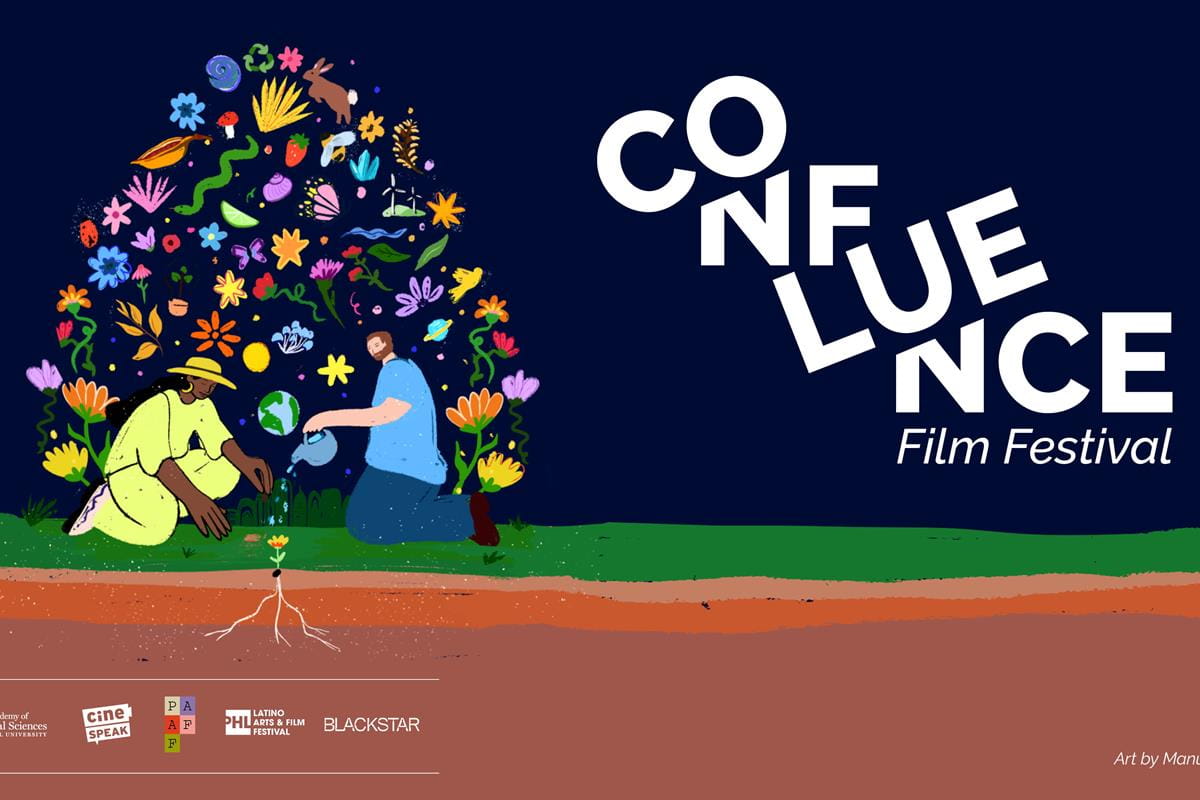
Confluence Film Festival
Explore climate justice and sustainability through films, talks and community events.
Event
Thursday, April 2, 2026
5:30 PM


