The Unexpected Diversity of Philadelphia’s Bees
Journal
Written on: August 1, 2023
While Philadelphia may not seem like an ideal habitat for wildlife, the city and county actually have a variety of green spaces, such as the John Heinz National Wildlife Refuge at Tinicum, the United States’ first urban wildlife refuge, to support plenty of different plant and animal species — including bees. But how many different kinds of bees call this city home? We reached out to Drexel University student and Academy co-op Liz Otruba to discuss what the bee population at the refuge really looks like.
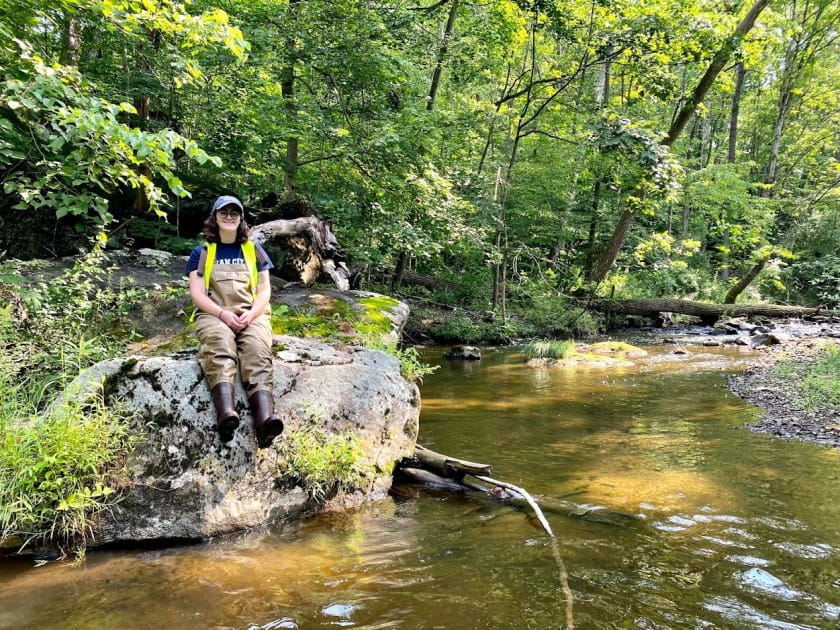
Tell us about yourself.
I am an environmental science senior in the Biodiversity, Earth and Environmental Science Department at Drexel and work in the Entomology Department at the Academy of Natural Sciences of Drexel University. Last summer, I did a co-op with the Academy to survey the bee population at the refuge to see how many species were really there.
What did you end up finding at the refuge?
Aside from community scientist observations on iNaturalist and a bumble bee survey done five years ago, there’s no record of the full diversity of bee species that can be found at the refuge. We used three different collection methods to sample bees in the field and then sent the pinned specimens to experts at Penn State University who particularly specialize in identifying bees, especially the less common bee species, for them to verify my initial identifications.
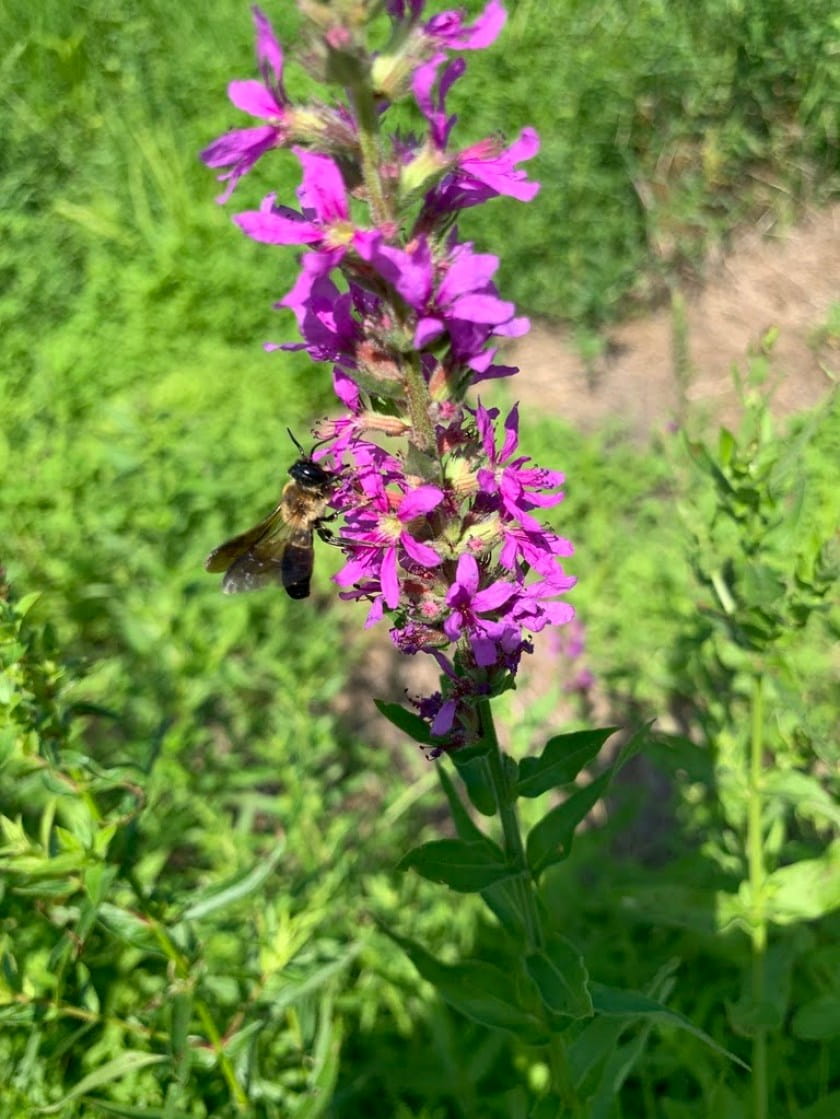
<em>Megachile sculpturalis</em>, Giant Resin Bee on Purple Loosestrife flower. <em>Liz Otruba/ANS</em>
After sampling different areas of John Heinz Wildlife Refuge from April to September of 2022, we ended up with about 2,500 bee specimens. So far, with our first batch of ID-ed bees we got back from Penn State, we found 56 bee species that occurred at the refuge. Of the 56 species we found, 16 of them are county records — that means that these species have not previously been recorded to occur in all of Philadelphia County. Once we get our second batch of bees back from Penn State, we might find even more new species!
Tell us more about those 56 species — that’s a lot more than just honeybees and bumble bees.
Honeybees and bumble bees are only eight of those 56 species! When people think of bees, yellow, fuzzy bees making honey in their hives seems to be the prevalent idea of what a bee is — but honeybees and bumble bees are actually quite unique compared to all other bee species. Honeybees are the only ones to make honey and live in hives, and many bees are much smaller than bumble bees.
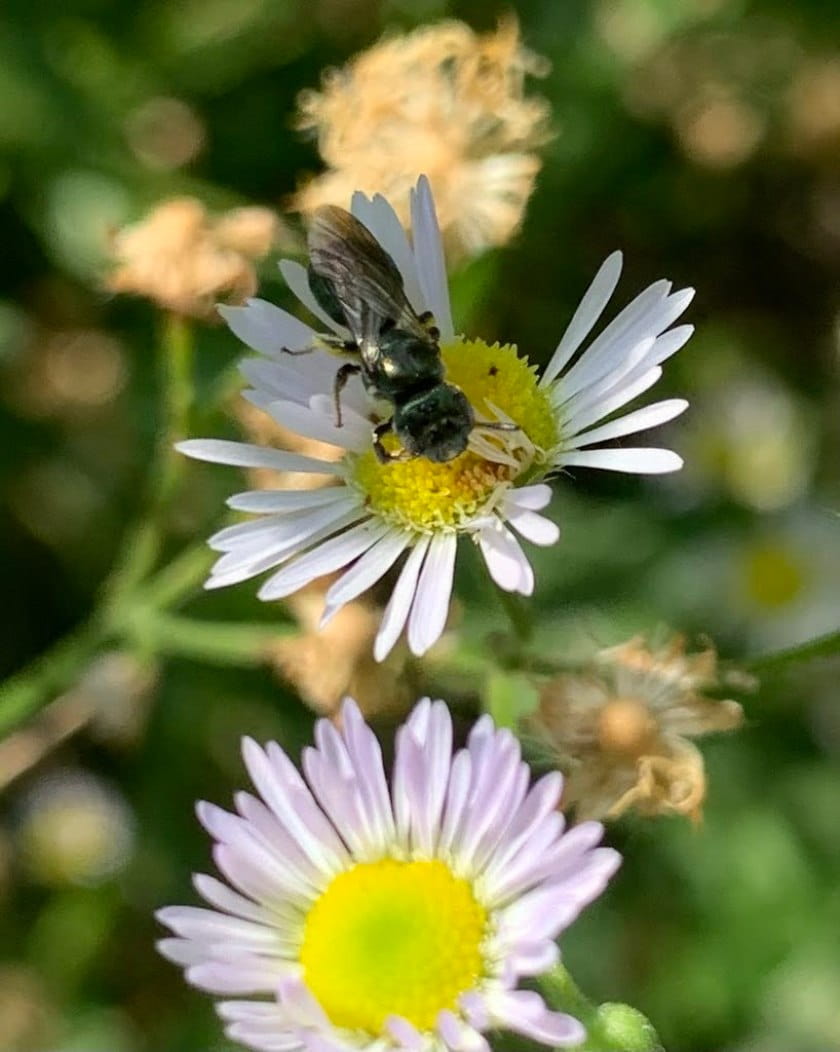
<em>Ceratina</em>, Small Carpenter Bee on Fleabane flower. <em>Liz Otruba/ANS</em>
A majority of bees are not social (so they don’t have a queen) and make their nests underground or in rotting wood. Some of the most common bees we found at the refuge are smaller than a house fly and not yellow or fuzzy — Small Carpenter Bees, which are dark blue, and Sweat Bees, which are metallic, shiny green. There are even some bees that are completely red: Nomad Bees.
Why does this diversity matter?
It’s really important to know what bee species are present in the refuge so we know what we have to protect. Bees (native ones in particular) play integral roles in supporting and sustaining a variety of other plants and animals in an ecosystem. However, bee populations are declining worldwide, so we have to know what exactly we are working to conserve.
For example, one of the new species we collected was the native Rose-mallow Bee, which exclusively pollinates and feeds on Hibiscus flowers. Now that we know Rose-mallow Bees are present, the refuge can ensure they’re supporting these bees by sustaining Hibiscus flowers across the marshes.
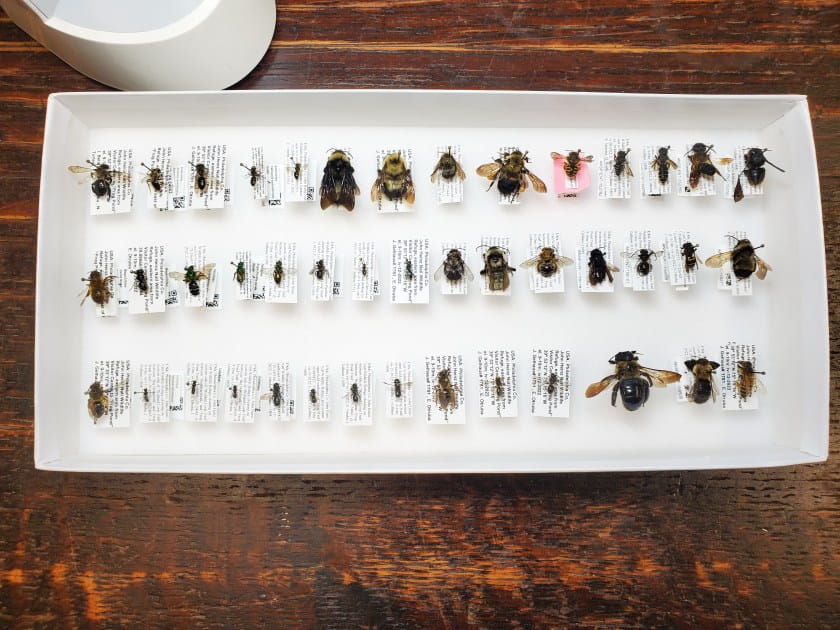
These 43 bees are all different species and were all collected at Heinz in 2022. <em>Liz Otruba/ANS</em>
Visit Liz Otruba and learn all about local bees and her work at the John Heinz Refuge at this year’s Bug Fest!
